Key Highlights
- Scientists quantified the diets of short-finned pilot whales living near Hawaii for the first time.
- A single whale can consume up to 200 squid a day, while whales in the region may collectively eat around 416 million squid a year.
- The local squid population is doing well due to their quick reproduction and growth rates.
- Researchers found that short-finned pilot whales primarily subsist on a steady diet of squid.
New Insights into Pilot Whale Diets
A groundbreaking study has revealed the staggering daily consumption habits of short-finned pilot whales (Globicephala macrorhynchus) in Hawaiian waters. This research, led by William Gough at the University of Hawaii at Mānoa’s Marine Mammal Research Program, marks a significant advancement in understanding these marine mammals’ dietary needs and behaviors.
Quantifying Dietary Habits
The team, consisting of an international group of researchers, embarked on this study with the primary aim to gather more data on false killer whales (Pseudorca crassidens) residing in the region. However, their efforts to track these elusive animals led them to encounter numerous pods of short-finned pilot whales. These encounters prompted a new direction for the research, focusing specifically on the diet and behavior of the pilot whales.
Staggering Numbers
The findings are nothing short of astounding. According to the study published in the Journal of Experimental Biology, an individual short-finned pilot whale can consume up to 200 squid per day. On a broader scale, the entire population of these whales collectively eats approximately 416 million squid annually. Despite such high consumption rates, both the whales and their primary food source appear to be thriving.
“Luckily for us and for the pilot whales, squid reproduce quickly and have high growth rates,” explained Gough. “This means that the pilot whales seem to have hit on a reliable food source at least for now.”
Methodology and Implications
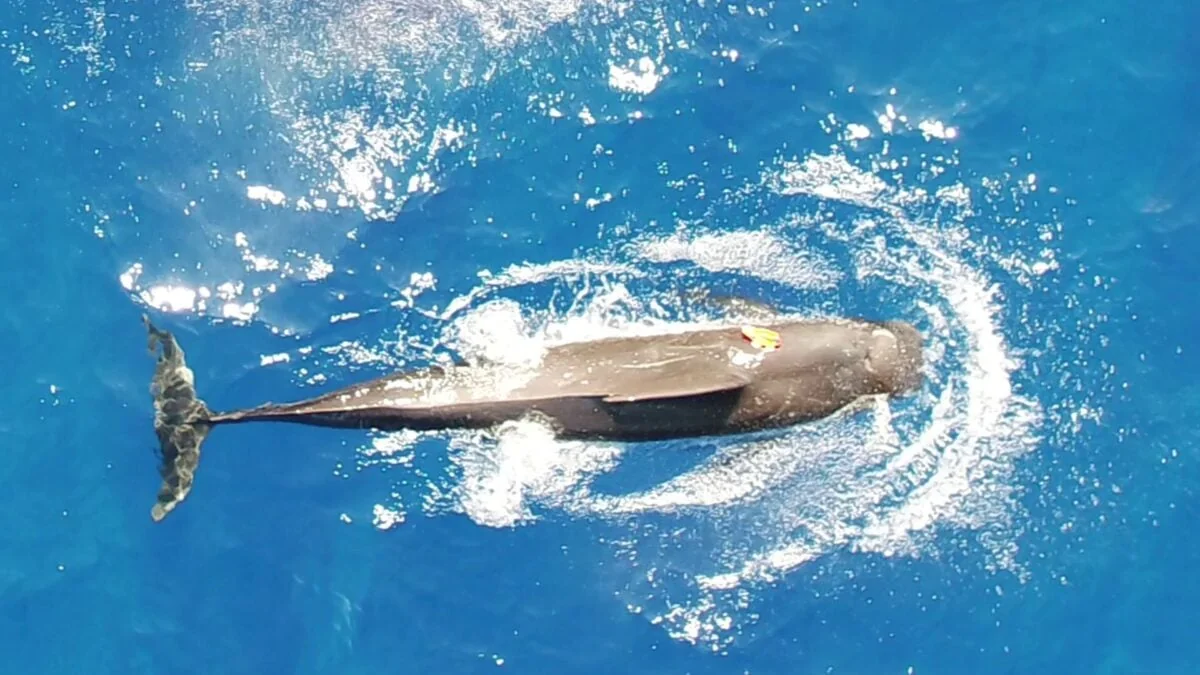
To arrive at these numbers, the researchers utilized a combination of data sources including movement tracking from tags, aerial drone measurements, and analysis of stomach contents from stranded whales. Their comprehensive approach not only provided insights into the daily caloric intake but also highlighted the significant role that squid play in the diet of short-finned pilot whales.
“These techniques can be applied to other whale and dolphin species as well,” stated Gough, suggesting a broader impact on marine mammal research. “Over the last 10-15 years, researchers have built some really impressive datasets for various whale and dolphin species, so we’re hopeful about using our framework to study more species.”
This research underscores the complex interplay between predator and prey in ocean ecosystems and highlights the importance of continuous scientific inquiry into marine life. As climate change poses increasing threats to these and other species, such detailed dietary studies can inform conservation efforts and management strategies.