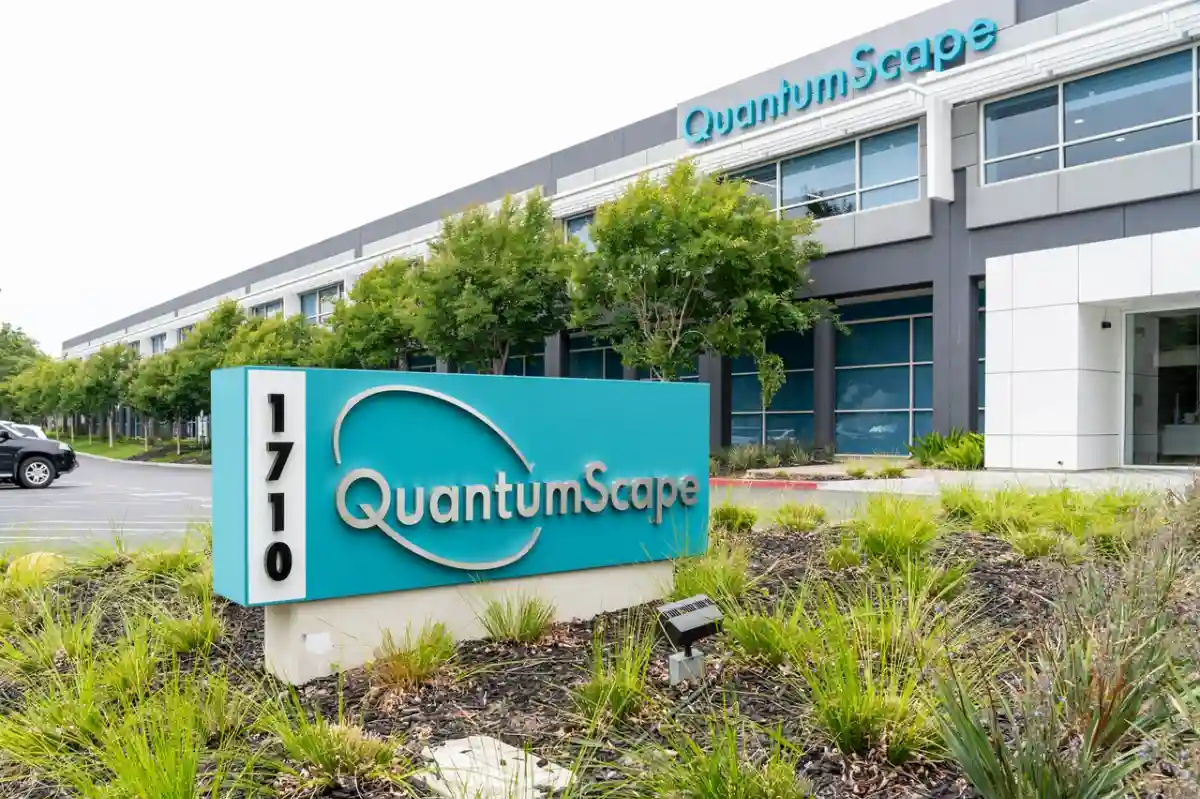
QuantumScape–Corning Partnership 2025: How This Deal Could Supercharge Solid-State Batteries & EV Stocks
Quick Take
- What happened: QuantumScape (NYSE: QS) announced an agreement with Corning (NYSE: GLW) to co-develop ceramic separator manufacturing for solid-state lithium-metal batteries (announced Sept 30, 2025).
- Why it matters: The separator is the core enabler in QuantumScape’s anode-free design. Scaling this step is a bottleneck to commercial production.
- Investor angle: A credible manufacturing partner can accelerate yield, throughput, and cost improvements—key inputs to margins, cash runway, and time-to-revenue for QS. Investopedia
What This Partnership Actually Does
QuantumScape’s batteries replace the flammable liquid electrolyte and polymer separator of traditional li-ion cells with a solid ceramic separator that allows a lithium-metal anode to form in-situ during charging. That separator is not just a component—it’s the heart of QS’s architecture. The agreement with Corning is about jointly developing manufacturing capabilities to make this separator at high volume and high quality.
Why Corning? Corning is a global leader in glass and ceramics and has decades of experience moving fragile, high-precision materials from lab to mass production—think Gorilla Glass, optical fiber, and advanced display glass. Applying that know-how to QS’s separator could drive:
- Higher yields: Fewer micro-defects and fractures in thin ceramic layers.
- Throughput gains: Faster forming/sintering, better web handling, and inline inspection.
- Cost reductions: Process optimization that lowers cost per kWh, improving unit economics for EV packs.
These are precisely the hurdles that decide whether a breakthrough stays in the lab—or lands in a showroom.
Where This Fits in QuantumScape’s Commercialization Timeline
QuantumScape’s public milestones in 2024–2025 emphasized process integration (e.g., Cobra separator process) and pilot-line learning curves. The Corning tie-up is the next logical step: take a validated separator approach and industrialize it. The aim is to shorten the path from A-samples to automotive-grade cells with consistent quality at a meaningful volume. Investopedia
Key phases you should expect to hear about next:
- Joint process development: Lock down materials stack, thickness targets, thermal budgets, and defect thresholds for separator rolls.
- Pilot-scale manufacturing trials: Prove repeatability, track scrap rates, and refine inline metrology.
- Automotive qualification steps: Abuse testing, life-cycle validation, calendar aging, and pack-level integration with OEM partners.
- Ramp planning: Capex, footprint, staffing, and supplier contracts; then PPAP/APQP flows for automotive.
Translation for investors: Better separator yields and throughput → lower cost/kWh + faster ramps → earlier revenue and improved gross margin trajectory.
Why the Separator Is a Big Deal (Beginner Friendly)
Think of a battery like a sandwich:
- Cathode (positive side) is your “bread” with energy-rich materials.
- Anode (negative side) is the other “bread.” In QS’s case, it’s lithium metal formed during charging—no thick graphite slab.
- The separator is the “wrapper” in between that lets ions pass but blocks short circuits.
In conventional batteries, the separator is usually a polymer film soaked with liquid electrolyte. In solid-state, the separator is solid ceramic—stiffer, more stable, and capable of suppressing dendrites while enabling high energy density and fast charging. But making that ceramic at scale—thin, uniform, defect-free—is hard. That’s why a manufacturing heavyweight like Corning matters here.
What It Could Mean for Electric Vehicles in the U.S.
If QuantumScape and Corning can crack the code on high-volume ceramic separators, U.S. EVs could see:
- Longer range per charge thanks to higher energy density.
- Faster charging, improving driver convenience and fleet uptime.
- Safety enhancements from solid electrolytes that are less prone to thermal runaway.
- Lower total cost of ownership as cost/kWh trends down.
Add the potential for U.S. manufacturing and supply-chain localization, and you get a story that fits well with industrial-policy incentives and on-shoring trends.
Stock & Finance Angle: QS and GLW
For QS (QuantumScape):
- Narrative boost: A marquee partner reduces manufacturing risk.
- Valuation sensitivity: QS is a pre-revenue, R&D-heavy story. Any credible path to scale tends to move the stock—both up on positive milestones and down on delays.
- KPIs to watch: separator yield, throughput (m²/hour), scrap rates, cost per m², and pilot-line OEE; plus cell cycle life, calendar life, and fast-charge metrics.
For GLW (Corning):
- Optionality: Corning gains exposure to one of the highest-growth corners of electrification without betting the farm.
- Revenue mix: If successful, separators could become a new specialty ceramics revenue stream with high switching costs once qualified.
Market reaction so far: Initial coverage and financial press framed the deal as a manufacturing step-change for QuantumScape, with early share price strength reported around the announcement window.
Competitive Landscape: Who Else Is Chasing Solid-State?
- Toyota/Panasonic, Solid Power, ProLogium, and various OEM labs are all advancing solid-state approaches.
- The separator chemistry and ability to scale manufacturing are the make-or-break factors—exactly the chokepoint this partnership targets.
- Expect more ecosystem partnerships (materials, equipment, metrology) as programs move from pilot to pre-production.
Risks to Keep in Mind
- Yield risk: Tiny ceramic defects can create shorts at scale.
- Cost risk: Even with better yields, early volumes can be expensive; it takes time to amortize capex.
- Timeline risk: Automotive qualification is unforgiving—durability and safety testing can uncover surprises.
- Capital needs: Scale requires capex; watch cash burn, gross margin roadmaps, and any strategic funding tied to factory build-outs.
- Customer concentration: Early demand may hinge on a few anchor OEMs; watch for supply agreements.
What to Watch Next (Investor Checklist)
- Process milestones from QS/Corning: pilot-line throughput and yield disclosures. QuantumScape
- Equipment partners: Any mentions of web-handling, sintering, or inline inspection vendors (a hint that scaling is maturing).
- Automotive updates: Integration tests with existing OEM partners; sample shipments beyond A-samples.
- Policy tailwinds: U.S. incentives for domestic battery manufacturing and advanced materials.
- Earnings calls: Listen for capex guidance, cash runway, and ramp cadence.
Frequently Asked Questions (FAQs)
1) What exactly did QuantumScape and Corning announce?
They agreed to co-develop manufacturing capabilities for QuantumScape’s ceramic separator, a critical layer in its solid-state lithium-metal battery. The announcement was made September 30, 2025. QuantumScape
2) Why is the separator so important?
It’s the core enabler that allows an anode-free lithium-metal design—boosting energy density and potential fast-charge while suppressing dendrites. Making it thin, defect-free, and cheap at scale is the hard part.
3) Does this mean solid-state EVs are here now?
Not immediately. It’s a manufacturing scale-up step. Expect continued pilot production, testing, and qualification before mass-market EV packs.
4) How could this affect QS stock in the near term?
Milestones that de-risk manufacturing (higher yields, faster throughput) are typically bullish for pre-revenue battery developers. Delays or cost overruns can cut the other way.
5) What’s in it for Corning?
A chance to extend its ceramics leadership into EV batteries, potentially creating a new specialty materials stream with long-term contracts if qualification succeeds.
6) What should retail investors watch most closely?
- Separator yield % and scrap rate trends
- m² of separator per day (throughput)
- Cost per kWh progress
- Any customer qualification or supply agreement news
7) Is this partnership exclusive?
Public materials emphasize the joint push on separator manufacturing for QS’s design; exclusivity terms and scope are typically clarified in future filings or calls.
Practical Takeaways for Investors
- Position sizing: Solid-state is a high-beta, milestone-driven story. Size positions so you can withstand volatility.
- Time horizon: Commercialization is a multi-year process; be wary of reading too much into any single month’s move.
- Diversification: Consider pairing QS exposure with broader EV supply-chain or materials names to smooth idiosyncratic risk.
- Due diligence: Track earnings transcripts, technical updates, and capex guidance—especially any numbers tied to separator output.
Conclusion
The QuantumScape–Corning agreement is not just another press release—it targets the true bottleneck in solid-state commercialization: manufacturing the ceramic separator at scale. If the duo can lift yields, push throughput, and cut costs, they’ll accelerate the timeline from pilot cells to automotive-grade volumes.
For consumers, that could mean longer-range, faster-charging EVs built on safer chemistry. For investors, it’s a clearer path to revenue, gross margin expansion, and a de-risked ramp—with all the usual execution risks still on the table. In a crowded field chasing solid-state, partnering with a ceramics heavyweight is a smart move that could tip the scales.