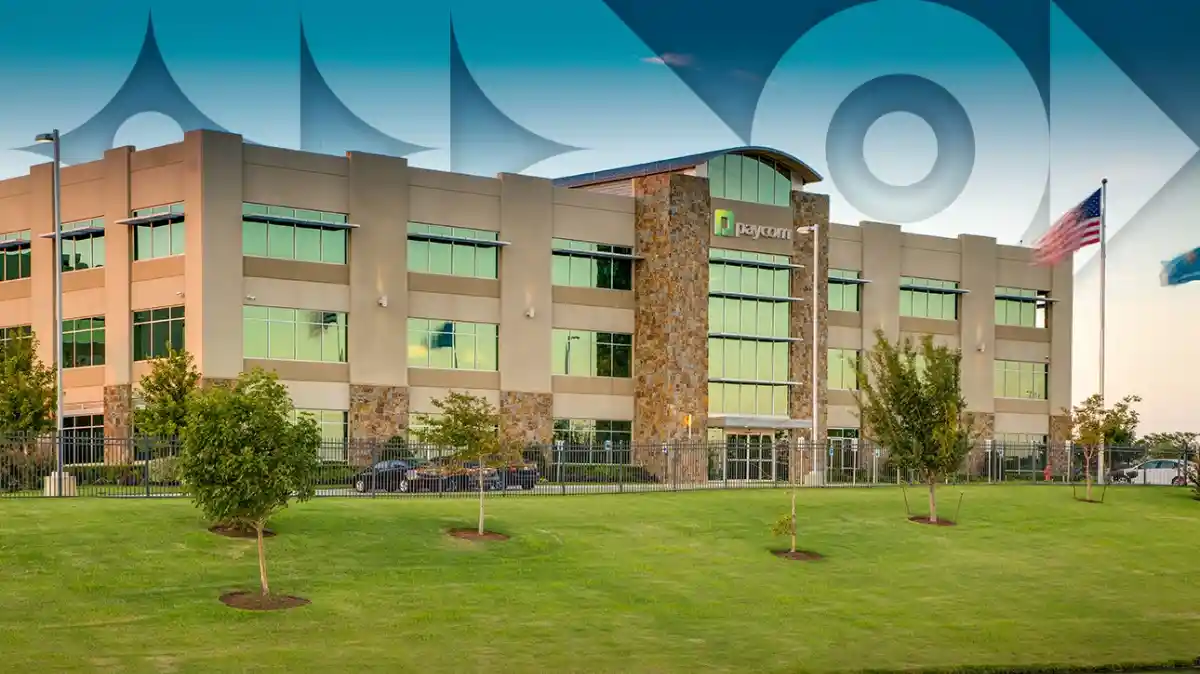
Paycom to Replace 500+ Jobs With AI at Oklahoma City HQ (2025): What It Means for Investors, Workers & the Future of HR Tech
TL;DR
Paycom Software plans to replace more than 500 workers at its Oklahoma City headquarters with artificial intelligence systems, part of a broader move to automate back-office and support functions across its human capital management (HCM) platform.
The company has been vocal about its AI roadmap in 2025, including the launch of a command-driven engine (“IWant”), and has recently raised growth and margin targets on AI tailwinds. The new restructuring centers on efficiencies from automation, particularly in back-office roles, as the company consolidates functions and leans into productized AI for scale.
What exactly did Paycom announce?
Multiple local reports in Oklahoma City confirm over 500 jobs will be affected as Paycom restructures and replaces roles with AI-enabled workflows. The company framed the move as a workforce realignment driven by advanced automation and AI-powered technologies, specifying the impact would be limited to certain back-office positions. Timing aligns with a period in which Paycom has been highlighting AI gains and stronger operating leverage.
Why is Paycom doing this now?
1) A productized AI strategy is already in motion
In late July 2025, Paycom announced “IWant,” a command-driven AI engine embedded in its platform to speed up information access and task completion for clients. This isn’t a bolt-on—Paycom positions it as a core capability that compresses manual steps across HR, payroll, and compliance.
2) Stronger guidance fueled by automation
In August 2025, the company raised its revenue and profit outlook for 2025, attributing momentum to AI features that automate tasks (like job description drafting and retention risk analysis). That backdrop makes a headcount restructuring—especially in administrative functions—consistent with a shift toward higher margins and AI-led scale.
3) Competitive dynamics in enterprise HR tech
HCM is a crowded market. Vendors are racing to embed generative AI and automation that lower service costs and improve client self-service. Replacing manual workflows with platform-native AI helps Paycom defend share, protect pricing, and expand margins—especially in a slower labor market.
Which roles are likely impacted?
Reports point to a “limited number of back-office roles,” with the company citing AI efficiencies as the reason. In practice, work queues tied to repeatable tasks—think ticket triage, routine data updates, first-line support, and certain sales-ops or administrative functions—are the likeliest to be automated first. While Paycom has not published a full role-by-role breakdown, local outlets consistently emphasize back-office impact in Oklahoma City.
How many employees does Paycom have—and how big is 500+?
While the company has grown substantially over the past decade, 500+ roles is a meaningful reduction for a single site and signals a structural shift toward AI-first workflows. The Oklahoma City campus has historically been a large hub for Paycom’s operations and support. The scale of the change underscores management’s confidence in AI throughput and client self-service tools launched this year.
What this means for investors
- Margin expansion: Removing manual back-office work and redeploying spend into productized automation typically improves gross margin and operating margin over time. Paycom has already raised 2025 guidance, citing AI tailwinds—this move should reinforce the margin narrative if client experience remains strong.
- Revenue durability: AI features like command-driven queries and automated HR workflows can increase product stickiness, usage, and upsell—key levers for a SaaS revenue model. Paycom.com
- Execution risk: Large workforce changes carry risk—knowledge transfer, service continuity, and brand perception must be managed well to avoid churn or support bottlenecks.
- Valuation watch: If investors believe AI is structurally lowering Paycom’s cost base, the market may reward higher free-cash-flow multiples; conversely, any stumble in service quality after automation could pressure the multiple.
What this means for employees and job-seekers in OKC
- Short-term disruption: Affected workers will face immediate transition. Many administrative or repeatable tasks are at the front of AI replacement curves.
- Reskilling opportunity: Roles that persist will shift up the value chain—data analysis, workflow design, AI prompt engineering for HR, compliance oversight, and client advisory functions will matter more.
- Regional labor market dynamics: Oklahoma City has been growing tech employment, but near-term supply of mid-career ops/support talent may exceed demand, increasing competition for roles across SaaS, fintech, and shared services.
How Paycom’s AI fits into the HR tech stack
IWant and related AI features sit on top of Paycom’s single-database HCM platform, enabling things like:
- Command-driven tasks: pull employee info, run payroll checks, surface compliance items. Paycom.com
- Automated content: job descriptions, policy summaries, onboarding steps.
- Risk/insight modules: churn risk indicators, anomaly detection, and task prioritization.
Net effect: Fewer manual tickets and faster first-contact resolution, which reduces the need for large back-office headcount while improving client response times.
The bigger picture: AI, automation, and corporate cost structures
Across enterprise software, 2025 has marked a step-change as companies use generative AI to:
- Eliminate repetitive tasks (data entry, triage, templated email handling)
- Shrink service layers in favor of in-product automation
- Rebalance spend from labor to compute, model tuning, and product R&D
Paycom’s move reflects a macro trend: public SaaS companies are pressured to expand margins while keeping revenue growth on track. The quickest path is often automation of internal workflows—especially for support, ops, and admin work.
Potential risks and safeguards to watch
- Service Quality: Will client satisfaction and SLAs hold as human layers are removed?
- Regulatory & Compliance: HR data is sensitive; AI governance, auditability, and bias controls must be rigorous.
- Change Management: Success depends on knowledge capture, process documentation, and training for remaining teams.
- Employee Morale & Brand: Layoffs can affect employer branding and recruiting funnels—Paycom’s strong employer rankings will be tested by how it manages this transition.
What should Paycom clients do now?
- Ask for the AI roadmap: Clarify which workflows are now automated and how to configure them for your org. Paycom.com
- Review support channels: Confirm changes to ticketing, response times, and escalation paths.
- Audit data flows: Ensure permissions, data retention, and PII safeguards remain in place with the new AI layer.
- Plan adoption: Identify quick-win use cases (policy summaries, onboarding packets, routine checks) to get immediate productivity boosts.
What should displaced workers consider?
- Map transferable skills: Workflow know-how, domain expertise in HR/payroll, and customer empathy translate well into CX ops, RevOps, compliance, and implementation roles.
- Upskill in AI tooling: Learn prompt design, workflow orchestration, and data QA for AI outputs—skills that matter in modern HCM stacks.
- Target adjacent sectors: Fintech, insurtech, and shared services centers often hire for process-minded talent with SaaS experience.
FAQs:
Q1: How many roles are affected at Paycom’s Oklahoma City HQ?
A: Local reports indicate over 500 jobs will be impacted as part of a workforce restructuring tied to automation and AI.
Q2: Which functions are being replaced by AI?
A: Reports reference back-office roles, which typically include repetitive administrative tasks, first-line support, and internal ops that AI can handle at scale. Paycom has not published a role-by-role list.
Q3: What is “IWant,” and why does it matter?
A: IWant is Paycom’s command-driven AI engine designed to speed up how users access information and complete tasks inside the platform, reducing manual work and tickets.
Q4: Is this purely a cost-cutting move, or part of a growth strategy?
A: Both. Paycom has been raising 2025 growth and margin targets, citing AI adoption. Cutting manual processes while enhancing product automation can lift profitability and customer experience simultaneously.
Q5: Will this affect Paycom’s clients?
A: If executed well, clients may see faster response and self-service improvements. Risks include short-term transition hiccups if knowledge transfer or process changes lag.
Q6: How does this compare with broader tech trends?
A: Many enterprise vendors are reducing service layers and pushing in-product AI. Paycom’s shift is emblematic of AI-enabled margin expansion across SaaS.
Actionable takeaways for different readers
For Investors
- Watch gross margin and operating expense trends in upcoming quarters.
- Track client retention and NPS to ensure automation isn’t eroding service quality.
- Monitor the AI roadmap for monetizable features (tiered AI add-ons, usage-based modules). Paycom.com
For HR Leaders/Clients
- Pilot AI workflows in low-risk areas, then scale.
- Establish AI governance: human review for sensitive decisions, bias checks, and audit logs.
- Build a reskilling plan for your team—role design will change as AI absorbs repetitive work.
For Affected Employees
- Document your process expertise; it’s valuable in implementation and solutions roles.
- Learn AI orchestration tools—those who can design and supervise automated workflows will stay in demand.
Conclusion
Paycom’s decision to replace 500+ roles with AI at its Oklahoma City headquarters is a clear signal: in 2025, enterprise HR tech is becoming AI-native. The company’s IWant engine and upgraded guidance suggest a long-term bet on automation-driven scale, higher margins, and product-led support. For investors, the move could reinforce the free-cash-flow story if execution holds. For clients, the promise is faster, smarter workflows with fewer manual touchpoints. And for the workforce, the message is unmistakable: adapt toward AI-adjacent skills, or risk being automated out of the process.
As AI continues to reshape cost structures and client experiences across SaaS, Paycom’s restructuring offers a blueprint—and a caution—for how quickly back-office functions can be absorbed by native, platform-level automation. The winners will be organizations (and professionals) that can pair AI throughput with human judgment, maintaining trust, compliance, and customer delight at scale.