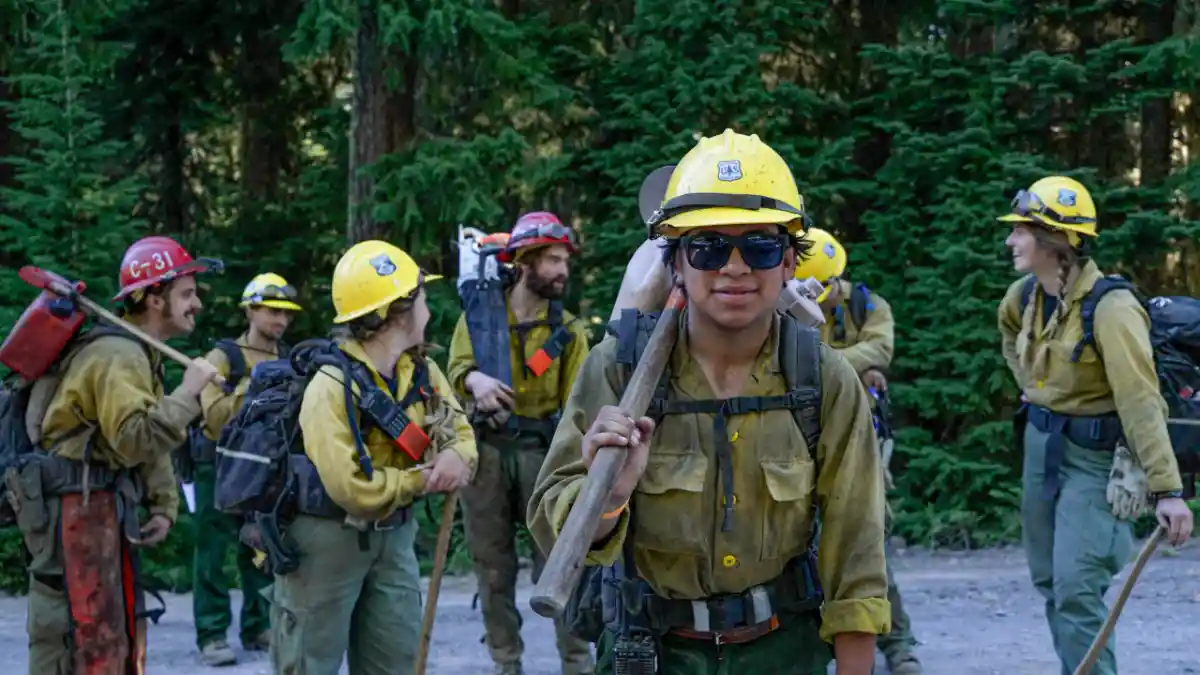
USDA Forest Service 2025: Grants, Contracts, Permits & High-Value Funding Opportunities
If you’ve heard of the USDA Forest Service only in the context of hiking trails or wildfire crews, you’re missing a much bigger picture. In 2025, the agency sits at the center of federal funding, grants, public-private partnerships, and contracting that touch everything from timber and biomass to recreation fees, carbon markets, and rural small-business growth.
This article breaks down what the Forest Service does, where the money flows, which permits you’ll need, and how entrepreneurs, nonprofits, and local governments can tap opportunities—without getting lost in jargon. It’s designed to be Google Discover-friendly with a clear structure, scannable sections, and practical takeaways.
What the USDA Forest Service Actually Does (in Plain English)
Think of the USDA Forest Service as the nation’s land and watershed manager for national forests and grasslands, with a mission to sustain the health, diversity, and productivity of these public lands. Day to day, that includes:
- Managing 193+ million acres of public lands (forests, grasslands, watersheds).
- Preventing and fighting wildfires and funding wildfire resilience projects.
- Overseeing timber sales, stewardship contracts, and prescribed fire work.
- Supporting outdoor recreation (campgrounds, trails, permits, concessionaires).
- Funding research on forest health, climate resilience, and invasive species.
- Running grants and cooperative agreements that channel dollars to states, tribes, local governments, nonprofits, and small businesses for forest and community benefits.
Why this matters for your wallet: the Forest Service’s programs drive billions in economic activity—contracts, grants, and fee-based permits that create direct opportunities for service providers, gear companies, local governments, and rural entrepreneurs.
Follow the Money: Where Funding & High-CPM Topics Intersect
To write a finance-friendly (high-CPM) strategy around USDA Forest Service, focus on areas that tie directly to budgets, risk, and capital:
- Wildfire Funding & Mitigation
- Fuels reduction, defensible space, forest thinning, prescribed burns.
- Private companies can bid on hazardous fuels work, equipment rentals, and mitigation contracts.
- Grants to communities for Wildland-Urban Interface (WUI) resilience.
- Infrastructure & Trails
- Roads, bridges, trail systems, water systems, and campground rehabilitation.
- Prime ground for construction firms, engineering consultancies, trail builders, and ADA upgrades vendors.
- Timber Sales & Biomass
- Opportunities for timber operators, biomass and wood-products businesses under stewardship agreements.
- Financial angles: stumpage pricing, long-term supply reliability, mill investments, bioenergy markets.
- Recreation Concessions & Fee Programs
- Concessionaire permits for campgrounds, marinas, ski areas, outfitter-guides (rafting, hunting, climbing, fishing).
- Predictable seasonal cashflow and diversified local tourism revenue.
- Cooperative Agreements & Cost-Share
- Forest Service cost-shares with states, tribes, universities, nonprofits for forest health, urban forestry, and community wildfire preparedness.
- Carbon & Climate Resilience
- Forest health and reforestation intersect with carbon sequestration, voluntary carbon markets, nature-based solutions, and ecosystem services.
- While federal lands carbon programs are complex, private partners in restoration and monitoring tech can win R&D and pilot work.
Finance keywords woven throughout: funding, grants, cooperative agreements, budget, capital, ROI, risk management, underwriting, insurance, catastrophe risk, resilience investments, federal contracting, set-asides, vendor registration, procurement, compliance, RFP/RFQ, ESG, carbon credits, infrastructure, public-private partnerships.
Permits & Programs You’ll Hear About (and What They Mean)
- Special Use Permits (SUPs): For activities like outfitter-guide services, events, communications sites, recreation concessions, or ski areas.
- Timber Sale Contracts: Competitive sales of timber with stewardship requirements (restoration, road-work, fuels reduction).
- Cooperative Agreements & Grants: Non-procurement funding to accomplish shared mission work (often cost-share).
- Research Joint Ventures: Partnered R&D in silviculture, ecosystems, wildfire science, and remote-sensing.
How to Get Ready for USDA Forest Service Opportunities
1) Decide: Grant vs. Contract vs. Permit
- Grants/Co-ops: Best for nonprofits, universities, tribes, local governments delivering public benefits (education, restoration, community safety).
- Contracts: Best for for-profit providers delivering services—fuels reduction, trail work, equipment rentals, construction, IT & data, logistics.
- Permits: Best for concessionaires and outfitters-guides operating recreation businesses on federal land.
2) Register & Comply (Finance-critical)
- SAM.gov registration (to be eligible for federal awards).
- UEI (Unique Entity ID) instead of DUNS.
- NAICS codes mapped to your services.
- SBA size standards for small-business set-asides.
- Insurance & bonding (especially construction and fuels work).
- OSHA & safety programs; wildfire qualifications if applicable.
3) Build a Bid-Ready Toolkit
- Past performance summaries (with dollar amounts and outcomes).
- Technical capability statements (crew size, equipment list, ICS experience).
- Safety plan, QA/QC plan, schedule, cost breakdown, and risk management approach.
- Financial documents: cash-flow planning, line of credit, bonding capacity, proof of workers’ comp and liability coverage.
4) Track the Right Notices
- RFP/RFQ postings for contracts, prospectuses for recreation concessions, NOFOs for grants.
- Build alerts for keywords: “hazardous fuels,” “stewardship,” “trail maintenance,” “campground concession,” “urban forestry,” “WUI,” “Good Neighbor,” “biomass,” “reforestation.”
Where Small Businesses Can Win (Without a Huge Team)
- Hazardous fuels thinning and chipping
- Trail and bridge maintenance
- Road corridor clearing and culvert jobs
- Campground operations, cleaning, concessions
- Archaeological surveys and NEPA support (with qualified staff)
- GIS mapping, drone imagery, remote-sensing analytics
- Nursery stock, seed collection, reforestation planting
- Watershed restoration and erosion control
- Public outreach, interpretive programs, volunteer coordination
Pro tip: Pair a practical field service (e.g., fuels reduction) with a data service (e.g., GIS reporting). Bundling compliance-ready documentation raises your evaluation scores and supports higher margins.
Recreation Economy: Concessions, Guides, and Seasonal Cashflow
If you dream about turning your outdoor skills into a business, the Forest Service’s recreation portfolio can be your gateway:
- Concessionaire operations: run campgrounds, day-use sites, marinas, winter facilities.
- Outfitter-Guide permits: rafting, fishing, climbing, hunting, horseback, mountain biking, photography workshops.
- Events & filming: special use permits for races, festivals, and commercial filming (with stipulations).
Finance angle: Seasonal revenue forecasting, pricing against recreation fee schedules, capital improvements amortized over a permit term, and insurance requirements are all part of your business plan. Well-run concessions can produce steady cashflow with manageable overhead once established.
Timber, Biomass & Stewardship: Aligning Conservation with Cashflow
Timber sales are still a core tool for forest health and rural economies. Modern stewardship contracting ties harvest to restoration outcomes—opening doors for:
- Integrated service-plus-material opportunities (you perform restoration and receive timber value).
- Biomass utilization for heat, power, pellets, biochar—turning low-value fuels into revenue.
- Mill investments near supply: the stability of multi-year stewardship can justify new equipment or facilities.
Risk management: Understand volume risk, haul distances, road maintenance obligations, and market price volatility. Work with lenders who understand forestry cycles and equipment financing.
Wildfire Mitigation & Insurance: A Growing Financial Frontier
Insurers are recalculating wildfire risk in the WUI. That spotlight creates funding for:
- Defensible space programs (brush clearing around communities).
- Home hardening projects (vents, roofs, windows, ember guards).
- Community chipping days, green-waste logistics, and fuel breaks.
- Risk analytics and remote-sensing that identify priority projects.
Why it matters for high-CPM readers: This is where catastrophe risk, underwriting, reinsurance, municipal bonds, and federal grants collide. Businesses that translate mitigation work into quantified risk reduction data become valuable partners for both public grants and private insurers.
Urban & Community Forestry: Grants with Visible Impact
Not just wilderness—urban forestry grants support tree planting, heat-island mitigation, and stormwater benefits in towns and cities. These projects create:
- Contracts for nurseries, arborists, landscapers, watering logistics, and monitoring vendors.
- Workforce development for youth crews and entry-level green jobs.
- Partnerships with schools, health departments, and local nonprofits.
Finance angle: Urban canopy projects can unlock co-funding from health grants, ESG budgets, and philanthropy, producing diversified revenue beyond a single federal source.
Compliance & Environmental Review (Don’t Skip This)
Many Forest Service activities require environmental review under NEPA and coordination on cultural resources, endangered species, and water quality.
Practical tips:
- Budget time for surveys and consultations.
- Keep a document trail (photos, GPS tracks, crew logs) for reporting.
- Train staff on BMPs (Best Management Practices) to avoid costly rework or penalties.
- For grants, match your deliverables to measurable outcomes (acres treated, miles of trail improved, tons of biomass removed, trees planted/surviving).
Step-by-Step: Your First 90 Days to “Bid-Ready”
Week 1–2: Foundations
- Form your entity (LLC/Corp), line up insurance, register in SAM.gov, secure your UEI.
- Define your NAICS scope and create a one-page capability statement.
- Collect past performance proof (even from private jobs) with before/after photos.
Week 3–4: Market Scan
- Identify 2–3 service lanes (e.g., “trail bridges,” “fuels reduction + chipping,” “campground ops”).
- Set bid alerts (RFP/RFQ/NOFO/prospectus).
- Meet your local Forest or District contacts at public meetings or vendor days.
Week 5–8: Pre-Qualification
- Line up equipment rentals and subcontractors; document availability and rates.
- Draft safety, QA/QC, and wildfire plans; assemble crew quals and certifications.
- Create a unit-cost sheet (per acre, per mile, per cubic yard) for faster quoting.
Week 9–12: Targeted Bidding
- Pick 1–2 small awards you can definitely deliver.
- Submit tight, compliance-clean proposals.
- Prep a cash-flow plan: deposit, progress payments, retainage, and contingency.
Related words: cash-flow, bonding, retainage, unit pricing, procurement, vendor profile, performance evaluation.
Common Mistakes to Avoid (and How to Fix Them)
- Chasing everything → Instead, specialize and build a track record in 1–2 service lanes.
- Weak documentation → Photograph, log, and report consistently to maximize performance ratings.
- Underpricing risk → Budget for mobilization, fuel, weather delays, and compliance audits.
- Ignoring safety culture → Strong safety programs lower incident rates and insurance premiums—and score better in evaluations.
- No local relationships → Attend pre-bid meetings, ask smart questions, and follow up professionally.
Frequently Asked Questions (FAQs)
1) Do I need to be a big company to work with the Forest Service?
No. Many awards are small-business set-asides. Start with niche services (e.g., trail brushing, culvert cleaning, sign installation) and grow.
2) What’s the difference between a grant and a contract here?
A grant/cooperative agreement funds shared public benefits (education, restoration, community safety). A contract buys goods/services for agency needs with stricter procurement rules and performance measures.
3) How do recreation concessions make money?
Operators collect user fees (per night/day). Profitability depends on occupancy, seasonal staffing, maintenance, and optional services (firewood, rentals, tours).
4) Are there opportunities for tech startups?
Yes—GIS, drones, remote sensing, AI-powered monitoring, wildfire risk modeling, and work order apps. Pair tech with field execution or partner with a field contractor.
5) What insurance do I need?
Expect general liability, workers’ comp, and sometimes auto, maritime, or umbrella depending on the project. Recreation and fuels work may need higher limits.
6) How do timber and biomass projects pencil out?
Run scenarios on haul distance, diesel, machine hours, residual value, and market prices. Consider multi-year stewardship for supply stability and talk early with lenders about equipment financing.
7) Any quick wins for communities?
Yes—apply for community wildfire preparedness, urban forestry tree planting, and trail rehabilitation grants that have visible, near-term impact and strong volunteer backing.
Conclusion: Where Conservation Meets Cashflow
The USDA Forest Service is more than a land manager—it’s a funding engine for resilience, recreation, and rural prosperity. In 2025, opportunities span contracts, grants, and permits that reward credible execution, clean compliance, and authentic partnerships. Start small, document everything, and build a bid-ready operation that blends financial discipline with on-the-ground expertise.