Key Highlights
- CNN data analyst Harry Enten predicts that Democrats have flipped the GOP’s Trump-led redistricting battle in their favor.
- Democrats could potentially gain one or more new districts on Thursday, according to Enten.
- The result of all redistricting efforts has completely evaporated the initial Republican post-Texas 5-seat gain.
- Democrats have countered with their own redistricting efforts, which could give them an advantage in upcoming midterms.
Redistricting Battle Heats Up: Democrats Gain Ground Over GOP
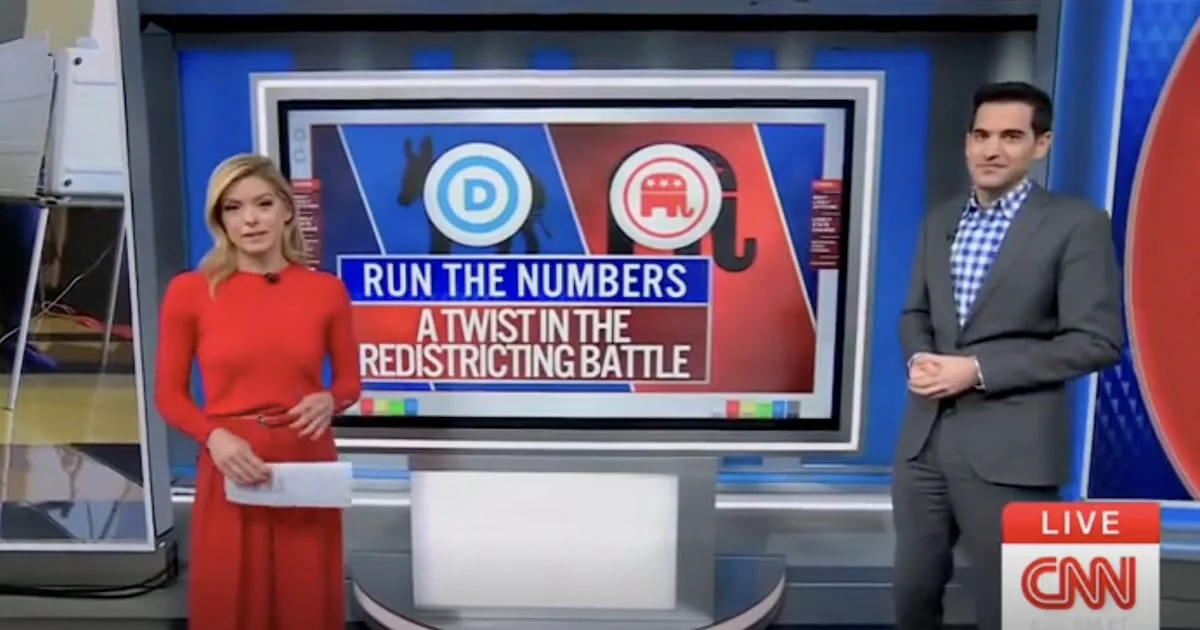
CNN data analyst Harry Enten’s latest revelation has sent shockwaves through the political landscape. Speaking on CNN News Central, Enten stated that Republicans’ initial advantage in redistricting efforts may have been short-lived as Democrats have managed to flip the script.
Initial Republican Advantage
Enten explained how it started with Texas, where the Trump administration urged Governor Greg Abbott to support a GOP-friendly redistricting effort. This move was aimed at giving Republicans five more seats in Congress. However, Enten’s analysis indicates that this initial advantage may have been nullified.
Democratic Counterattack
According to Enten, Democrats have stepped up their own redistricting efforts across several states. California passed Prop 50, which added five additional Democratic districts. Similarly, a Utah judge struck down the state’s all-red map, giving Democrats another blue seat. Other states like Ohio, Missouri, and North Carolina adjusted their maps to favor Republicans, while Indiana resisted such pressure.
Shift in Midterm Dynamics
The shift in redistricting dynamics could significantly impact the 2026 midterms. Enten stressed that Democrats’ new advantage isn’t huge but substantial enough to potentially gain one or two seats from the redistricting battle. He elaborated, “I wouldn’t be surprised if it’s tied. I wouldn’t be surprised if Democrats actually gain 2 or 3 seats from the mid-decade redistricting battle.”
Surprise and Impact of Redistricting Efforts
The analyst was clearly taken aback by how close this situation has become, stating, “If you said to me last summer, Democrats are more likely to gain than Republicans, I wouldn’t buy it. But again, as I said at the start, Donald Trump and the Republicans started this mid-decade redistricting war, but it looks like Democrats are going to finish him off.” Enten’s analysis underscores the critical role that redistricting plays in shaping electoral outcomes.
The implications of these shifts could have far-reaching effects on both parties’ strategies for the 2026 midterm elections. As political analysts and observers continue to closely monitor developments, it remains clear that redistricting is a pivotal factor in determining the balance of power in Congress.