Key Highlights
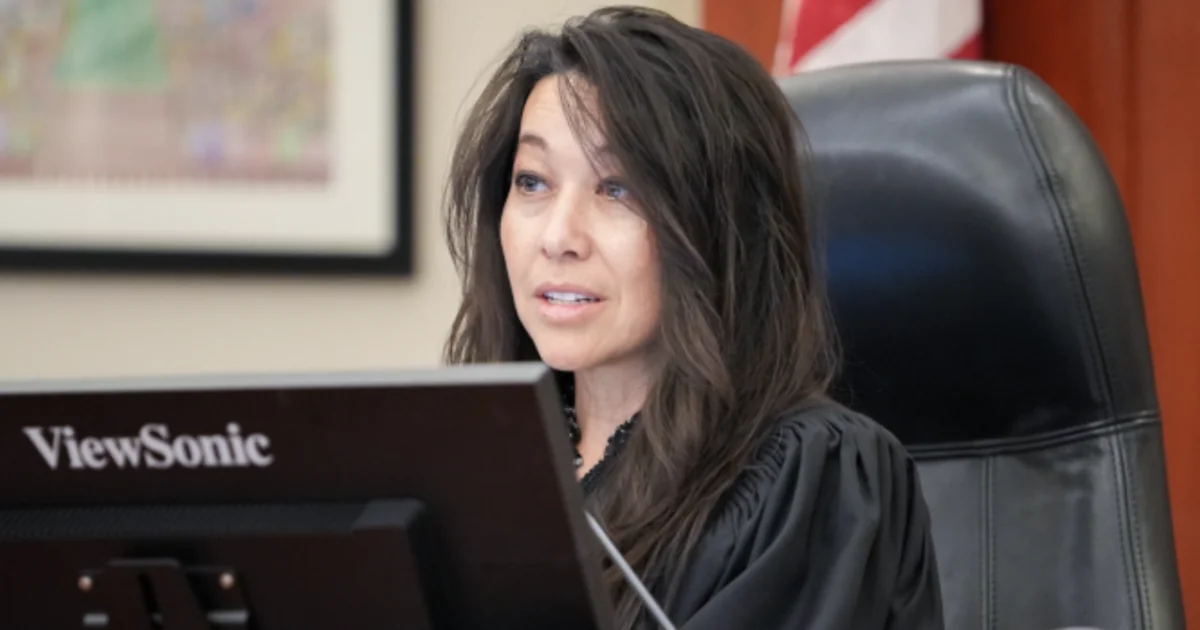
- Judge Dianna Gibson orders fixes in new congressional map despite legislative push for a halt.
- Lt. Governor Deidre Henderson requests clarification on minor adjustments to the map due to issues with boundary lines cutting through homes and apartments.
- Legislature’s lawyers argue that the redistricting powers lie solely with them, not the Lt. Governor.
- Judge Gibson allows some tweaks but maintains a stay on deciding whether to block the case entirely.
Background on Redistricting in Utah
The process of redrawing congressional maps is an annual event in the United States, and this year has seen its fair share of legal battles. In Salt Lake City, Utah, a contentious dispute over the new congressional map has pitted the state’s legislative body against Lt. Governor Deidre Henderson.
Legal Disputes Over Congressional Map
On November 21, 2025, Judge Dianna Gibson issued an order that was to be a temporary solution until she could provide a more definitive ruling on the matter. The legislature’s lawyers had demanded a stay over the new congressional map due to issues raised by Lt. Governor Henderson.
However, in her Friday ruling, Judge Gibson did not outright decide on the legislative request but promised one soon.
Meanwhile, Judge Gibson authorized Lt. Governor Henderson to make some minor adjustments to address problems with the newly enacted map. These issues included instances where homes were cut in half by boundary lines and an entire apartment complex in Huntsville was similarly divided.
A small part of a community found itself in a different congressional district.
“The Lt. Governor requests clarification regarding whether the several homes identified in the image… should continue to be bisected, or whether the Court wishes to adjust this boundary and, if so, how,” her attorneys wrote, attaching maps illustrating these issues.
Legislative vs. Judicial Authority
The League of Women Voters of Utah and Mormon Women for Ethical Government argued in favor of some minor tweaks to the map, but the legislature’s lawyers were quick to counter that it came back to the fundamental constitutional issue: the state legislature has the sole power to draw boundaries.
“As for the eight boundary issues identified in the Lieutenant Governor’s motion, Plaintiffs’ counsel can instruct the Lieutenant Governor how to resolve those issues. But in doing so, the constitutional problem—the denial of the Legislature’s constitutional authority to redistrict—only becomes more obvious,” wrote Tyler Green, an attorney for the legislature.
Green urged Judge Gibson to revert back to the old congressional map while the legislature pursued appeals. However, Judge Gibson noted that plaintiffs had suggested approaches and Lt.
Governor Henderson could consider these when making determinations for implementation. She added: “The boundary issues further reveal that there was no good reason for taking a Plaintiffs’ proposed map over the Legislature’s duly enacted redistricting legislation.”
Despite this, Judge Gibson held off on deciding whether to block the case entirely and stated her intention to provide legal reasoning in support of her order. She promised an analysis of the legislative defendants’ response to Lt. Governor Henderson’s notice that she would issue separately.
Facts and Implications
The lawsuit against the Utah State Legislature arose after it overrode Proposition 4, a citizen ballot initiative for independent redistricting. The League of Women Voters and Mormon Women for Ethical Government alleged that the result was a congressional map favoring Republicans, which Judge Gibson upheld in her ruling.
“We are pleased with the judge’s decision to uphold Proposition 4 and throw out the old congressional map,” said a representative from the League of Women Voters. “This is an important step toward ensuring fair representation for all Utah voters.”
The Republican supermajority legislature maintained its stance that it has the sole constitutional power to carry out redistricting, and Judge Gibson rejected their new map as not following Prop. 4, which was now law.
Instead, she chose a map proposed by the plaintiffs in the litigation that created a more competitive district centered in Salt Lake County. This decision reflects ongoing debates over gerrymandering and the role of independent redistricting in ensuring fair representation across political lines.
The upcoming legal battles will likely set important precedents for similar cases nationwide, as issues around redistricting continue to be hotly contested in various states. The outcome could significantly impact future elections and legislative outcomes in Utah.