Key Highlights
- Astronomer Gianluca Masi will host a livestream to observe the close approach of two comets to Earth.
- The comets C/2025 A6 Lemmon and C/2025 R2 SWAN are expected to peak in brightness on October 20-21.
- Both comets will pass within 24 million miles (39 million km) of Earth, making them well-placed for observations.
- The Virtual Telescope Project will livestream the event from 1:30 p.m. EDT on October 20.
Approaching Comets: A Rare Celestial Event
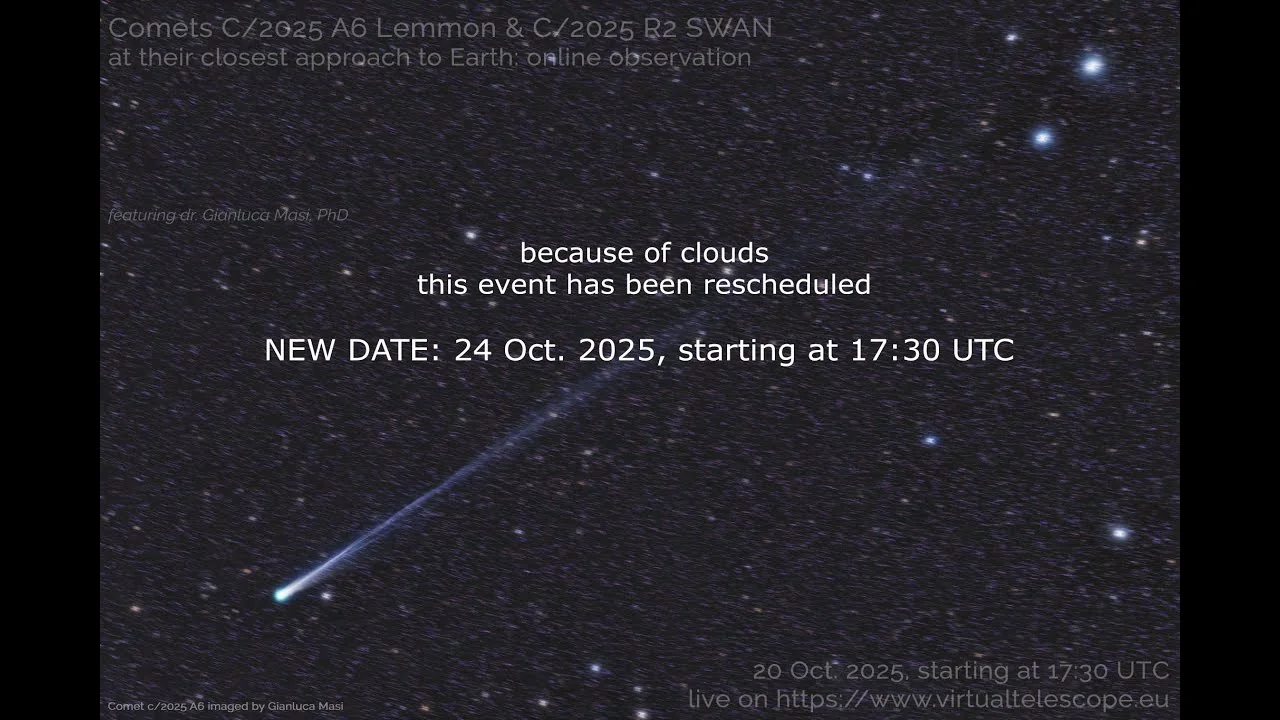
Astronomy enthusiasts and amateur stargazers are in for a treat this week as two comets, C/2025 A6 Lemmon and C/2025 R2 SWAN, make their closest approach to Earth. This rare cosmic event will be observed live by Gianluca Masi and his Virtual Telescope Project on October 20 at 1:30 p.m. EDT (1730 GMT).
The comets are expected to peak in brightness between October 20 and 21, making them visible with binoculars or small telescopes from the Northern Hemisphere. Comet Lemmon will pass about 56 million miles (90 million kilometers) from Earth, while Comet SWAN will come closer at approximately 24 million miles (39 million km).
Expert Insights: Gianluca Masi
In an interview with Space.com, Gianluca Masi expressed his excitement about the event. “So far, living in the Northern hemisphere, I could admire C/2025 A6 Lemmon only, but C/2025 R2 SWAN is quickly joining the show and we are ready to amaze every astronomy lover with our live feed!” Masi stated.
For those who wish to observe the comets themselves, Masi recommends using binoculars or small telescopes. He notes that Comet Lemmon is visible in the western evening sky after sunset and will slowly climb higher each night as it moves northward. Meanwhile, Comet SWAN can be seen in the predawn sky, appearing low on the eastern horizon.
Observing the Comets: A Guide for Stargazers
The Virtual Telescope Project’s livestream offers a unique opportunity to observe these celestial objects without needing specialized equipment. The event is accessible online and will provide real-time views of both comets as they approach Earth.
If you’re planning to watch the livestream, make sure your internet connection is stable and you have a good view of the sky. Masi advises viewers to position themselves in an open area with minimal light pollution for the best viewing experience.
Additionally, he recommends using a star chart or astronomy app to locate the comets in the night sky.
For those who prefer to observe the comets on their own, Masi suggests checking out our guides to the best binoculars and telescopes for beginners. These resources can help you choose the right equipment to enhance your stargazing experience and increase your chances of spotting these rare celestial visitors.
Future Implications: A Glimpse into Celestial Phenomena
The close approach of Comets Lemmon and SWAN provides a unique opportunity for both amateur and professional astronomers. This event highlights the dynamic nature of our solar system and underscores the importance of continued observation and study.
As we continue to explore the cosmos, events like this remind us that the universe is full of surprises waiting to be discovered. By participating in such celestial observations, not only do we enhance our understanding of space but also inspire a sense of wonder and curiosity among the general public.
To stay up-to-date with the latest astronomical events and participate in similar live streams, follow reputable astronomy websites and social media channels dedicated to space exploration. The cosmos continues to offer endless fascination and opportunity for discovery, making each night under the stars an adventure waiting to unfold.