Key Highlights
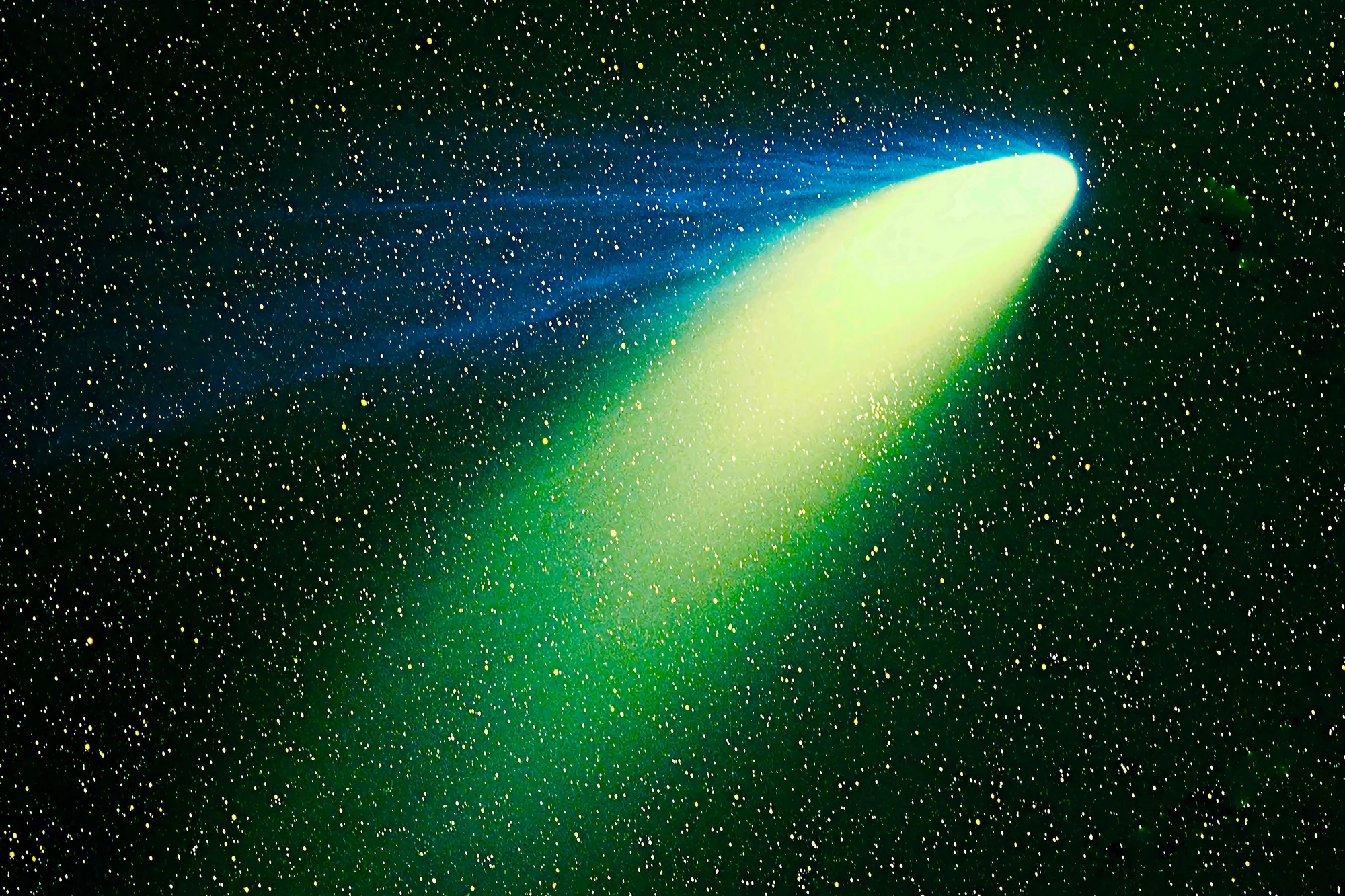
- Two green comets, Comet Lemmon and Comet SWAN, are currently visible in the night sky.
- The comets are expected to be most visible after sunset, with Comet Lemmon closer to the horizon and Comet SWAN to the southwest.
- Astronomers note that spotting two comets simultaneously is rare but not unprecedented.
- Comets emit a green hue due to gases streaming off their surfaces as they approach the sun.
The Celestial Dance of Comets Lemmon and SWAN
Two distinct comets, Comet Lemmon (C/2025 A6) and Comet SWAN (C/2025 R2), are currently gracing the night sky, offering a rare spectacle for stargazers in the Northern Hemisphere. These celestial wanderers, which originate from the outer reaches of our solar system, including possibly the Oort Cloud beyond Pluto, are expected to provide an awe-inspiring display as they approach Earth.
Approaching Close Encounters
Comet Lemmon, discovered in January by a telescope surveying near-Earth asteroids, will have its closest approach with Earth on or around October 16, 2025. In contrast, Comet SWAN, identified in September by an amateur astronomer using photos from NASA and ESA spacecraft, is expected to make its flyby closer to October 15, 2025.
Spotting the Comets
To catch a glimpse of these cometary guests, observers should venture outside just after sunset. Comet Lemmon will be visible close to the horizon in the northern sky, while Comet SWAN is positioned slightly southwest. Both comets may remain visible through binoculars until the end of October, but their brightness levels are yet to be determined.
According to astronomer Valerie Rapson from the State University of New York at Oneonta, these cometary visits are rare but not unheard of: “Spotting two comets simultaneously without special equipment is rare, but not unprecedented.” She adds that the green coloration of both comets is due to gases like cyanogen and diatomic carbon streaming off their surfaces as they heat up near the sun.
Comet Characteristics
Comets are cosmic snowballs left over from the formation of our solar system billions of years ago. As these frozen remnants approach the sun, they release characteristic tails that make them easily recognizable in the night sky. The green hue of both comets is a result of the gases they emit.
The recent history of cometary sightings includes notable events such as Comet Tsuchinshan-Atlas in 2024 and more distant visits by comets like Neowise in 2020, Hale-Bopp, and Hyakutake in the 1990s. These celestial visitors remind us of the vast and dynamic nature of our universe.