Key Highlights
- NASA’s Europa Clipper spacecraft may soon be pummeled by charged particles from the interstellar comet 3I/ATLAS.
- The event, if observed, could provide valuable insights into the composition of an interstellar comet for the first time.
- Scientists predict that the alignment between the spacecraft and the comet’s ion tail will occur between October 30 and November 6.
- The success of this measurement depends on several factors including ongoing government shutdowns and the strength of solar wind particles.
Comet 3I/ATLAS: The Interstellar Intruder
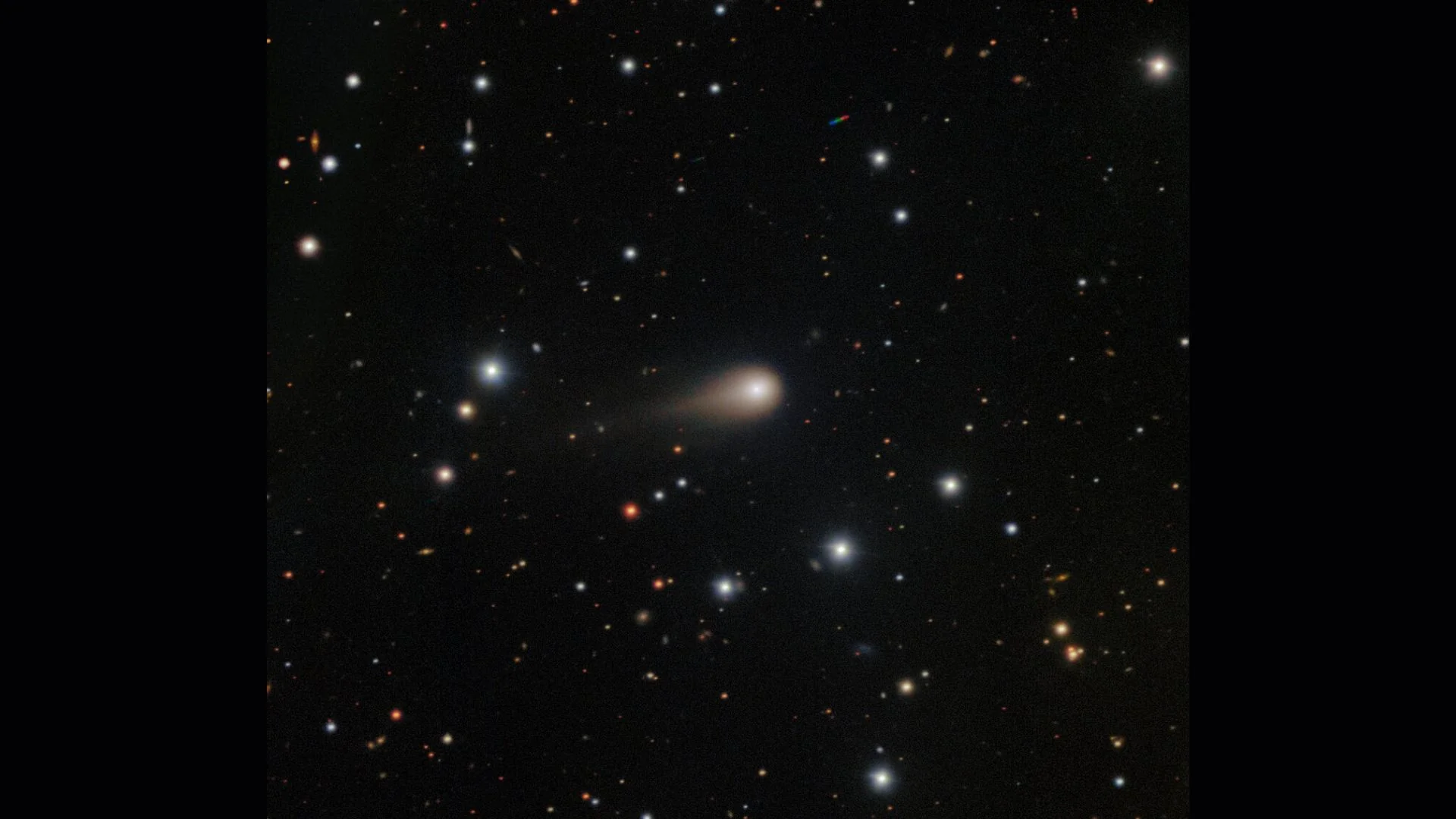
Astronomers are eagerly awaiting a unique opportunity to sample material from an interstellar comet, Comet 3I/ATLAS. Recent predictions suggest that NASA’s Europa Clipper spacecraft could intercept charged particles streaming from the comet’s ion tail as it zooms past the sun.
Predicting Particle Showers
Samuel Grant and Geraint Jones of the European Space Agency have developed a program called Tailcatcher, which can predict when cometary ions will align with spacecraft. According to their calculations, Europa Clipper could encounter some of these ions between October 30 and November 6. The alignment is critical for scientists to differentiate between solar wind particles and those stolen from the comet.
The success hinges on several factors: the direction and strength of the solar wind, as well as whether NASA’s government shutdown will prevent the activation of Europa Clipper’s instruments.
Comet Anatomy and Scientific Opportunity
Comets like 3I/ATLAS possess two tails – one made of dust and another from ions. The ion tail is particularly interesting because it points away from the sun, driven by solar wind. As Comet 3I/ATLAS nears its closest approach to the sun on October 29 at a distance inside Mars’ orbit, activity will increase, broadening the ion tail.
“Sampling the tail in this way is the closest we can currently get to a direct sample of such an object, and thus a different part of the galaxy,” said Grant. “We have virtually no data on the interior of interstellar comets and the star systems that formed them.” This rare event could provide unprecedented insights into the composition of 3I/ATLAS.
Future Missions and Interstellar Comets
The European Space Agency’s Comet Interceptor mission, set to launch in 2029, aims to fly close enough to an interstellar or long-period comet to directly sample its coma and head. The success of the current opportunity with Europa Clipper could bolster future missions’ strategies.
“It would be an amazing opportunity if another spacecraft was able to cross upstream of the tail at a similar time,” said Grant, emphasizing the potential for further exploration into these cosmic travelers. Tailcatcher has already been used successfully in predicting ion tail crossings, making it a valuable tool for future missions targeting interstellar comets.
Stay tuned as scientists and space enthusiasts await this potentially groundbreaking event, which could rewrite our understanding of interstellar comets and their origins.