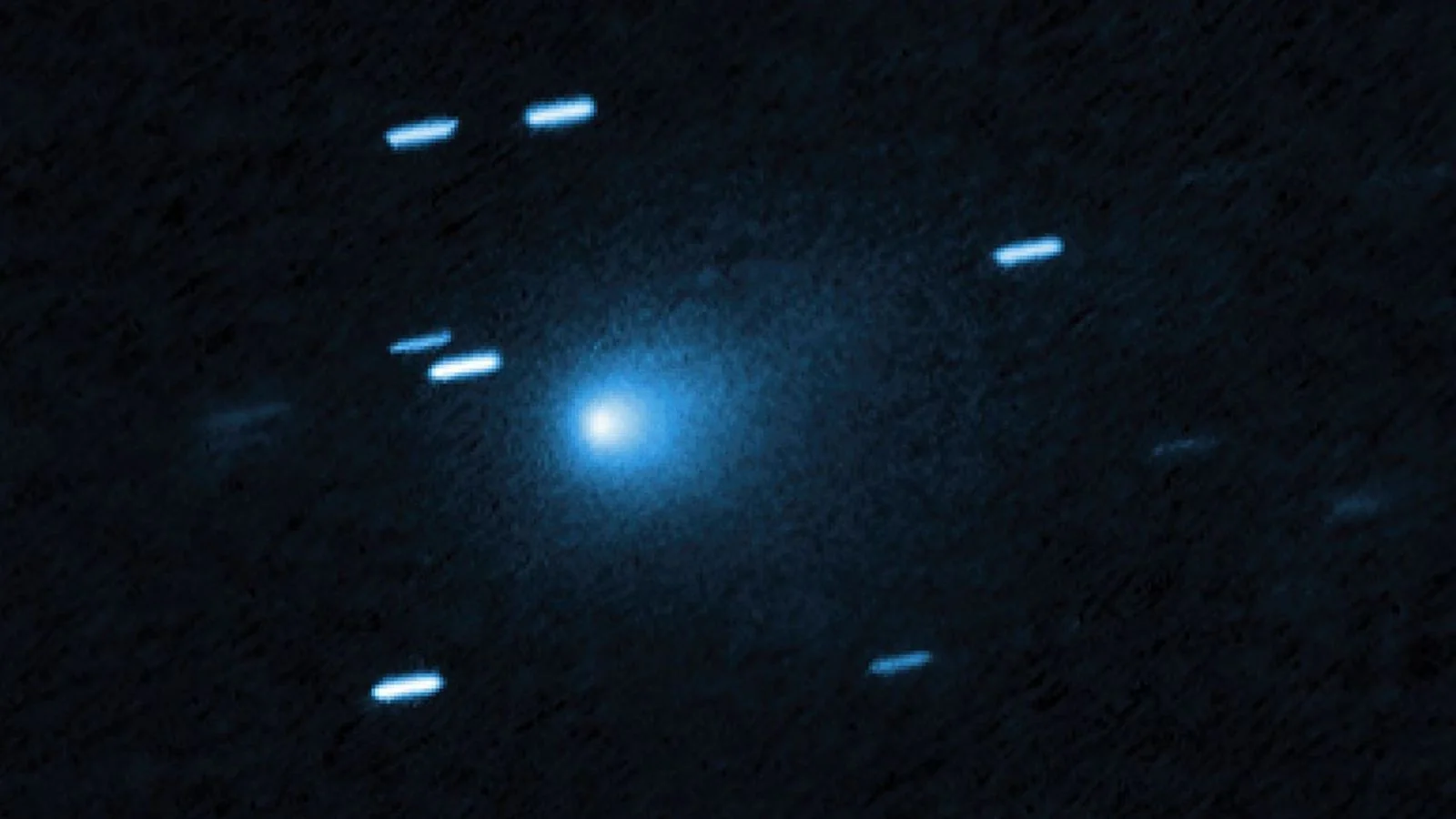
Key Highlights
- A team of astronomers detected surprising levels of nickel vapor in the gas surrounding Comet 3I/ATLAS, an interstellar visitor.
- This discovery provides new insights into the chemistry of materials from beyond our solar system and their journey through space.
- The observations were made using the Very Large Telescope (VLT) and Hubble Space Telescope, tracking the comet’s approach to the sun.
- Comet 3I/ATLAS, detected on July 1, 2025, is only the third confirmed interstellar object ever discovered, offering a unique opportunity for scientific study.
The Discovery of Comet 3I/ATLAS
On July 1, 2025, a routine sky survey by the Asteroid Terrestrial-impact Last Alert System (ATLAS) detected an object that would soon be confirmed as the third interstellar object ever discovered: Comet 3I/ATLAS. Unlike its predecessors ‘Oumuamua and comet Borisov, this comet was caught early in its journey through our solar system, providing astronomers with a rare chance to observe an interstellar visitor as it approaches the sun.
Unprecedented Observations at the VLT
A team of international scientists, including researchers from Chile, Belgium, the U.K., Canada, New Zealand, the United States, and Italy, used the Very Large Telescope (VLT) in Chile to track Comet 3I/ATLAS. The VLT’s X-shooter and UVES spectrographs recorded a fascinating sequence of chemical activation as the comet approached the sun.
On July 20, 2025, at a distance of 3.88 astronomical units (AU) from the sun—nearly four times Earth’s distance—the team made their first significant detection: atomic nickel vapor in the comet’s tenuous atmosphere. This finding was unexpected as temperatures remain extremely cold at such distances.
Chemical Clues and Future Implications
The presence of nickel without concurrent detection of iron above instrumental limits suggests that the nickel might be released through processes working at much lower temperatures than direct sublimation, typically requiring higher temperatures. These findings raise questions about how metals are bound within molecules in interstellar space.
Further observations using the James Webb Space Telescope (JWST) revealed a complex mix of frozen materials, including carbon dioxide and water ice particles, suggesting that nickel may be bound in molecules breaking apart under solar radiation. Such processes could release both metals and gases in chemical reactions, challenging existing models of comet chemistry.
Continued Monitoring and Scientific Significance
The team will continue to monitor Comet 3I/ATLAS as it approaches perihelion on October 29, 2025. These observations provide valuable insights into the chemical signatures of material from another star system, helping us understand whether building blocks of planetary systems are similar or vary significantly between different stellar environments.
By comparing Comet 3I/ATLAS with solar system comets and previous interstellar visitors like 2I/Borisov, scientists hope to build a more complete picture of the materials that form planets around different stars. The unique chemical processes observed in this comet continue to challenge our understanding of cosmic chemistry.