Key Highlights
- Nigeria denies claims of a Christian genocide by President Trump.
- US President Donald Trump considers military options in Nigeria over alleged persecution of Christians.
- Nigerian officials assert that killings are not restricted to Christians and that the government does not sanction such actions.
- The conflict in Nigeria is largely confined to the northeast, a predominantly Muslim region.
Background on the Conflict in Nigeria
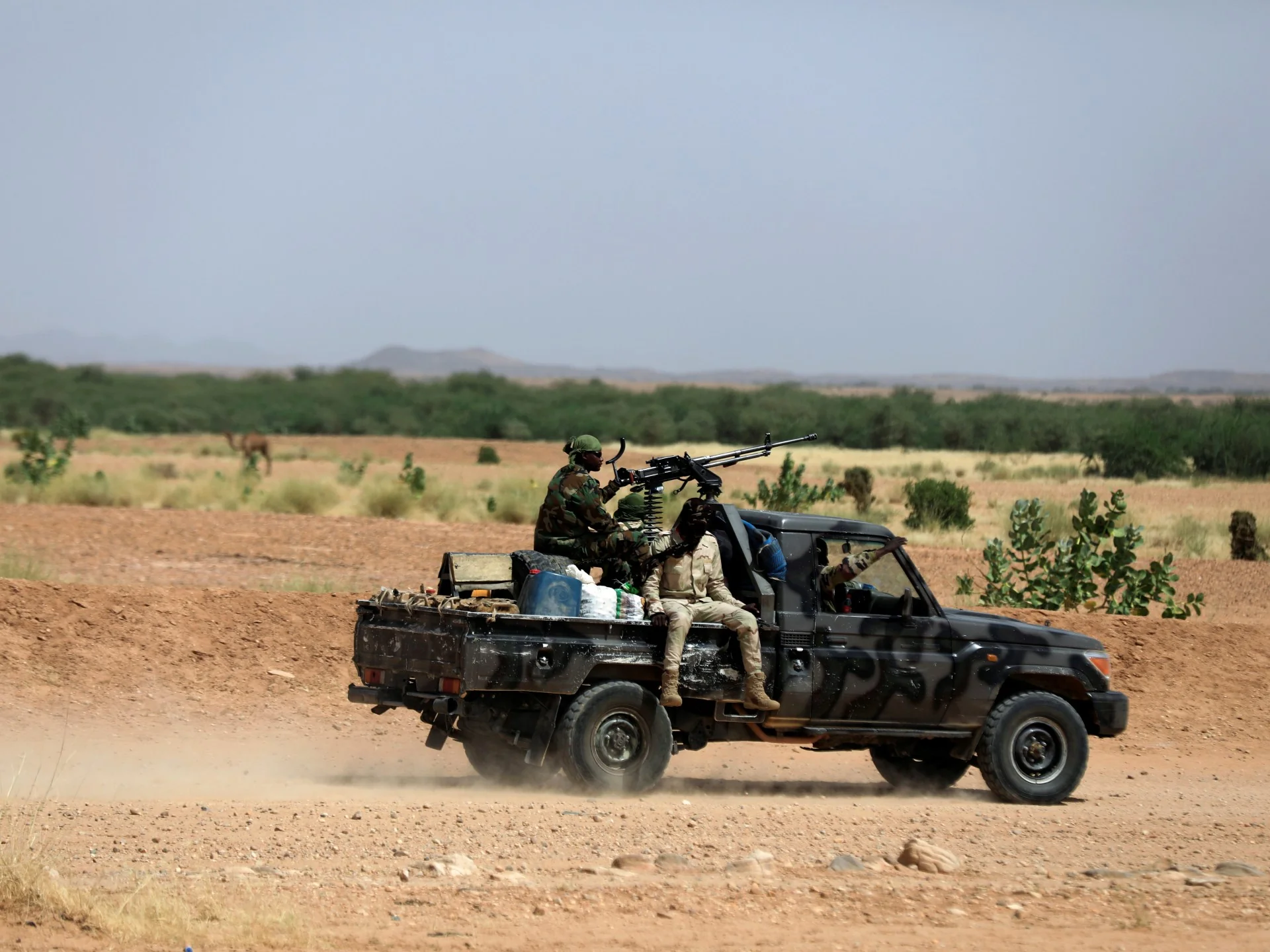
Nigeria, with a population exceeding 200 million people, faces a complex security challenge primarily centered in its northeastern region. This area has been a battleground for prolonged conflict involving Boko Haram and al-Qaeda-linked groups. The majority of the Nigerian population in this region is Muslim, but the country is divided along religious lines, with the mostly Christian south.
The violence has resulted in significant loss of life, affecting both Muslims and Christians.
According to data from ACLED, a US crisis-monitoring group, out of 1,923 attacks on civilians so far this year, only 50 targeted Christians specifically because of their religion. This suggests that the narrative of a “Christian genocide” is overly simplistic and potentially misleading.
Trump’s Threats and Nigeria’s Response
US President Donald Trump has intensified his rhetoric against Nigeria, claiming that Christian communities are under threat from mass killings. In response to these claims, officials in Nigeria have denied any widespread persecution of Christians. Kimiebi Imomotimi Ebienfa, a spokesman for Nigeria’s Ministry of Foreign Affairs, stated unequivocally: “We are not proud of the security situation we are passing through, but to go with the narrative that only Christians are targeted, no, it is not true.
There is no Christian genocide in Nigeria.”
Trump’s administration has listed Nigeria as a “Country of Particular Concern” for religious freedom violations, placing it alongside nations like China and Russia. Despite these concerns, Nigerian President Bola Tinubu has maintained that his government is committed to protecting the rights of all citizens regardless of their faith.
Expert Analysis and Future Implications
Experts and human rights advocates have pushed back against the notion of a “Christian genocide,” emphasizing the indiscriminate nature of violence in Nigeria. Bulama Bukarti, a Nigerian humanitarian lawyer, argues that President Trump is amplifying a dangerous far-right narrative: “This is a divisive narrative only going to further increase instability in Nigeria.” He asserts that armed groups target civilians based on their location rather than religious affiliation.
While acknowledging the severity of the situation, analysts like Ebenezer Obadare advocate for collaborative efforts between the US and Nigerian governments. Obadare states: “This is precisely the moment when Nigeria needs assistance, especially military assistance.
The wrong thing to do is to invade Nigeria and override the authorities or the authority of the Nigerian government.”
The ongoing tensions highlight the complex interplay of religious, political, and security challenges in one of Africa’s most populous nations. As both countries navigate this sensitive issue, the international community watches closely for any potential escalation.