Key Highlights
- A planned summit between U.S. President Donald Trump and Russian President Vladimir Putin was put on hold after Russia rejected an immediate ceasefire in Ukraine.
- The postponement of a preparatory meeting between Secretary of State Marco Rubio and Russian Foreign Minister Sergei Lavrov indicates reluctance from the Americans to proceed with the summit unless Moscow yields its demands.
- European leaders have expressed concern that Trump might meet Putin without achieving any significant concessions, as Russia has maintained its long-standing terms for a peace deal in Ukraine.
- Poland warned that it could force Putin’s plane down and arrest him on an international warrant if he flies over their airspace to reach the summit venue in Budapest.
The Stalled Summit: A Diplomatic Standstill
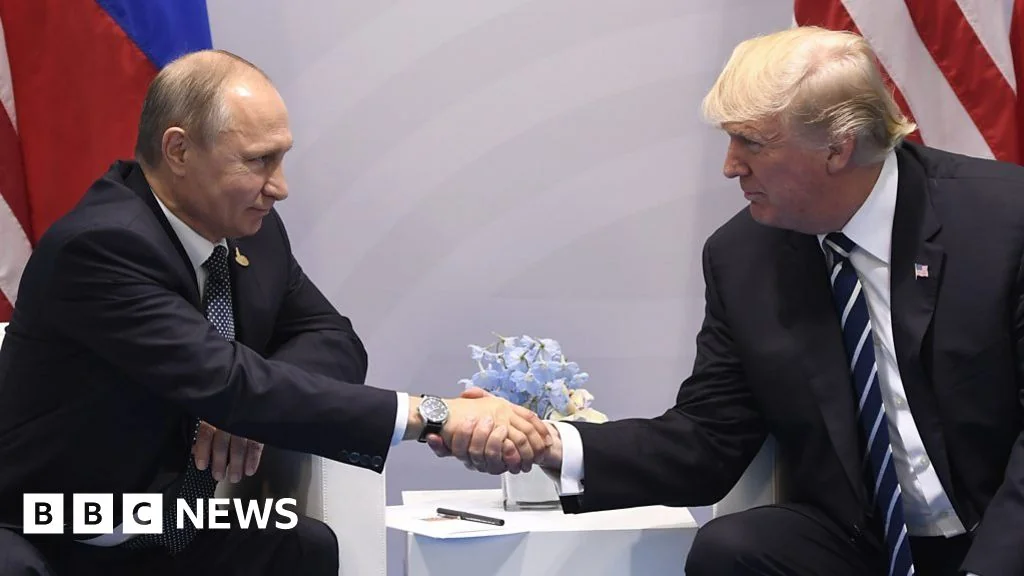
In a diplomatic twist, plans for a high-stakes meeting between U.S. President Donald Trump and Russian President Vladimir Putin were put on hold due to Russia’s rejection of an immediate ceasefire in Ukraine. The decision comes after Secretary of State Marco Rubio and Russian Foreign Minister Sergei Lavrov had a productive phone call but opted against an in-person meeting.
Preparations and Postponement
A senior White House official informed Reuters that there are currently no plans for President Trump to meet with President Putin. The decision was made following a “productive call” between Rubio and Lavrov, which resulted in the postponement of a preparatory meeting scheduled for Budapest on Thursday.
Russia reiterated its long-standing terms for a peace deal in Ukraine through a private communique known as a “non-paper,” according to two U.S. officials and people familiar with the situation. The document reaffirmed Russia’s demand for full control over the Donbas region, effectively rejecting Trump’s call for an immediate ceasefire.
European Diplomatic Pressure
The postponement has alarmed European leaders who have been concerned that a summit without significant concessions could be seen as a failure by Moscow. In response, the leaders of Europe, including Britain, France, Germany, and the EU, issued a statement supporting Trump’s position that the fighting should stop immediately and that the current line of contact should serve as the starting point for negotiations.
Despite these concerns, some European officials suggested that Russia wanted too much from the summit. “I guess the Russians wanted too much,” said one senior European diplomat. “And I assume Lavrov gave the same spiel, and Rubio was like: ‘See you later.’” This sentiment underscores the complexity of diplomatic negotiations between two major powers with differing interests.
Security Concerns and Airspace Issues
The choice of Budapest as a venue for a potential summit is contentious within the EU. Hungary’s Prime Minister Viktor Orban maintains warm relations with Russia, making any trip to Budapest potentially risky. Poland has warned that it could force Putin’s plane down and arrest him on an international warrant if he flies over their airspace.
However, Bulgaria has stated that Putin can use its airspace to reach the meeting point. This situation highlights the delicate balance between diplomatic relations and national security concerns in Europe.
Future Implications for Diplomatic Relations
The postponement of the summit reflects broader tensions in international diplomacy and the challenges of negotiating with a state as powerful and assertive as Russia. The failure to reach an immediate ceasefire agreement underscores the complexity of resolving conflicts that have lasted years, involving multiple parties with conflicting interests.
While the summit is currently on hold, it does not necessarily mean that diplomatic efforts will come to a complete halt. Both Trump and Putin have expressed their commitment to finding a solution, though the path forward remains uncertain. The international community continues to monitor developments closely, hoping for progress in resolving one of the most pressing conflicts in Europe.