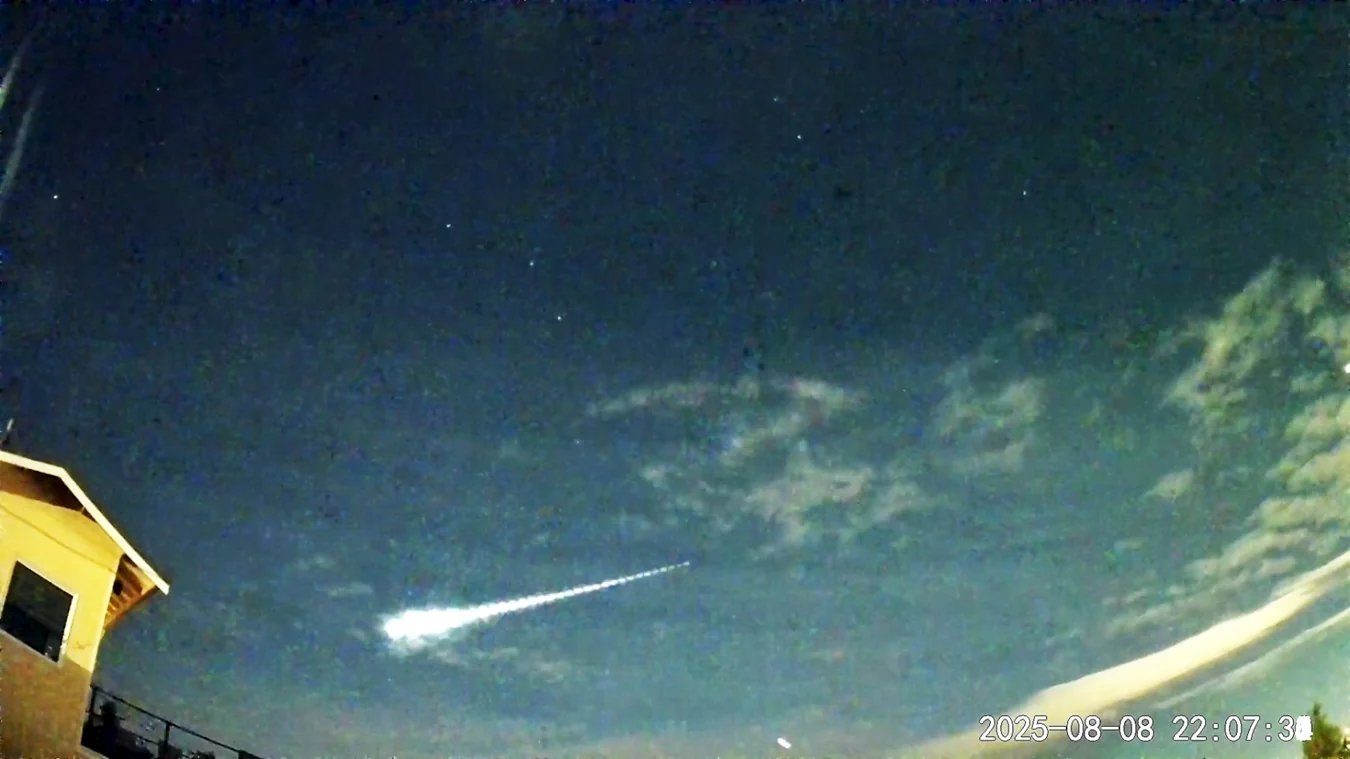
Key Highlights
- Meteor rates continue to be strong in November 2025.
- No major activity is expected this month but the Taurids and Leonids keep the skies active.
- The Moon reaches its full phase on Wednesday, November 5th.
- Viewing opportunities are better from north of the equator than south due to sporadic rates.
Meteor Activity Outlook for November 1-7, 2025: A Guide for Skywatchers
In this week’s outlook, meteor activity remains strong across the northern hemisphere as several minor showers contribute to the spectacle. While there are no major events expected in November 2025, enthusiasts can look forward to observing the Taurids and Leonids, which will make the skies particularly active.
Monthly Overview: Meteor Activity in November
According to Robert Lunsford, meteor activity is most favorable for observers located north of the equator. The northern hemisphere can expect higher rates from showers like the Taurids and Leonids. However, southern hemisphere viewers will not experience as much activity due to lower sporadic rates.
The Role of the Moon
On November 5th, the Moon will reach its full phase, creating challenges for skywatchers. The full Moon will set before dawn on that night, providing a brief window for optimal viewing conditions. For those observing in urban areas, the presence of the Moon significantly reduces visibility as only the brighter meteors can be seen.
Observing Conditions and Rates
For evening observers located in mid-northern latitudes (45°N), the estimated total hourly rates are near 3. In tropical southern locations, this figure drops to 2. For morning observers in the same northern regions, the rate increases to about 12, while it is around 6 for those in the south. These estimates take into account lunar interference and are based on observations from dark-sky sites.
Active Meteor Showers: November’s Highlights
The following meteor showers will be active during this period:
- Northern Taurids (NTA): Active Nov 09, with a radiant position at 018° and +20° DEC.
- Southern Taurids (STA): Active Nov 05, with a radiant position at 048° and +14° DEC.
- Epsilon Geminids (EGE): Active Oct 16, with a radiant position at 108° and +27° DEC.
- Leonids (LEO): Active Nov 17, with a radiant position at 140° and +30° DEC.
While these showers are expected to be active, the hourly rates for most of them are typically low. The Southern lambda Draconids (SLD) and Lambda Ursa Majorids (LUM) also have their maximum activity on November 3rd and October 28th respectively.
Conclusion
A Month Full of Observing Opportunities
Despite the absence of major showers, November 2025 offers several opportunities for meteor enthusiasts to observe these celestial phenomena. By utilizing resources like the NASA Meteor Shower Portal, observers can track and categorize meteors from different sources, enhancing their understanding and enjoyment of this natural spectacle.