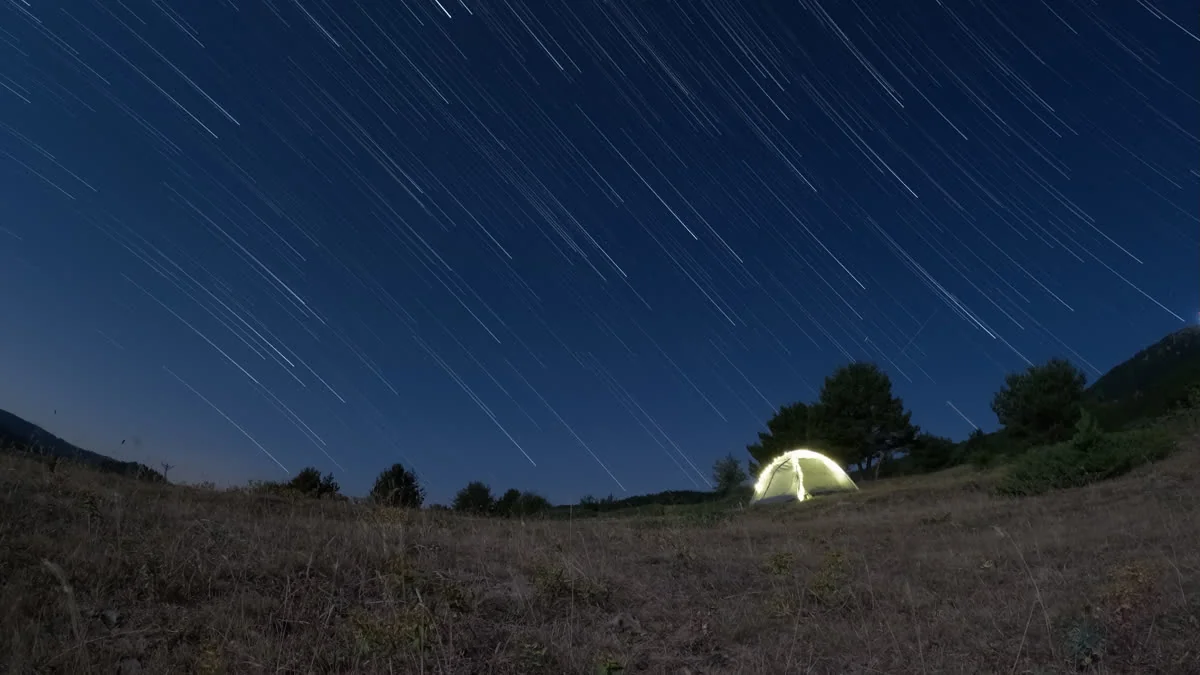
Key Highlights
- The 2025 Orionid Meteor Shower will peak from October 21 to 23.
- Bright skies and no moonlight provide ideal viewing conditions this year.
- Best observation times are between 1 a.m. and dawn, when the radiant is higher in the sky.
- Observers can contribute valuable data by participating as citizen scientists.
The Orionid Meteor Shower: A Spectacular Annual Event
Every year, from mid-October to early November, Earth passes through debris left behind by the renowned Halley’s Comet. This phenomenon results in the annual Orionid Meteor Shower, a dazzling display of celestial light that captivates skywatchers worldwide.
The Science Behind the Orionids
Halley’s Comet, famous for its 76-year orbit around the sun, releases particles as it travels. These particles form streams in space; Earth encounters these streams annually when it orbits the sun. In October, our planet crosses the inbound part of Halley’s debris field, leading to the Orionid Meteor Shower. As these small particles enter Earth’s atmosphere at high speeds, they burn up, creating brief but brilliant streaks across the night sky.
Observation Tips for 2025
The 2025 Orionid Meteor Shower will peak between October 21 and 23. Observers can expect to see up to 20 meteors per hour under clear, dark skies. The shower is most visible from around 1 a.m., when the radiant point in the sky, located in the constellation Orion, rises above the eastern horizon.
For optimal viewing, find a safe location away from city lights and lie back in a comfortable reclining chair, facing south.
This posture allows you to take in a wide portion of the night sky, where more meteors can be observed compared to directly overhead. Additionally, while Orionid activity is strongest on these peak nights, observers may still see some activity for several days around October 22.
Contribute as a Citizen Scientist
Beyond the enjoyment of witnessing this natural spectacle, participants can contribute valuable data by observing and recording their findings. Robert Lunsford, an experienced meteor observer, suggests that observers record each meteor’s shower association, noting its brightness relative to the faintest star visible in their sky. This information helps researchers understand the dynamics of meteor showers.
Interested individuals can share their observations via the International Meteor Organization (IMO) visual report form.
The IMO also offers a guide for beginners interested in observing meteors and contributing scientific data. Participation not only enhances our understanding of these phenomena but also promotes public engagement with astronomy.
Astronomy Enthusiasts Unite: A Guide to Orionid Observing
With the moon out of the way, this year’s Orionid Meteor Shower offers one of the best observing opportunities. The new moon on October 21 provides dark skies and minimal interference from lunar light. However, clouds or city lights could obstruct the view.
To ensure a clear sky, check weather forecasts in advance and choose an open area with minimal urban light pollution. Robert Lunsford, a renowned meteor observer, emphasizes the importance of choosing a safe location away from hazards such as traffic or unstable ground.
Conclusion
The 2025 Orionid Meteor Shower promises to be a spectacular event for amateur astronomers and skywatchers alike. With proper preparation and observation techniques, viewers can enjoy this celestial phenomenon while contributing valuable scientific data through citizen science initiatives. As always, clear skies and good luck!