Key Highlights
- President Donald Trump urges Republicans to abolish the filibuster for a government funding bill.
- Senate Republican leaders, including John Thune and Jon Husted, express opposition to eliminating the filibuster.
- The legislative filibuster has been a contentious issue in Congress, with both parties holding opposing views.
- Democrats, including Sen. John Fetterman, have called for the elimination of the filibuster as part of their platform.
President Trump’s Call for Filibuster Abolition
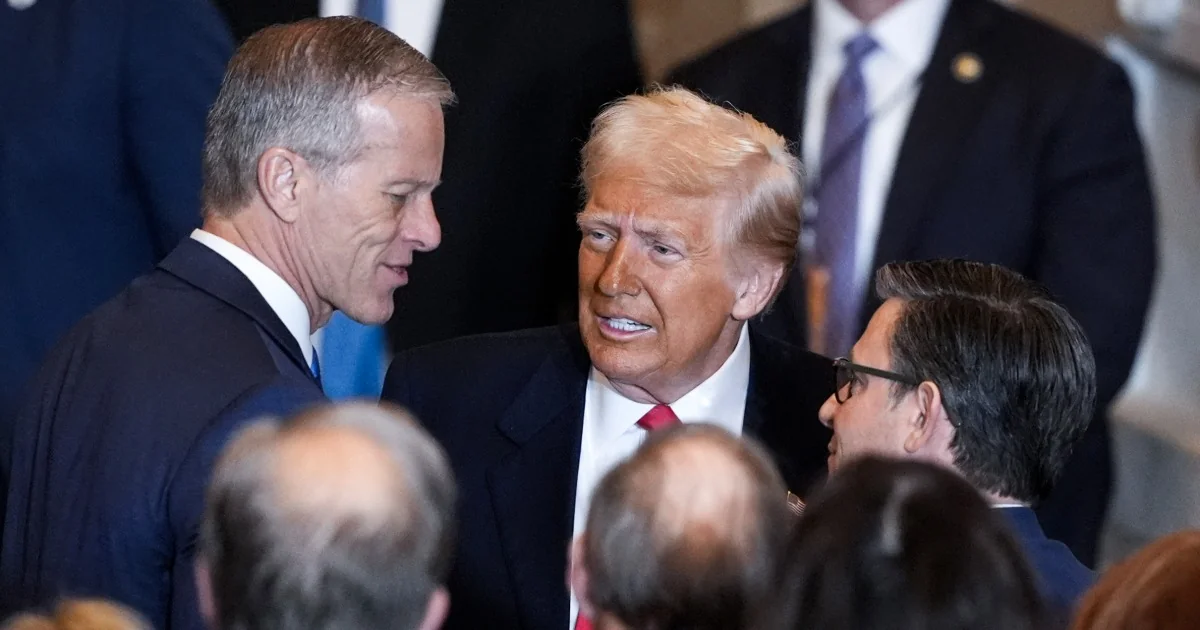
In a significant development in U.S. politics, President Donald Trump has publicly pushed Senate Republicans to abolish the 60-vote threshold known as the filibuster. In late-night social media posts, he implored his fellow Republicans to utilize the “nuclear option” and pass a government funding bill without Democratic votes.
“It is now time for the Republicans to play their ‘TRUMP CARD,’ and go for what is called the Nuclear Option — Get rid of the Filibuster, and get rid of it, NOW!” Trump declared in his posts. This direct call comes as the U.S. government remains shut down due to ongoing disputes between the two parties.
Republican Reactions and Opposition
Senator John Thune, R-S.D., who holds the position of new majority leader, has steadfastly maintained support for the legislative filibuster. “Leader Thune’s position on the importance of the legislative filibuster is unchanged,” said Thune’s spokesman Ryan Wrasse.
Other Republicans have also expressed firm opposition to eliminating the filibuster. Senator John Curtis, R-Utah, stated: “The filibuster forces us to find common ground in the Senate.” Similarly, Sen. Roger Marshall, R-Kansas, and Sen.
Markwayne Mullin, R-Okla., both emphasized their unwillingness to abolish the filibuster.
Despite the resistance from within his own party, President Trump has continued to advocate for its removal, citing past efforts by Democrats to eliminate it in 2022 as a precedent. He argued that the absence of the filibuster would serve as a safeguard against potential Democratic overreach if they regain control.
Historical Context and Future Implications
The legislative filibuster has been a long-standing feature of the U.S. Senate, requiring 60 votes to achieve “cloture” on most bills since 1975. Exceptions like budget reconciliation have allowed for simpler majority passage in recent years.
President Trump’s push reflects a broader ideological divide within his party regarding the use of the filibuster.
While some Republicans view it as an essential tool for maintaining legislative integrity, others see it as an obstacle to governing effectively with their slim majorities. This debate is likely to continue as both parties grapple with how best to navigate future legislative challenges.