Key Highlights
- The annual Leonid meteor shower is expected to peak on Sunday and Monday nights in November 2025.
- Prime viewing conditions are forecasted with clear skies and a waning crescent moon that won’t interfere.
- To observe the meteor shower, find a dark sky location away from city lights, facing east after midnight.
- The Leonids were first observed in 902 A.D. and produce up to 10-15 meteors per hour under ideal conditions this year.
Get Ready for the Celestial Show: The Leonid Meteor Shower
Astronomy enthusiasts, get your telescopes ready! This November, a spectacular celestial event is set to light up the night skies. The annual Leonid meteor shower, which typically peaks on Sunday and Monday nights in 2025, promises a dazzling display of shooting stars.
The Timing and Conditions for Prime Viewing
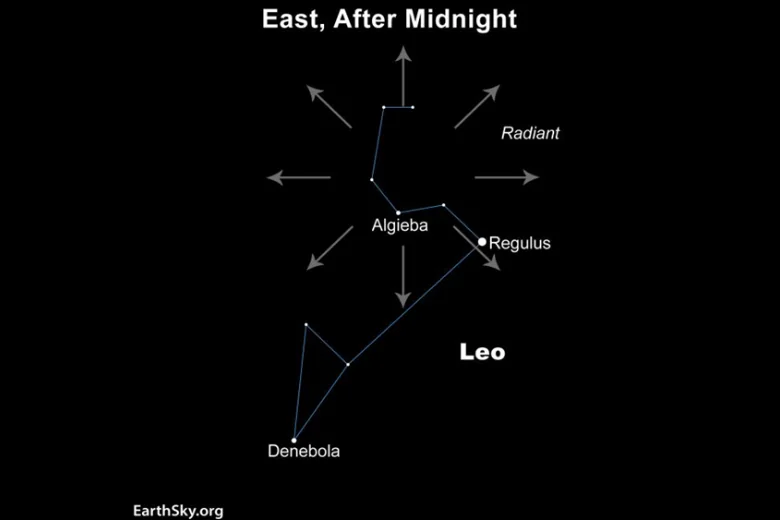
According to predictions from celestial experts, the best time to catch the Leonids is after midnight. During this period, the constellation Leo, which gives the meteor shower its name, will rise above the horizon. Observers should look towards the east, where meteors can be traced back to Leo.
The sky conditions are also favorable for observing the meteor shower.
The waning crescent moon is expected to be slender and not interfere with the view. Additionally, DC’s weather forecast indicates clear skies both nights, offering excellent viewing opportunities for stargazers.
Where and How to View the Shower
To maximize your chances of catching a glimpse of these cosmic fireworks, choose a dark sky location away from city lights and obstructions such as trees or buildings. City dwellers can still spot the brightest Leonids if they avoid direct light sources.
A comfortable viewing position is recommended. Whether it’s a lounge chair or a blanket on the ground, ensure that you have a clear view of the eastern sky and overhead. Starting from midnight, when Leo begins to rise, keep an eye on this area as meteors can appear in any part of the sky but are most likely to be seen towards the east.
A Historical Look at the Leonids
The Leonid meteor shower has a rich history dating back to 902 A.D. While it typically produces around 10-15 meteors per hour under ideal conditions, every 33 years, a “storm” occurs, producing hundreds or even thousands of meteors an hour. The last such storm was observed in 2001, making this year’s event particularly noteworthy for its regular activity.
These shooting stars are the result of Earth colliding with debris left behind by Comet Temple-Tuttle as it orbits the sun. As the planet moves through these particles at a staggering speed—45 miles per second (about 155,000 miles per hour)—they burn up in our atmosphere, creating the visual spectacle known as a meteor shower.
Join the Viewing and Make It a Social Event
The Leonid meteor shower is not just for solo stargazers. Invite friends and family to join you under the stars. To enhance your experience, consider bringing along some music, food, and beverages.
Photographing the event can also be an enjoyable addition, although it requires some preparation with a camera and tripod.
For those looking to stay informed about upcoming celestial events, follow astronomy blogs or social media accounts dedicated to stargazing. Wishing you clear skies and pleasant views as the Leonids grace our night sky this November!