Key Highlights
- Operation Epic Fury targets Iranian leadership, killing Supreme Leader Ayatollah Khamenei.
- US and Israel launch coordinated military offensive against Iran amid escalating tensions.
- Iran retaliates with missile strikes on Bahrain, home of US Navy 5th Fleet HQ.
- UK Prime Minister Starmer defends decision not to join initial attacks but acknowledges involvement.
- Gas prices could rise due to Middle East tensions threatening global oil supply.
The War in Words: Operation Epic Fury and Beyond
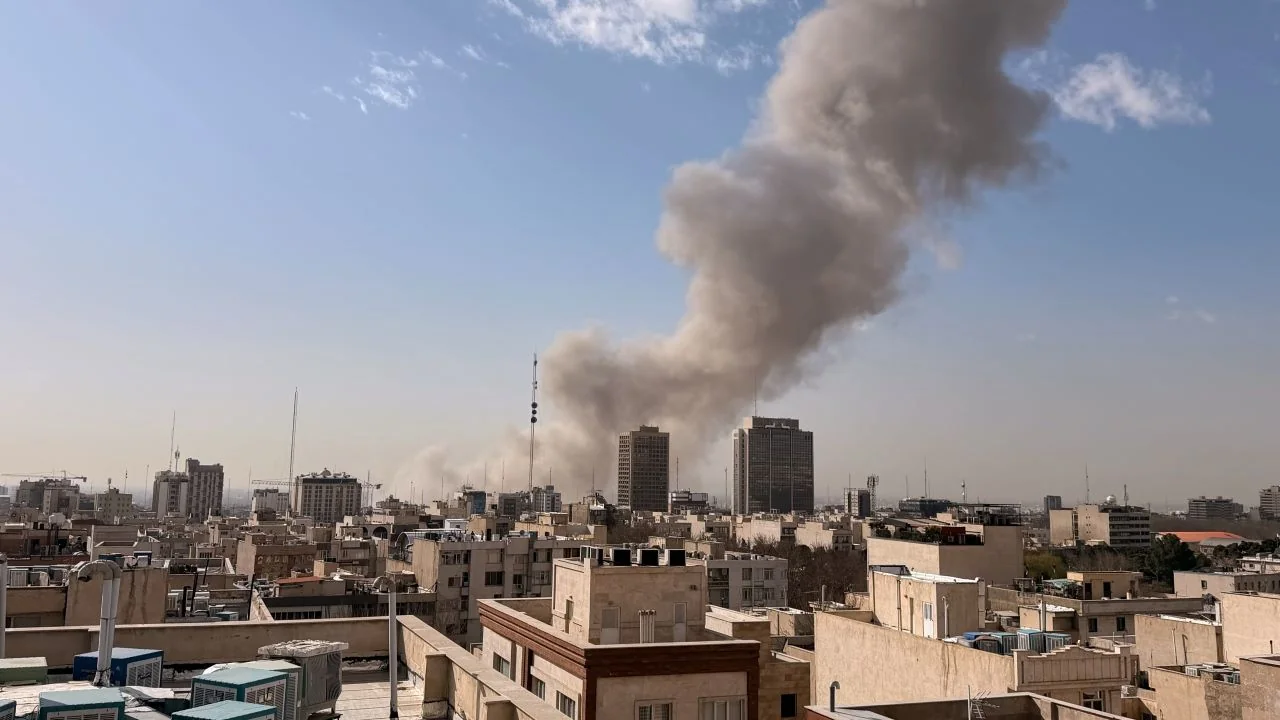
Operation Epic Fury, a coordinated military offensive launched by the U.S. and Israel against Iran, has sent shockwaves through international relations and energy markets alike. The operation, which began on Saturday with strikes that killed Iran’s Supreme Leader Ayatollah Ali Khamenei, marks a significant escalation in tensions between the two countries.
Operation Epic Fury: A Decade of Planning
The U.S. Joint Chiefs Chairman, Gen. Dan Caine, revealed that aspects of Operation Epic Fury took months and even years to plan. “The president directed, and I quote, ‘Operation Epic Fury is approved.
No aborts. Good luck,’ close quote,” said Caine during a press conference at the Pentagon.
Gen. Caine also highlighted the role of U.S. space and cyber operations in disabling Iran’s ability to coordinate an effective response. “We have more tactical aviation flowing into theater just based on the time it took to get it out there,” he added, emphasizing the comprehensive nature of the operation.
Iran’s Retaliation: Missile Strikes
In response to the U.S.-Israeli attacks, Iran launched a counterattack that included 70 missiles and 59 drones at Bahrain, home to the US Navy’s 5th Fleet Headquarters. “Bahrain’s air defenses intercepted a fresh wave of Iranian ballistic missiles and drones,” reported Anders Hagstrom.
The strikes on Bahrain have raised concerns about potential disruptions in global oil supplies, as the region is a critical chokepoint for crude oil transportation. “Americans could soon see higher gas prices as escalating tensions threaten a critical global oil chokepoint,” warned economist Stephen Moore.
UK’s Involvement and Backlash
The UK Prime Minister, Kier Starmer, initially refused to join the initial attacks on Iran but later acknowledged that Britain’s involvement was necessary due to the safety of its citizens in the region. “President Trump has expressed his disagreement with our decision not to get involved with the initial strikes, but it is my duty to judge what is in Britain’s national interest,” said Starmer.
However, Starmer also noted that Iran’s actions had forced a change in stance: “There are an estimated 300,000 British citizens in the region, residents, families on holiday and those in transit. Iran has hit airports and hotels where British citizens are staying,” he told Parliament.
War Secretary Hegseth’s Perspective
US War Secretary Pete Hegseth addressed the nation, saying that “We didn’t start this war, but under President Trump, we are finishing it.” Hegseth dismissed accusations of an “endless war,” stating: “This operation is a clear, devastating, decisive mission. Destroy the missile threat. Destroy the navy.
No nukes.”
He also criticized Iran’s regime for its refusal to make nuclear deals and its ongoing support of Hezbollah in Lebanon. “The former regime had every chance to make a peaceful and sensible deal. But Tehran was not negotiating,” said Hegseth.
Conclusion
The operation against Iran has set the stage for an unpredictable and potentially volatile period in Middle Eastern geopolitics. As tensions continue to rise, the global economy watches closely, waiting for any signs of disruption in oil markets that could ripple through economies worldwide.