Key Highlights
- The USS Gerald R. Ford is on its longest deployment since Vietnam.
- The U.S. Navy is reconsidering its force generation model due to back-to-back operational demands.
- A proposal suggests transitioning amphibious ships to a 50- or 52-month cycle for efficiency.
- Other services also face challenges in adapting to current operational tempo and training needs.
The Longest Deployment in Decades
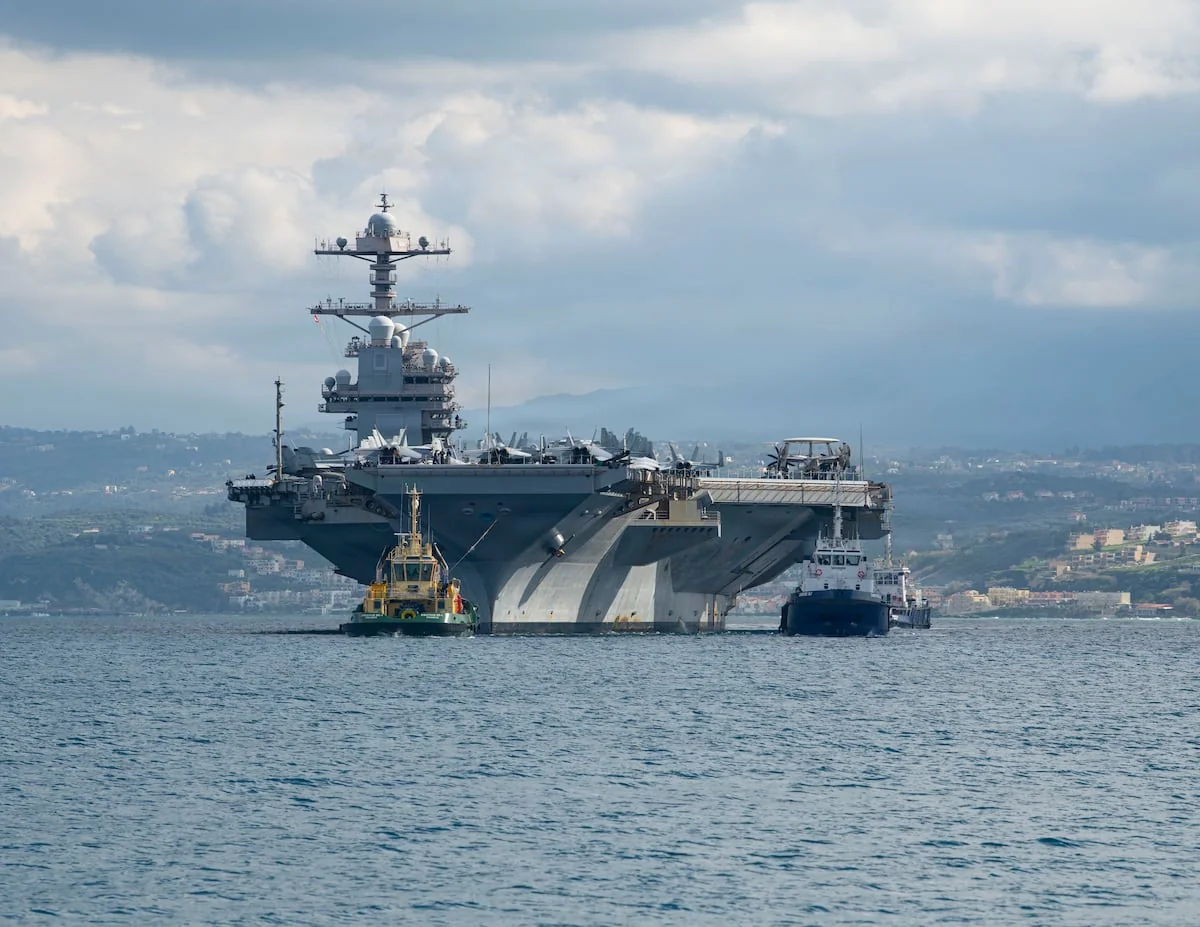
The USS Gerald R. Ford, currently en route home after its longest deployment since the Vietnam War, has highlighted the need for a new approach. Master Chief Petty Officer of the Navy John Perryman recently addressed this issue at a forum hosted by the Military Officers Association of America.
A New Force Generation Model
According to Perryman, the navy is rethinking its traditional force generation model that has largely been based on peacetime operations. “We’re going to have to come up with a different force generation model,” he stated. This shift comes as the navy faces back-to-back operational demands, including military interventions and airstrikes.
Perryman highlighted the need for more flexibility in deployment cycles. For example, carrier strike groups typically deploy on three-year centers, meaning they cycle through training, deployment, and maintenance every three years. The recent long deployment of the Ford has raised questions about whether this model is still effective.
Efficiency Gains Proposed
In an effort to improve efficiency, Chief of Naval Operations Adm. Daryl Caudle suggested transitioning amphibious ships from a 36-month deployment cycle to a 50- or 52-month cycle that would incorporate two deployments. This change aims to reduce overhead and gain more operational flexibility.
“We think we can do better in our force generation model to generate the readiness that we know the department is going to consume,” Perryman added. “Let’s take a step back and really evaluate what that should look like.”
Challenges Across Services
While the navy faces these challenges, other military services are also reevaluating their operational strategies. Sergeant Major of the Army Michael Weimer mentioned difficulties in adapting to current op tempo while trying to manage training needs. Chief Master Sergeant of the Air Force David Wolfe noted that months of air sorties had left some aircraft tired and in need of maintenance.
“We’ve got some work to do in that department with stable and predictable budgets,” Wolfe said, “making sure we have the parts and resources where they’re needed.” The army is working on modernizing training ranges and aligning them more closely with current threats.
Insight from the Deployed Carrier
The experience onboard the deployed carrier USS Ford has been instructive. Adm. Daryl Caudle, speaking at the Modern Day Marine Symposium in late April, suggested that by getting two deployments out of the same training and maintenance phase, the navy could “reduce the overhead and gain some efficiency.” This proposal marks a significant shift from previous structures.
Despite these challenges, Perryman emphasized that troops are performing well.
The number of returning combat-injured troops is at an unprecedented level, according to David Isom, the senior enlisted adviser to the Chairman of the Joint Chiefs of Staff. “We do see a lot of propensity to serve,” he stated.
While the focus on efficiency and readiness is crucial, it’s clear that these changes come with significant challenges. The navy must balance the need for operational flexibility with the demands of maintaining a ready force. As Perryman noted, this reevaluation is just the beginning: “We’ve started to do some pretty transformative work in that area.”