Key Highlights
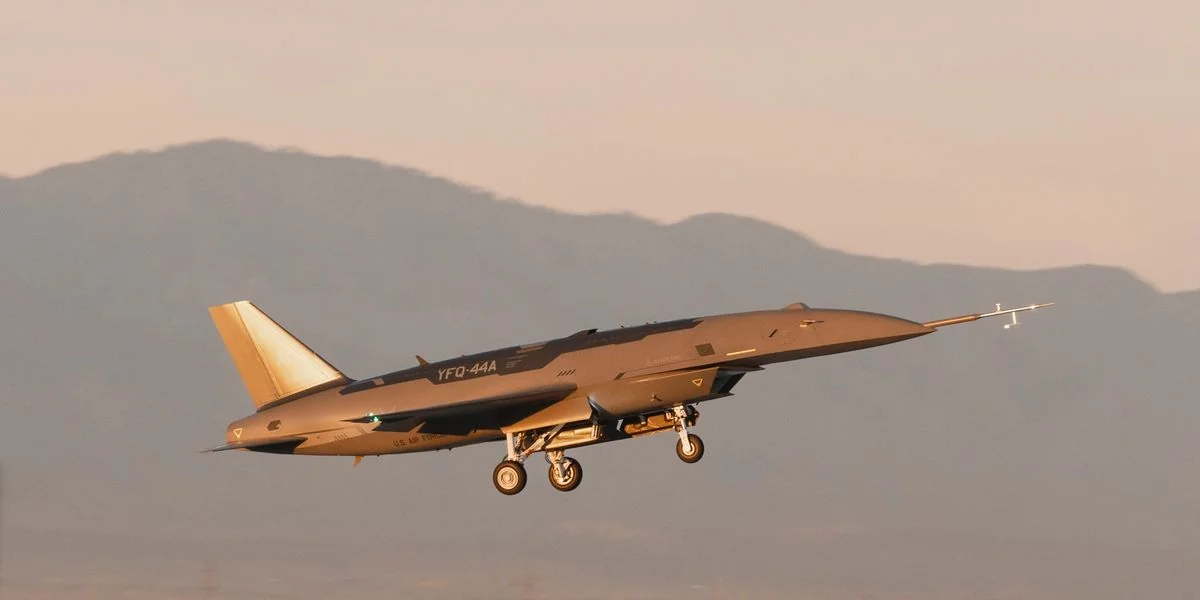
- Anduril’s YFQ-44A begins flight testing for the Collaborative Combat Aircraft (CCA) program.
- The development took 556 days from clean-sheet design to first semi-autonomous flight.
- The aircraft focuses on autonomy and affordable mass, enhancing air superiority in contested environments.
- YFQ-44A is designed for both manned-unmanned teaming concepts and operating independently.
Anduril’s Pioneering Effort in Autonomous Aviation
The aviation industry stands on the brink of a transformative step change, driven by the integration of autonomy into fighter aircraft. This development is spearheaded by Anduril Industries through its YFQ-44A Collaborative Combat Aircraft (CCA) program.
From Concept to Flight: A Record-Breaking Timeline
The journey from concept inception to flight testing has been nothing short of remarkable. The Anduril team, in collaboration with the U.S. Air Force, achieved a clean-sheet design-to-first-flight in just 556 days—significantly faster than any major fighter aircraft program in recent history.
Autonomy and Semi-Autonomous Flight
The YFQ-44A is not merely about achieving flight; it’s about integrating semi-autonomous capabilities that revolutionize how combat airpower operates. The aircraft executes mission plans, manages flight control independently, and returns to land autonomously under the watchful eye of an operator “on the loop.” This marks a new era in aviation where human pilots no longer have direct control from behind the stick and throttle.
Mass Production and Manufacturing Innovations
While technological advancements are crucial, Anduril is equally focused on achieving affordable mass through innovative manufacturing processes. The ArsenalOS software backbone plays a central role in streamlining production by leveraging mature, low-risk technologies. This approach aims to accelerate the pace of learning and iteration, ultimately delivering this critical capability faster to warfighters.
Expertise and Willpower
The success of the YFQ-44A program is built on a foundation of expertise and unwavering willpower. Team members have faced skepticism and doubt but have overcome these challenges through relentless effort and innovation. The project’s emotional journey reflects the broader mission to address complex threats in an increasingly competitive geopolitical landscape.
As Anduril continues its efforts towards mass production, the first prototype is set for flight testing with plans to begin production at Arsenal-1 in Columbus, Ohio, early next year. This milestone marks a significant step forward in shaping the future of military aviation and autonomous technologies.