Key Highlights
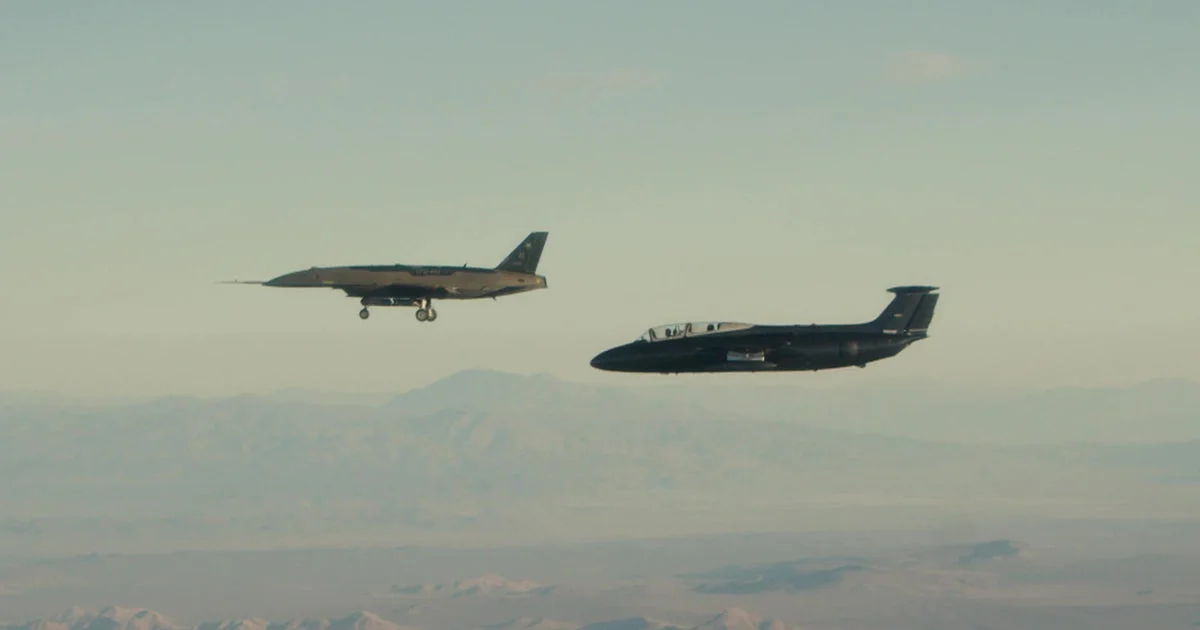
- Anduril’s unmanned jet “Fury” completed its first test flight in October 2025.
- Fury is a Collaborative Combat Aircraft (CCA) designed to operate semi-autonomously with artificial intelligence.
- The U.S. Air Force plans to use such autonomous wingmen for enhanced deterrence and pilot protection.
- Anduril aims to mass-produce the aircraft in the United States, potentially at a lower cost than traditional fighter jets.
New Era of Autonomous Combat Aircraft: Anduril’s “Fury” Takes Flight
In a significant milestone for defense technology, Anduril Industries’ unmanned jet “Fury” completed its first test flight in October 2025. This event marks the advancement of collaborative combat aircraft (CCA) designed to operate alongside manned fighter jets, enhancing military capabilities and operational efficiency.
Operational Capabilities and Technology
Fury operates semi-autonomously with artificial intelligence, allowing it to carry out mission plans and adjust its flight without direct human input. According to Anduril CEO Brian Schimpf, the jet is intended to protect pilots’ lives by operating ahead of manned fighters, engaging enemies before they are in range.
“These fly out ahead of manned fighters, and they’re able to find the enemy first,” Schimpf explained. “Be able to engage the enemy well before a manned fighter has to be seen or is in range.” He further elaborated that Fury can return to land when commanded by ground control while a person monitors its actions rather than directly piloting it.
Technical Details and Production Plans
Anduril’s Fury represents an innovative approach to aircraft manufacturing, with the company aiming to mass-produce these aircraft in the United States. Schimpf highlighted that nearly every part of the aircraft can be made in hundreds of different places within the U.S., leveraging commercial off-the-shelf components and reducing production bottlenecks.
“The goal of these systems is to be mass producible,” Schimpf said, “And we tried to eliminate really every bottleneck we could find around what makes an aircraft hard to produce.” The jet’s landing gear was designed to be built in any machine shop, and the engine uses a commercial business jet engine. This approach not only enhances production flexibility but also potentially reduces costs compared to traditional fighter jets.
Competing Technologies and Industry Context
In this competitive landscape, Anduril faces competition from General Atomics, which has already completed successful test flights of its YFQ-42A drone. Despite the presence of these competitors, Anduril founder Palmer Luckey remains focused on advancing U.S. defense capabilities.
“I think we’re racing against China,” Luckey told 60 Minutes in the spring. “We talk about this all the time internally. Our adversary is not other defense contractors.
It’s hostile foreign powers that are fundamentally misaligned with the American way of life, who are trying to achieve massive economic and military overmatch and destroy our economy, destroy our military, and destroy our ability to influence people around the world.” Luckey acknowledged the moral concerns surrounding autonomous weapons but emphasized the necessity of advancing technology to counteract potential adversaries.
As the U.S. Air Force considers incorporating such technologies into its arsenal, Anduril’s efforts represent a significant step toward integrating advanced AI and unmanned systems in modern warfare.