Key Highlights
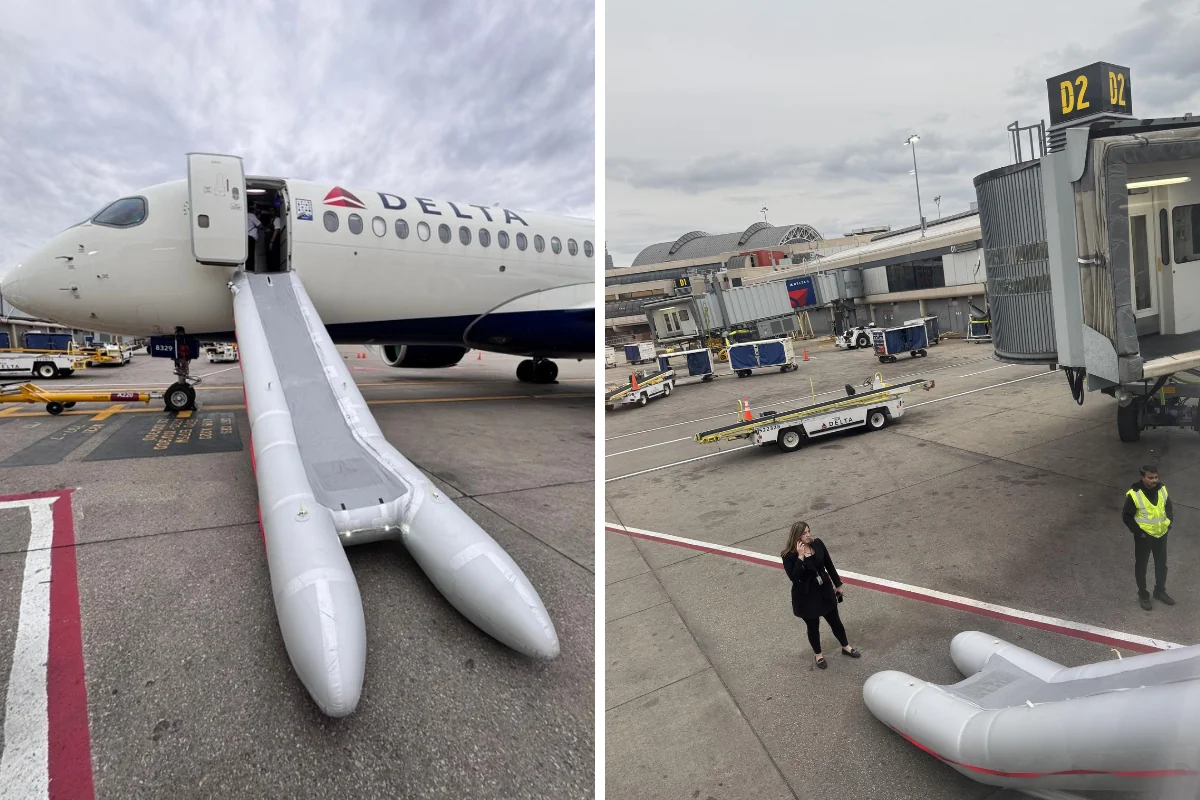
- A Delta Air Lines flight attendant mistakenly deployed an emergency evacuation slide on a plane at Pittsburgh Airport.
- The incident resulted in significant financial costs, estimated between $50,000 and $70,000 for the new slide and assembly alone.
- This mistake is part of a broader issue known as Inadvertent Slide Deployments (ISDs) within the aviation industry, which are relatively rare but costly when they occur.
- Delta Air Lines, like other airlines, has experienced multiple instances of such incidents in recent years, highlighting the ongoing challenges in maintaining safety protocols.
Delta’s Mistaken Move: $70,000 Emergency Slide Deployment
A Delta Air Lines flight attendant made a costly mistake on Saturday evening, deploying an emergency evacuation slide on board an Airbus A220 aircraft at Pittsburgh Airport. The incident has not only caused significant disruption to the passengers’ journey but also incurred substantial financial costs for the airline.
Cost of Mistake
The emergency slide deployment is estimated to have cost Delta Air Lines between $50,000 and $70,000. This figure includes the price of a new slide and its assembly, which are crucial safety equipment for commercial aircraft. While it might seem like a rare occurrence, such incidents pose significant financial implications for airlines.
Inadvertent Slide Deployments (ISDs)
Accidental deployment of emergency slides is known in the aviation industry as Inadvertent Slide Deployments (ISDs). These events are relatively uncommon but can occur under specific circumstances. For instance, the flight attendant responsible for the forward left-hand door mistakenly lifted the handle while the aircraft was preparing to push back from the gate.
Once armed, these doors can be triggered by any movement of the handle, leading to the automatic deployment of the emergency slide. Even if the flight attendant realizes their mistake and attempts to correct it, it often proves too late due to the power-assist system forcing the door open regardless.
Impact on Passengers
The incident left passengers stranded onboard as engineers had to unhook the deployed slide before a jetbridge could be reattached. This process significantly disrupted the flight and caused inconvenience for all those involved, emphasizing the critical nature of such safety protocols in aviation.
Industry Context and Expert Analysis
In 2023, British Airways faced similar challenges with an increase in ISDs, leading to the introduction of a Japanese ritual called Shisa Kanko. This practice involves workers pointing and calling out their actions to reduce human error by nearly 85%, according to one study.
Despite such measures, these incidents continue to pose risks for airlines. Delta Air Lines has experienced multiple instances of ISDs in recent years, including a similar incident shortly after landing in Dublin on September 9th, 2023, and another at Gatwick Airport on April 15th, 2024.
Future Implications
The frequent occurrence of ISDs highlights the need for continuous improvement in safety protocols within the aviation industry. Airlines must balance the importance of these safety measures with operational efficiency to minimize such costly incidents in the future.
Matt Mateusz Maszczynski, an experienced international flight attendant turned journalist, notes that while these accidents are rare, they serve as reminders of the crucial role human error plays in aviation safety. His insights and analysis continue to be valuable resources for understanding industry trends and challenges.