Key Highlights
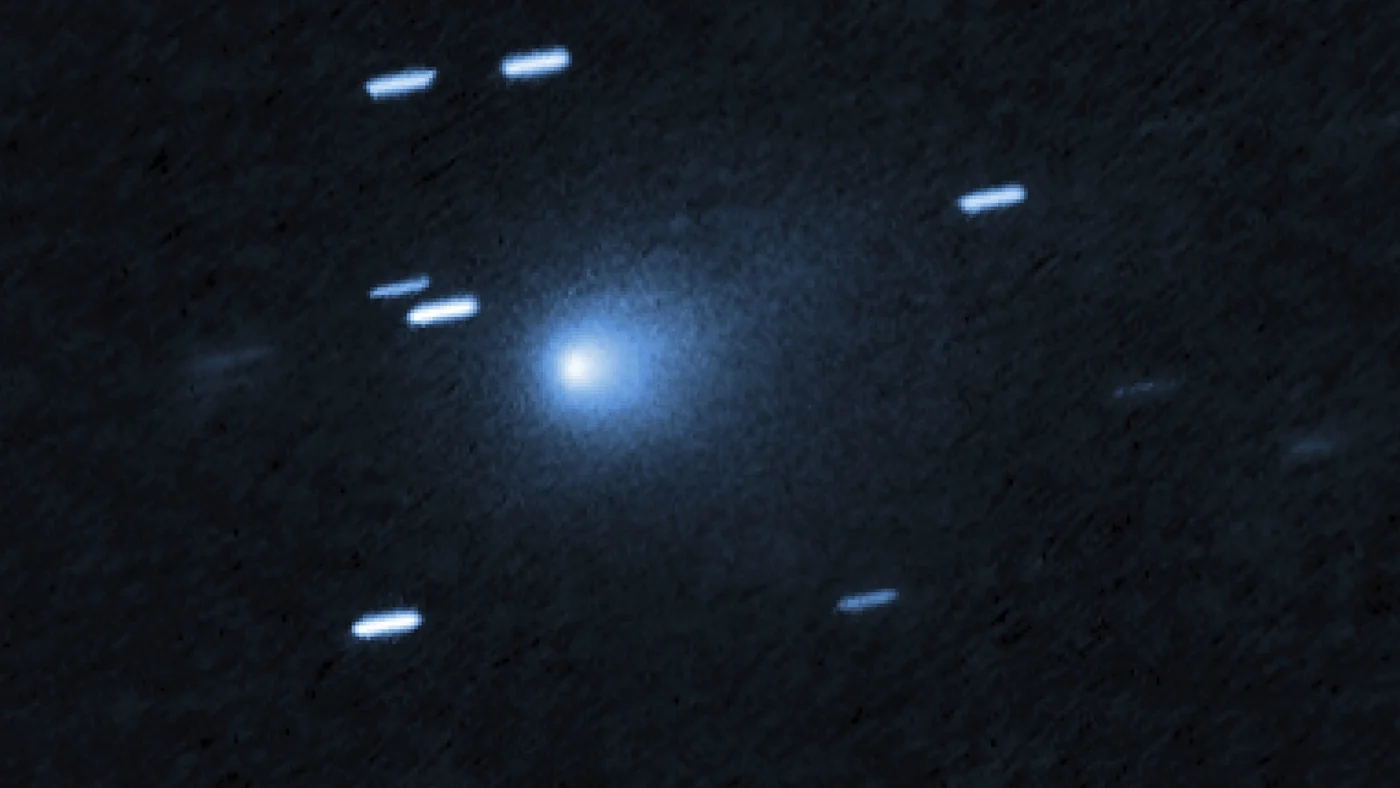
- An interstellar comet called 3I/ATLAS has been detected and is offering rare insights into distant planetary systems.
- Nickel vapor was detected surrounding the comet at a distance far from the sun, indicating its ancient origin.
- The findings could provide new insights into the chemistry of objects that originate outside our solar system.
- Scientists are coordinating international teams to observe and analyze 3I/ATLAS as it continues its journey through our solar system.
New Insights from Interstellar Comet 3I/ATLAS
Scientists around the world have expressed excitement over an interstellar comet known as 3I/ATLAS, discovered in July 2025. This rare celestial object is providing a unique opportunity to study distant planetary systems that are inaccessible through any spacecraft missions.
Rare Opportunity to Study Interstellar Objects
The discovery of 3I/ATLAS is significant because it marks the third known interstellar object entering our solar system in recorded history. According to Darryl Z. Seligman, an assistant professor of physics and astronomy at Michigan State University, observing such a comet “is extremely valuable for us,” as it is the only chance to study this object before its departure from our solar system.
Nickel Vapor Detection
In a groundbreaking discovery, researchers led by Rohan Rahatgaonkar and Thomas Puzia detected nickel vapor in the gas surrounding 3I/ATLAS. This comet is located at a distance nearly four times that of Earth from the sun, where temperatures are too cold for metals to normally vaporize. “It was pretty clear that it was nickel,” stated Puzia, describing the data as “super, super exciting.” The detection of such elements so far from the sun suggests that 3I/ATLAS may be much older than our solar system.
Chemical Signatures and Long Journey
The chemical signatures being emitted by 3I/ATLAS provide valuable insights into its ancient origin and long journey through interstellar space. Rahatgaonkar explained that these emissions reflect the comet’s age, potentially billions of years old, offering a glimpse into conditions from which our solar system formed.
International Collaboration
The study of 3I/ATLAS is being conducted by an international team of scientists utilizing various telescopes and instruments. This collaborative effort highlights the importance of global cooperation in advancing scientific knowledge about the universe.
Promising Future Research
As 3I/ATLAS continues its journey closer to the sun, it will undergo thermodynamic changes that could yield more detailed information about its origins and composition. “This particular interstellar comet ‘could be maybe older than our solar system,'” Rahatgaonkar emphasized, noting that further analysis is necessary before drawing definitive conclusions.
The study of 3I/ATLAS not only offers a rare opportunity to learn about distant planetary systems but also deepens our understanding of the chemical and physical processes that occur in interstellar space. As research continues, scientists hope to uncover more secrets hidden within this ancient visitor from beyond our solar system.