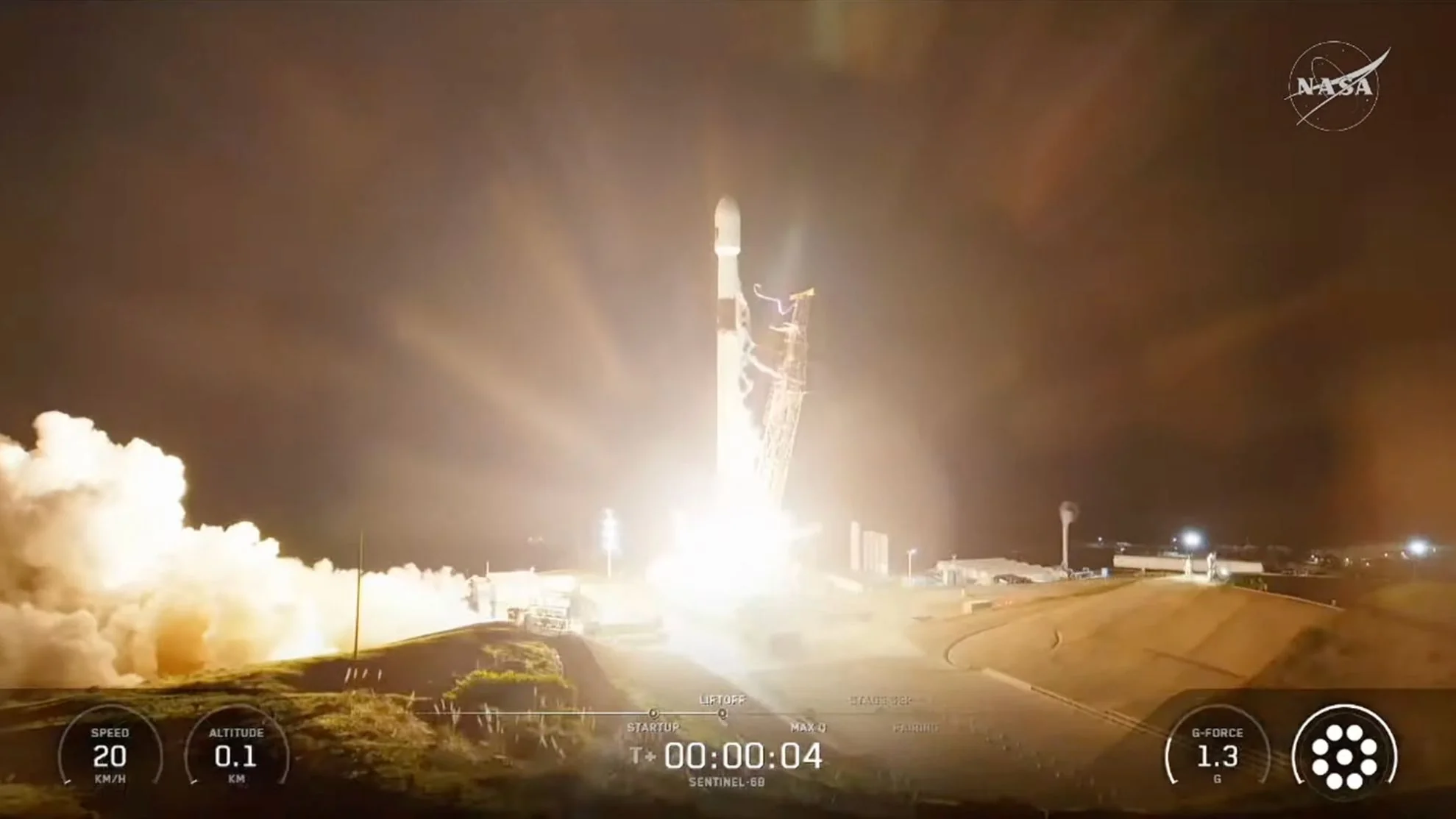
, according to data from the Copernicus program. The Sentinel-6B mission is poised to become the “gold standard” for recording these changes over time.
Technical Specifications and Mission Collaboration
The Sentinel-6B ocean-monitoring satellite weighs 3,175 pounds (1,440 kilograms) and will orbit at an altitude of 830 miles (1,336 kilometers). Its journey to space was facilitated by a SpaceX Falcon 9 rocket. After the successful launch, the first stage returned to Vandenberg for landing, marking its third flight, following previous missions to deploy Starlink satellites.
The satellite’s primary mission is collaborative, with NASA providing critical support through the microwave radiometer on board.
This instrument will work in tandem with the radar altimeter to provide more accurate data interpretation, ensuring that the measurements of sea surface heights are as precise as possible. Additionally, Sentinel-6B will work closely with its predecessor during its first year of operation, enabling greater accuracy through cross-calibration between the two instruments.
Global Implications and Future Outlook
The launch of Sentinel-6B underscores the ongoing commitment to understanding Earth’s changing climate. By continuing the legacy of Sentinel 6 Michael Frelich, this new satellite will contribute significantly to our knowledge base, helping scientists better understand sea-level rise and its broader implications for global ecosystems and human populations.
The mission is a collaboration among several key organizations: the European Commission, ESA, NASA, Eumetsat, and the U.S. National Oceanic and Atmospheric Administration (NOAA), with support from the French space agency CNES.
This international partnership ensures that the data collected by Sentinel-6B will be accessible to researchers worldwide, fostering a global effort in climate research.
As we continue into 2025, the successful launch of Sentinel-6B marks an important step towards a more informed and prepared future, one where the impacts of climate change are better understood and addressed. The satellite’s journey from Vandenberg to its orbit above Earth sets the stage for years of critical data collection that will shape our understanding of the planet we call home.