Key Highlights
- NASA’s acting administrator Sean Duffy announced plans to seek moon landers from SpaceX rivals.
- Elon Musk attacked Duffy on social media, questioning his competence and IQ.
- Musk’s company SpaceX is behind schedule with its Starship rocket development.
- Duffy aims to return astronauts to the moon before China does in collaboration with other companies.
NASA’s Moon Plans Spark Controversy Between Administrators and CEO
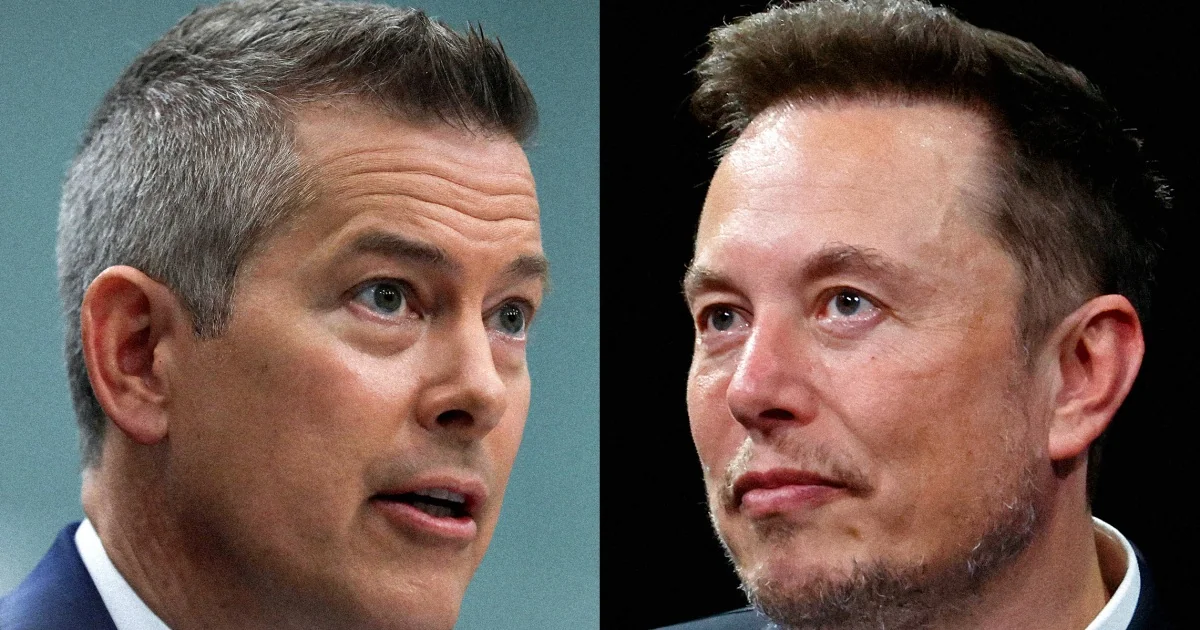
SpaceX founder Elon Musk has launched a social media tirade against NASA’s acting administrator Sean Duffy, questioning his intelligence and competence after Duffy announced plans to seek moon landers from SpaceX rivals. The controversy comes amid mounting pressure for the United States to stay competitive in space exploration, particularly with China.
Musk’s Social Media Outburst
On Tuesday, Musk lashed out at Duffy on X (formerly Twitter), using an insulting nickname and questioning his IQ. “Sean Dummy is trying to kill NASA!” he wrote, followed by: “The person responsible for America’s space program can’t have a 2 digit IQ.”
Musk even created a poll asking whether the acting administrator should be running NASA, with responses suggesting he lacks the necessary intelligence. One option read, “Yezz, chimps skillz rūl!” while another was, “Noo, he need moar brainz!” As of Tuesday afternoon, the poll had nearly 110,000 votes.
NASA’s Moon Mission Plans
According to NASA’s interim plans, the agency intended to use SpaceX’s next-generation Starship rocket system for landing on the lunar surface. However, Musk’s company has fallen behind schedule with its testing and development of Starship. In his social media posts, Musk emphasized that SpaceX is far ahead of its rivals: “SpaceX is moving like lightning compared to the rest of the space industry.”
Despite these delays, NASA is still relying on SpaceX for its Artemis III mission, slated for 2027.
The mission aims to land two astronauts on the moon, but Musk expressed doubt about whether any other commercial space companies could meet such an aggressive timeline: “Moreover, Starship will end up doing the whole Moon mission. Mark my words.”
Duffy’s Response and Political Context
In response to Musk’s posts, Duffy wrote: “Love the passion. The race to the Moon is ON. Great companies shouldn’t be afraid of a challenge.
When our innovators compete with each other, America wins!” However, the timing of this controversy coincides with political pressure as the space race with China heats up.
China aims to land its astronauts on the moon by 2030 and has already sent two robotic rovers to the lunar surface. The country is also conducting key tests for a new rocket that would be used for crewed moon missions. In response, Duffy announced that NASA will open up the Artemis III contract and solicit other moon lander proposals from rival space companies.
“We’re not going to wait for one company,” Duffy said on CNBC’s “Squawk Box” on Monday. “We’re going to push this forward and win the second space race against the Chinese.”
Beyond SpaceX: Other Competitors
Duffy also highlighted Blue Origin, the space launch company started by Amazon founder Jeff Bezos, as an example of a potential competitor that could offer its own technology. The announcement has put pressure on Musk and SpaceX to accelerate their development efforts.
While SpaceX is currently ahead in testing and development, the competition from other companies like Blue Origin could pose significant challenges in the near future. This race to the moon involves more than just technological prowess; it’s also a matter of national pride and geopolitical strategy.
The tension between Musk and Duffy reflects broader dynamics within NASA and the space industry as they navigate the complex landscape of competition, innovation, and international rivalry in space exploration.