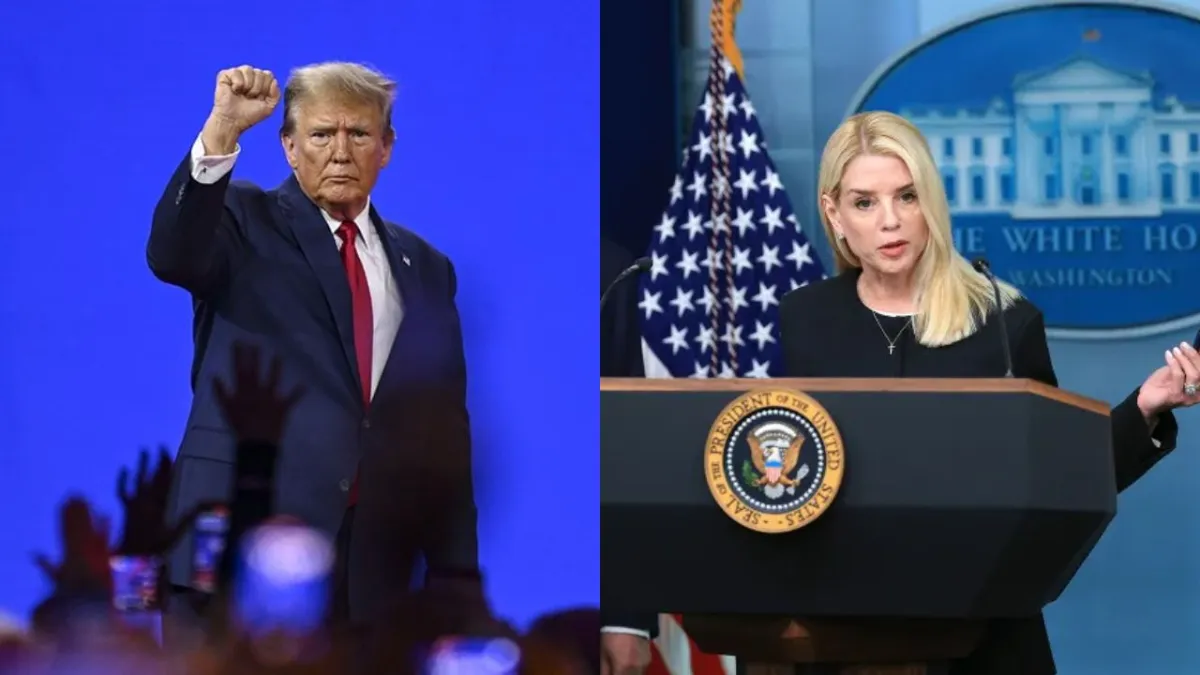
Donald Trump’s Truth Social Slip? The Pam Bondi Message Drama Explained (2025)
Why this story matters right now
Reports claim that a Trump Truth Social private message addressed to Pam Bondi was accidentally posted to the public feed before being removed.
Whether you follow politics, markets, or media, incidents like this trigger big questions: How do public communications by leaders affect legal risk, market sentiment, advertiser confidence, and user trust?
This guide breaks down what likely happened (and why it matters), the risks for platforms and public figures, and the practical takeaways for readers.
Note: This article focuses on analysis and context. The episode is widely discussed; details can evolve, and interpretations may differ.
Quick takeaways
- A purported Trump Truth Social private message surfaced publicly, then disappeared—fueling debate about platform controls and political communications.
- For platforms, the stakes include brand safety, regulatory exposure, and advertiser sentiment.
- For markets, headline risk can amplify volatility in social-media-linked equities and ad-tech.
- For legal observers, the debate centers on intent, process, and record-keeping for government-adjacent communications.
- For readers, it’s a reminder to treat social posts as effectively permanent and public.
What was reportedly posted?
Accounts circulating online say a Trump Truth Social private message intended for Pam Bondi appeared on a public feed for a short period. The content allegedly touched on sensitive matters tied to political or legal priorities.
Even if the post vanished quickly, screenshots and summaries spread across the web, dragging the platform into a familiar cycle: post → capture → reaction → repercussions.
Key points people are debating:
- Accident vs. intention: Was it mis-tapped UI, account confusion (private note vs. public post), or a scheduling mistake?
- Substance vs. optics: Even without final legal conclusions, the perception of a Trump Truth Social private message becoming public can shape narratives for weeks.
- Timing: In politics and markets, when something appears can matter as much as what appears.
Why a single post can move markets and narratives
A high-profile Trump Truth Social private message that appears publicly—even briefly—can spark:
- Headline volatility
- Financial news algos and social-listening systems can propagate the story, lifting trading volume in social media, news, ad-tech, and security names.
- Brand-safety recalibration
- Advertisers, wary of adjacency to controversy, may pause or re-price campaigns, pressuring CPMs and revenue projections on the margin.
- Regulatory and compliance scrutiny
- Communications that appear to cross into sensitive legal or policy territory invite questions about process, record-keeping, and platform controls.
- Reputation effects
- Platforms live and die on trust. Recurring stories like a Trump Truth Social private message going public can shape user and investor sentiment.
The platform angle: Design, defaults, and damage control
For platforms hosting public figures, incidents like an exposed Trump Truth Social private message surface three perennial issues:
- UI/UX clarity: Private vs. public posting must be unmistakable—distinct screens, confirmations, visual warnings, and friction for high-risk actions.
- Role-based controls: Elevated accounts (heads of state, cabinet-level figures, campaign HQs) benefit from two-person checks, scheduled post queues, and tiered approvals.
- Crisis playbook: The first 60 minutes matter. A polished response includes:
- Forensics (what exactly happened)
- User-facing clarity (avoid techno-babble)
- Policy references (record retention, moderation)
- Mitigations (what changes now to prevent repeats)
Legal & policy context (plain-English explainer)
A Trump Truth Social private message unexpectedly landing on a public feed raises overlapping questions:
- Public records & retention: When communications involve public officials, rules often require preservation—even if posted in error.
- Intent vs. effect: Legal analysis differentiates accidental exposure from deliberate signaling—but public perception doesn’t always wait for a ruling.
- Section 230 & moderation: Platforms generally have latitude to moderate, but consistency and clear terms are essential to maintain trust and reduce regulatory heat.
- Defamation & liability: If a public post names individuals or alleges wrongdoing, platforms and posters must weigh defamation risk and remedies.
Risk ripple map
| Risk Area | What could happen | Mitigation |
|---|---|---|
| Brand Safety | Advertisers pause or reduce bids | Contextual controls, exclusion lists, third-party brand-safety verification |
| Legal/Compliance | Record-keeping & retention questions | Audit trails, retention APIs, counsel-reviewed comms policy |
| Market Sentiment | Short-term volatility in platform-linked equities | Clear statements to investors; emphasize controls and roadmaps |
| User Trust | “If it happened once…” skepticism | Incident reports, product fixes, optional posting friction for VIP accounts |
(Illustrative) “What-if” impact levels
This is a conceptual chart to help non-experts quickly judge risk tiers; not financial advice.
- Low impact: Post is ambiguous; swift clarification lands; no new details emerge.
- Moderate impact: Screenshots spread; advertisers ask questions; regulators request info.
- High impact: Concrete, sensitive directives appear; formal probes or lawsuits follow; monetization gets hit.
What advertisers and investors look for next
- Tone and transparency in statements
- Concrete product changes (e.g., VIP “Are you sure?” gates; dual-approval posting)
- Stable governance signals—auditable logs, policy addenda, independent review
- Consistency across incidents—no ad-hoc exceptions
Best practices public figures can adopt (today)
- Two-factor and two-person posting for sensitive notes
- Staging area: Draft messages live in a queue; nothing posts without an explicit final review
- Labels and watermarks on screenshots from staging vs. production
- Device hygiene: Separate devices for private drafts and public posting accounts
- Crisis macros: Pre-approved templates for “post in error” acknowledgments
These steps lower the odds that a Trump Truth Social private message—or any high-stakes note—jumps into public view.
The discoverability angle: Why this keeps surfacing in feeds
Google Discover and social feeds prioritize fresh, engaging, and useful items. A Trump Truth Social private message that hits the public stream checks all three boxes: it’s timely, controversial, and practically relevant (platform safety, law, policy). To improve your Discover odds:
- Use clear titles and descriptive subheads
- Keep paragraphs short and scan-friendly
- Include structured data and FAQ blocks
- Maintain topical authority by covering follow-ups (product changes, hearings, advertiser reactions)
FAQs
Q1) What exactly is alleged to have happened?
A Trump Truth Social private message reportedly meant for Pam Bondi appeared publicly, then was pulled. The exact posting pathway (mis-tap, scheduling, or account mix-up) is unclear, but the optics fueled debate about intent and process.
Q2) Why do advertisers care about one post?
Brand-safety teams judge adjacency risk. A viral controversy can prompt temporary pauses or lower bids, affecting CPMs and platform revenue until confidence returns.
Q3) Is accidentally posting a private note illegal?
Accidents themselves aren’t crimes, but content matters. If the note touches on legal directives, investigations, or individuals, it can raise record-keeping, process, and liability questions.
Q4) How can platforms prevent this?
VIP posting friction (confirmations, dual-approval), role-based access, and strong audit trails. Clear UI separation between private drafts and public posting is vital.
Q5) Could this affect markets?
News like a Trump Truth Social private message can move platform-linked and ad-tech stocks in the short term as algorithms and traders react to headlines and perceived regulatory risk.
Q6) Does deleting a post solve the problem?
Not really. Screenshots and archives often persist. The best remedy is fast clarity, transparent process explanations, and visible product changes.
Q7) What should readers take away?
Treat every draft as public until proven otherwise. For public figures and teams, build process guardrails—because a few seconds on the feed can become weeks of fallout.
Related words to reinforce topical relevance
Truth Social, Pam Bondi, social media governance, brand safety, public records, platform moderation, policy compliance, reputation risk, market volatility, Section 230, communications protocol, audit trail, digital forensics, UI/UX safeguards, crisis management
(You’ll notice we’ve naturally used the primary phrase Trump Truth Social private message throughout to align with the ~1% keyword goal without sounding spammy.)
Conclusion
Whether you see it as a simple mistake or a revealing moment, the alleged Trump Truth Social private message to Pam Bondi underscores how fragile modern communications can be.
One post—public for only a short time—can spark legal debates, market moves, advertiser caution, and platform introspection.
The durable lesson is practical: build friction into sensitive workflows, document decisions, and communicate plainly when things go wrong. In an attention economy, process is policy—and policy is brand.