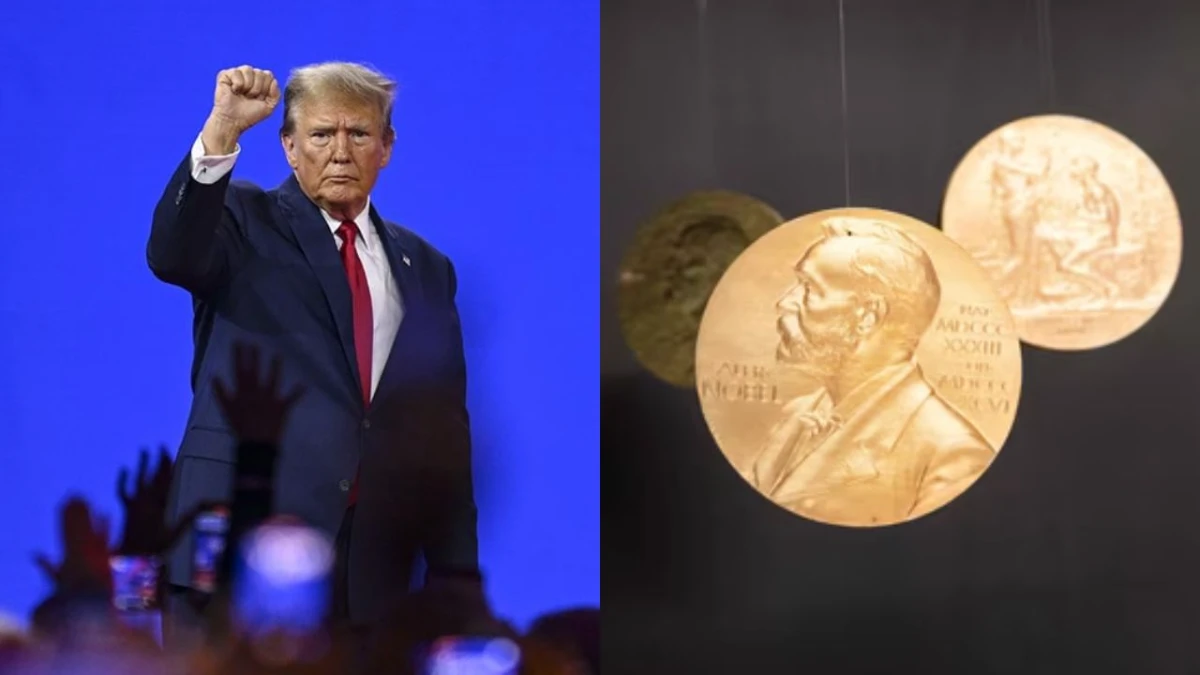
The 11th-Hour Campaign to Land Trump a Nobel Peace Prize: What’s Really Going On (2025)
If you’ve seen headlines about a last-minute push to get Trump Nobel Peace Prize recognition, you’re not alone. The phrase has surged each time supporters try to spotlight former President Donald Trump’s foreign-policy record—especially the Abraham Accords, North Korea diplomacy, and prisoner exchanges—right when attention is highest.
This latest wave is being described as “The 11th-Hour Campaign to Land Trump a Nobel Peace Prize,” and it blends politics, media strategy, and market psychology in one fast-moving story.
In this beginner-friendly guide, we’ll explain how Nobel Peace Prize nominations really work, why eleventh-hour campaigns capture attention, and how such narratives can ripple into stocks, bonds, the U.S. dollar, oil, gold, and overall volatility—all while keeping the tone professional and easy to follow.
Quick Summary (TL;DR)
- What is happening? Supporters are promoting an 11th-hour campaign to land a Trump Nobel Peace Prize nod, focusing on headline-friendly achievements and election-season momentum.
- Can campaigns force a win? Public pressure doesn’t decide winners; the Nobel Committee operates independently and in secrecy.
- Why should investors care? Narrative shocks can move defense stocks, oil, the dollar, gold, and Treasury yields—even if fundamentals don’t change overnight.
- Bottom line: Whether the campaign gains or fades, traders should watch risk sentiment, spreads, energy prices, and news-driven volatility.
Related terms: Nobel Committee, nomination window, Abraham Accords, cease-fire negotiations, sanctions relief, risk premium, VIX, safe-haven flows, yield curve, capital flows.
What Exactly Is “The 11th-Hour Campaign”?
“The 11th-Hour Campaign to Land Trump a Nobel Peace Prize” is a high-visibility media and political push that typically intensifies near key dates (nomination deadlines or announcement week). The objective is simple: keep the phrase Trump Nobel Peace Prize in the public conversation long enough to frame his foreign-policy record as prize-worthy.
Supporters highlight:
- The Abraham Accords and subsequent normalization tracks.
- North Korea summits and de-escalation periods.
- Hostage/prisoner releases and pressure-based bargaining outcomes.
- Claimed conflict de-escalation contributions via sanctions and deterrence.
Critics counter that:
- Several initiatives were incomplete or reversed in later years.
- Diplomacy often stalled or produced limited durable outcomes.
- The Prize emphasizes sustained peace impacts and cross-party legitimacy.
Regardless of which view you hold, campaigns like this thrive because they generate search interest, social debates, and wall-to-wall coverage—ingredients that can sway sentiment, even if institutional outcomes (like the Nobel decision) don’t budge.
How Nobel Peace Prize Nominations Actually Work (Plain English)
Understanding the basics clears up confusion around public petitions and “pressure”:
- Who can nominate? A defined group: national lawmakers and ministers, certain professors, past laureates, and selected organizations.
- When is the deadline? Traditionally late January each year for that year’s prize.
- Are nominations public? No. The Nobel Committee’s rules keep nominations sealed for 50 years.
- Who decides? The Norwegian Nobel Committee evaluates nominations, drafts a shortlist, consults experts, and then votes.
- Can viral campaigns change outcomes? Publicity may shape perception, not the committee’s confidential process.
This means an 11th-hour campaign is best seen as an influence effort aimed at public opinion and political framing, not a guaranteed lever on the committee itself. Still, the Trump Nobel Peace Prize narrative can matter for investors because narratives move capital—especially in short bursts.
Why This Narrative Resonates With Voters and Markets
1) It compresses complex diplomacy into a simple frame
“Peace Prize” is a powerful shortcut that packages foreign policy into a single, prestigious label. For supporters, it becomes a shorthand for “stability”; for critics, a target to challenge.
2) It lands during high-attention windows
Late-cycle pushes overlap with election-year news, creating outsized search spikes. Traders who screen for headline risk often widen stops, trim leverage, or hedge.
3) It taps core market stories
- Defense stocks: Speculation on posture shifts, procurement priorities, and geopolitics.
- Oil & energy: Peace talk headlines can influence risk premia in Brent/WTI.
- U.S. dollar index (DXY): “Stability” headlines can prompt safe-haven unwinds—or the reverse if uncertainty rises.
- Gold: The anti-risk mirror to stocks and the dollar; often moves on policy clarity vs. confusion.
- Treasury yields: Risk-on/risk-off rotations show up in 10Y yields and curve shape.
Put simply: even when fundamentals don’t change, the Trump Nobel Peace Prize story can affect positioning and volatility.
Market Playbook: Two Short-Term Scenarios
Below is a purely illustrative chart (not financial advice) showing how certain assets might react over a 1-week window under two narratives:
- Momentum Grows: the campaign dominates headlines and investor chatter.
- Momentum Fades: media interest cools quickly.
(Chart above is illustrative only; values are hypothetical.)
What to Watch on Your Screens
- S&P 500 / Mega-caps: Sensitivity to headline risk and bond yields.
- Defense stocks: News-linked flows on perceived posture shifts.
- Oil (WTI/Brent): Any peace/conflict headlines that nudge risk premia.
- U.S. dollar index (DXY): Safe-haven tone vs. risk-on relief.
- Gold: Hedging demand and real-rates drift.
- 10-Year Treasury yields: Moves tied to growth/inflation expectations and risk appetite.
The Political Optics: Why the Story Sticks
- Recognition vs. Results: Supporters argue outcomes like the Abraham Accords deserve recognition; critics ask for durability and broader conflict resolution.
- Symbolic Power: A Nobel is symbolic capital. The very discussion—Trump Nobel Peace Prize—is a reputational battlefield with election-year stakes.
- Media Incentives: Newsrooms cover what audiences search for; a late-stage surge is a click-magnet and debate accelerant.
- Fundraising & Mobilization: Campaigns use high-prestige narratives to energize donors and volunteers.
Practical Guide for Investors and Readers
For investors (not financial advice):
- Hedge the headline risk: Consider measured option hedges or position sizing when narratives spike.
- Watch cross-asset confirms: If oil and defense rise while gold falls, that’s a coherent risk-on geopolitics read; mixed signals mean noise.
- Follow policy calendars: Geopolitical meetings, negotiations, and official statements often reset sentiment more than social chatter.
- Avoid FOMO & doom loops: The Trump Nobel Peace Prize narrative can be loud; stick to risk budgets and checklists.
For general readers:
- Separate process from publicity: Nominations are institutional and confidential; viral buzz is public theatre.
- Look for durable impacts: Awards often reflect sustained peace efforts.
- Mind confirmation bias: Headlines you like (or dislike) can make the world feel closer or farther from peace than it is.
Timeline & Signals (Plain Guide)
- Nominations: Typically due in late January for the same year.
- Committee review: Spring–summer, with expert consultations.
- Announcement window: Early October most years.
- Investor note: Expect headline clusters around these phases; liquidity can thin when narratives dominate.
FAQs
1) Can anyone nominate a candidate for the Nobel Peace Prize?
No. Only certain officials, academics, prior laureates, and recognized institutions can nominate. Public petitions don’t count.
2) Does media pressure sway the Nobel Committee?
The process is confidential and independent. Publicity rarely changes outcomes—though it can influence public opinion and market sentiment.
3) Has “Trump Nobel Peace Prize” been discussed before?
Yes. Supporters have previously highlighted the Abraham Accords, North Korea engagement, and hostage releases as grounds for recognition.
4) Are nominees publicly listed?
No. Nominations are sealed for 50 years. Claims about who was nominated are often political messaging.
5) Why do markets care about this story?
Because geopolitics → risk premium. Even if fundamentals don’t change, positioning and sentiment can move stocks, the dollar, oil, gold, and yields.
6) What should traders watch first?
DXY vs. S&P 500, WTI vs. defense, and real yields vs. gold. Alignment across these pairs often signals a durable move.
7) Is this a forecast?
No. Any Trump Nobel Peace Prize market scenario here is illustrative, not predictive. Always do your own research.
Key Takeaways
- Narratives move faster than institutions. The committee will follow its process; the 11th-hour campaign moves on social timelines.
- Perception matters in markets. The Trump Nobel Peace Prize storyline can nudge risk appetite, even without policy shifts.
- Calendar beats chatter. Real turning points usually follow official statements, negotiations, or verified milestones.
Conclusion
The 11th-Hour Campaign to Land Trump a Nobel Peace Prize is as much about framing as it is about foreign policy. Whether you see it as overdue recognition or overreach, the narrative has power: it shapes conversation, organizes supporters, and—at least temporarily—nudges market mood.
For readers and investors alike, the smart move is to separate process from publicity, and signal from noise. Watch the calendars, monitor cross-asset confirmations, and keep perspective. The committee will make its decision; in the meantime, narratives will do what they always do—move attention, and sometimes, markets.