Key Highlights
- US President Donald Trump denies considering strikes on Venezuela.
- The US has deployed a significant military presence in the Caribbean amid reports of potential strikes.
- Venezuela’s government accuses the US of fabricating an “eternal war.”
- A new YouGov poll shows decreased approval for the US Navy’s deployment around Venezuela.
US President Trump Denies Considering Strikes on Venezuela
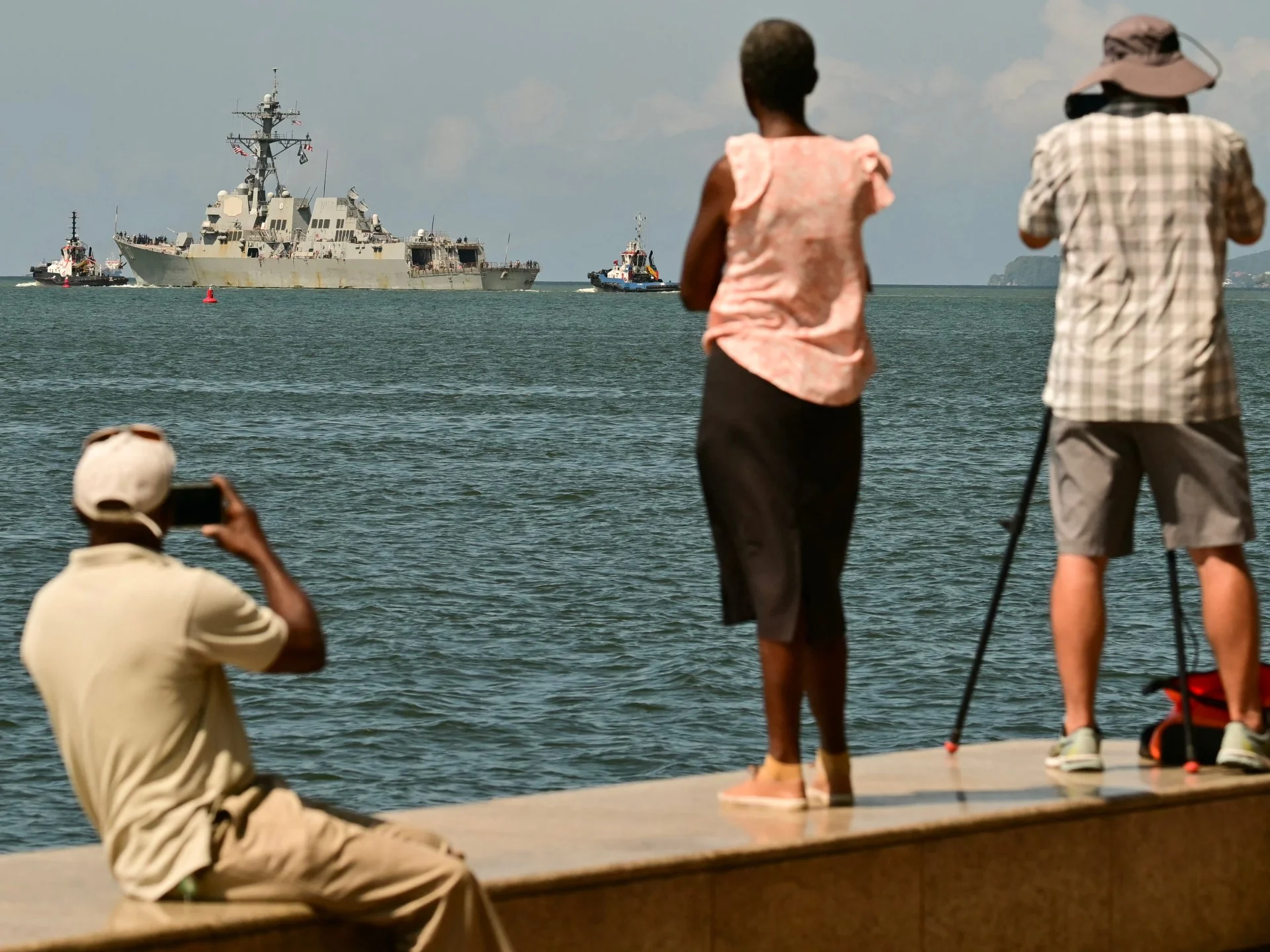
United States President Donald Trump has firmly stated that he is not planning any military strikes within Venezuela, contradicting earlier reports and his own statements from this month. The US has bolstered its military presence in the Caribbean, with fighter jets, warships, and thousands of troops deployed, including the world’s largest warship, the USS Gerald R Ford.
Escalation of Military Build-up
In an interview on Air Force One, Trump directly addressed media reports suggesting he was considering military action in Venezuela. “No,” Trump responded, dismissing the notion that such strikes were being contemplated. US Secretary of State Marco Rubio echoed this stance, criticizing articles from the Miami Herald that suggested the US was poised to attack Venezuela.
Previous Statements and Current Policies
Earlier this month, Trump had hinted at possible military action against Venezuela, stating he would not “necessarily ask for a declaration of war” but would use force to stop drug smuggling. He emphasized that his primary goal was targeting those bringing drugs into the US. The current stance appears to be a reversal or clarification of these earlier remarks.
Drug Smuggling and Military Strikes
The US military has been launching strikes on vessels in the Caribbean and eastern Pacific since September, resulting in at least 62 deaths and destroying 14 boats. However, there is no public evidence presented by the Trump administration to support its claims of drug smuggling. These actions have faced criticism from international bodies such as the United Nations High Commissioner for Human Rights.
Public Opinion and Diplomatic Fallout
A recent YouGov poll revealed that 60% of Americans disapprove of the US Navy’s presence around Venezuela, marking a decline in public support. Meanwhile, Trinidad and Tobago, which hosts one of the US warships, has placed its military on alert and recalled personnel to bases following the deployment.
International Reactions and Accusations
Venezuelan President Nicolas Maduro accused the US government of fabricating a new “eternal war” against him. He also denied claims of drug smuggling, asserting that Venezuela does not produce coca leaves. This stance contrasts with expert opinions suggesting that most drugs enter the US via Mexico and not through sea routes.
Transparency and Congressional Pressure
The US Senate Armed Services Committee has expressed concern over the legal basis of these strikes, requesting more information from the Defense Department. Republican Senator Roger Wicker and Democrat Jack Reed have called for answers regarding the “anti-drug” strategy employed by the US military.
Conclusion
The situation between the US and Venezuela remains tense, with ongoing military build-up and mixed messaging from both sides. As the political landscape evolves, it is crucial to monitor developments closely to understand their implications for regional stability and international relations.