Key Highlights
- A U.S. warship has docked in Trinidad and Tobago’s capital as the Trump administration increases military pressure on Venezuela.
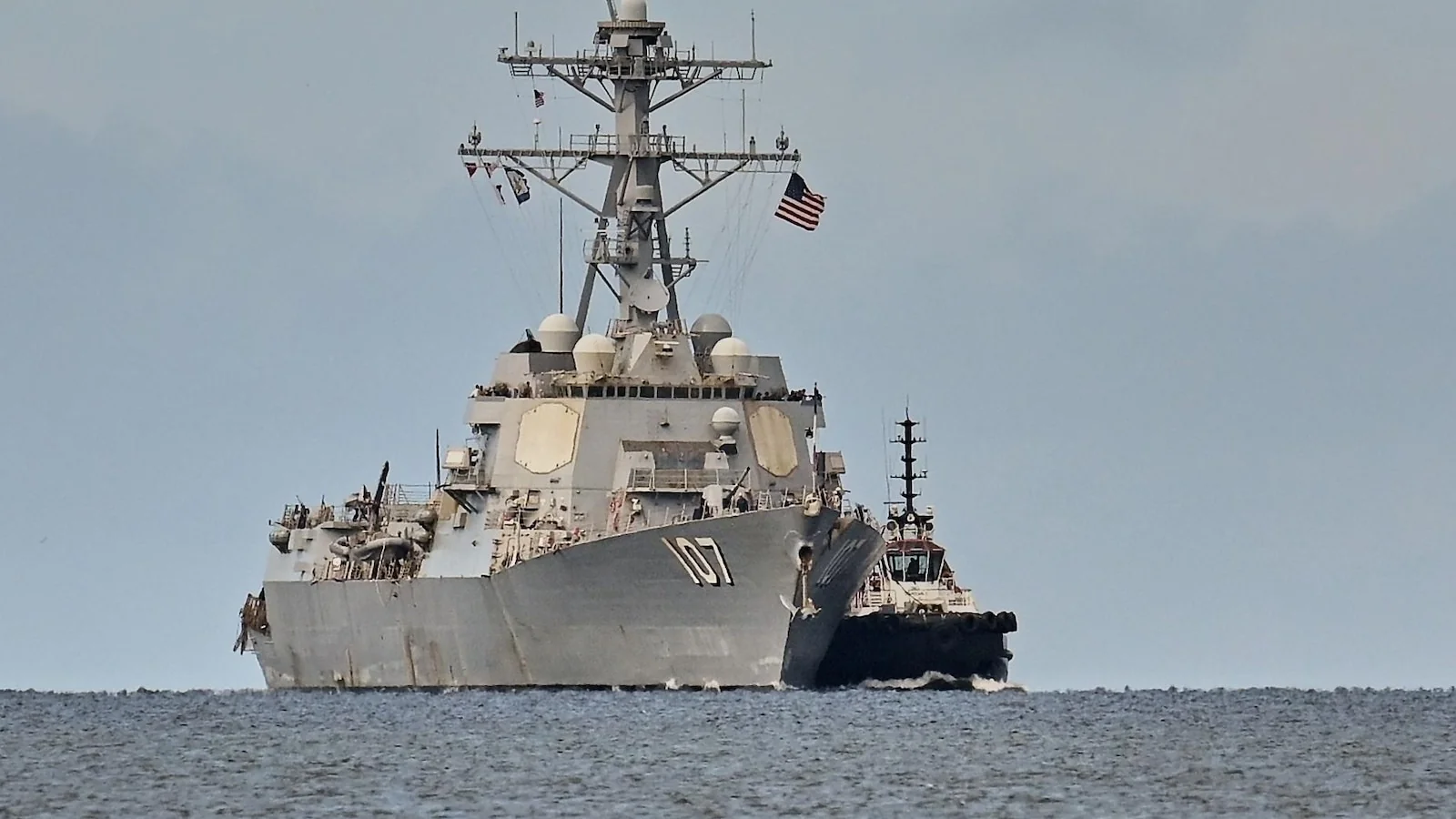
- The USS Gravely, a guided missile destroyer, is part of the increased presence near Venezuela alongside an aircraft carrier.
- Trinidad and Tobago’s Prime Minister Kamla Persad-Bissessar supports the U.S. military presence in her country.
- A senior military official from Trinidad and Tobago spoke under condition of anonymity about the recent scheduling of the warship’s arrival.
Increased Military Pressure on Venezuela
A United States naval vessel, the USS Gravely, a guided missile destroyer, has docked in Trinidad and Tobago’s capital, marking a significant move by the Trump administration to increase military pressure on its neighbor, Venezuela. This development comes as part of a broader strategy aimed at intensifying tensions with President Nicolás Maduro’s government.
Strategic Positioning
The USS Gravely’s presence in Trinidad and Tobago adds to the already existing U.S. military footprint near Venezuela. The aircraft carrier USS Gerald R. Ford is also moving closer to the South American country, creating a formidable naval force in the region.
Regional Dynamics and Criticism
The move has garnered mixed reactions within Trinidad and Tobago. Prime Minister Kamla Persad-Bissessar of Trinidad and Tobago has been a vocal supporter of the U.S. military presence, including recent deadly strikes on suspected drug boats in waters off Venezuela. However, not everyone shares this view.
Local Criticism
David Abdulah, leader of the Movement for Social Justice political party, criticized the warship’s docking in Trinidad and Tobago. He expressed concern that the warship’s presence could escalate tensions with Venezuela unnecessarily. “This is a warship in Trinidad, which will be anchored here for several days just miles off Venezuela when there’s a threat of war,” Abdulah stated, emphasizing his belief that such actions are misplaced.
Regional Responses and Concerns
The Caribbean Community (CARICOM), a regional trade bloc comprising 15 countries, has called for dialogue to address the ongoing tensions. However, Trinidad and Tobago’s Prime Minister has maintained that her country is not a zone of peace, citing high levels of violence within its borders.
International Relations
The visit by the U.S. warship underscores the complex web of international relations in the Caribbean region. While some nations support increased military presence as part of broader security efforts, others remain wary of potential escalations that could disrupt regional stability.
The arrival of the USS Gravely and its ongoing exercises with Trinidad and Tobago’s military reflect a strategic move by the U.S. government to exert more pressure on Venezuela under the Trump administration. The situation highlights the delicate balance between security concerns and regional cooperation in the Caribbean.