Key Highlights
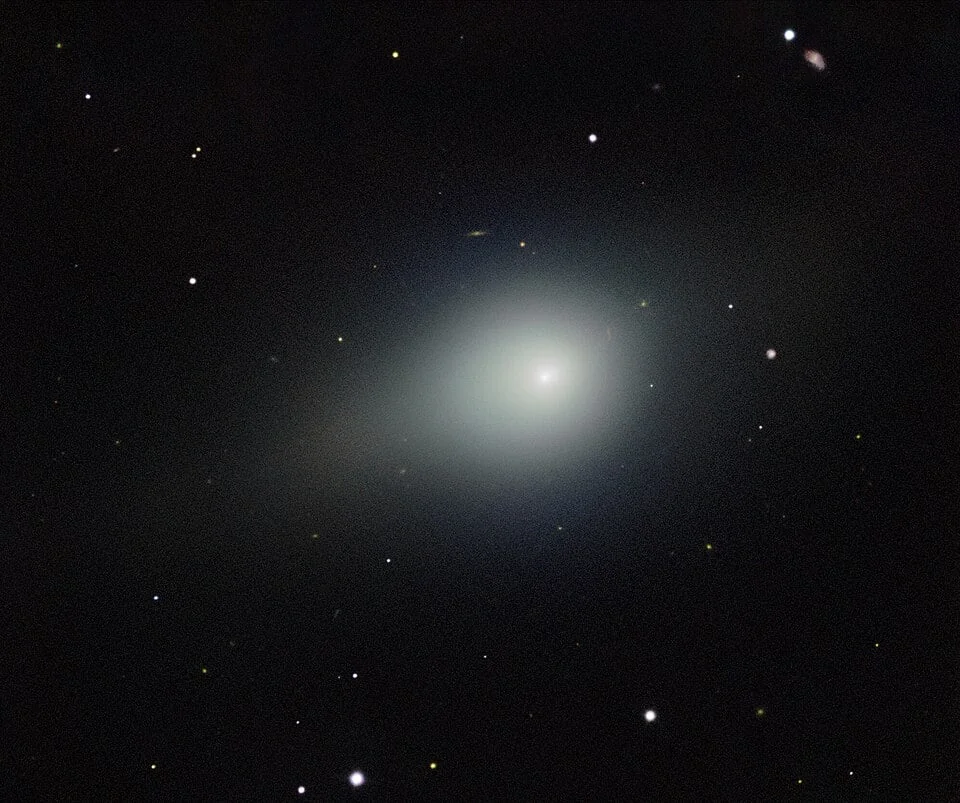
- Interstellar Comet 3I/ATLAS observed by SOHO/SWAN after perihelion.
- Six billion molecules of water emitted every second measured by SWAN.
- Decrease in activity as the comet moves away from the Sun observed.
- Comet’s behavior indicates it formed similarly to Solar System comets.
The Intriguing Interstellar Visitor 3I/ATLAS
When interstellar comet 3I/ATLAS swept past the Sun in late October 2025, it became only the third confirmed visitor from outer space to ever be detected. Unlike its predecessors, such as the mysterious ‘Oumuamua and 2I/Borisov, this latest traveler arrived with a perfect opportunity for detailed study by astronomers.
Unique Observations by SOHO/SWAN
The Solar and Heliosphere Observatory (SOHO), which has been monitoring the Sun from its orbital position since nearly 1996, included an unexpected observer in this cosmic spectacle. Among its instruments is SWAN, designed to watch for ultraviolet light emitted by hydrogen atoms throughout the Solar System. On November 6, nine days after 3I/ATLAS reached perihelion (its closest approach to the Sun), SWAN detected a distinctive hydrogen glow surrounding the comet.
This hydrogen glow provided astronomers with valuable insights into how much water was being produced by the comet’s nucleus as it approached and then moved away from the Sun.
When sunlight strikes water molecules in space, it breaks them apart, releasing hydrogen atoms that emit ultraviolet light. By measuring this glow, scientists can calculate the rate of water production.
Water Production Analysis
The measurements revealed that on November 6, when 3I/ATLAS was approximately 1.4 astronomical units from the Sun, it was spewing water at a rate of 3.17 × 10²⁹ molecules per second—equivalent to filling an Olympic swimming pool every few seconds. This substantial production rate indicates that despite traveling through interstellar space for potentially millions of years, the comet’s behavior closely resembles those found in our Solar System.
Over subsequent weeks, as the comet moved farther away from the Sun, its activity began to decline steadily. By early December, about 40 days after perihelion, water production had dropped to between 10 and 20 trillion trillion molecules per second. This pattern aligns with what astronomers observe in Solar System comets, suggesting that despite its origins, 3I/ATLAS hasn’t fundamentally changed from the icy bodies formed during our Solar System’s distant past.
Implications for Interstellar Studies
The technique used to measure this water production has proven remarkably reliable. First developed over two decades ago and refined through observations of more than 90 different comet apparitions, it combines SWAN’s hydrogen measurements with daily readings of solar ultraviolet output and corrections for the Sun’s rotation.
These measurements serve a broader purpose in understanding interstellar objects. As an object formed in a planetary system around another star, possibly billions of years ago, 3I/ATLAS offers valuable insights into the conditions in that distant stellar neighborhood.
By studying its composition and behavior, scientists can learn about the formation of other planetary systems throughout the galaxy.
The substantial water production from this comet also raises intriguing questions about its nucleus size and surface activity. Based on Hubble Space Telescope observations, the nucleus diameter is estimated to be between 440 meters and 5.6 kilometers. This suggests that a significant fraction of the surface would need to be active, possibly around 20 percent, much higher than typical Solar System comets which typically show 3 to 5 percent activity.
As 3I/ATLAS now leaves our Solar System behind, traveling for millennia before approaching another star, it has left us with a detailed snapshot of this messenger from the depths of space during its brief visit.
This study is not just about one comet but offers broader insights into the origins and evolution of interstellar objects.
The work by Mark Thompson, a science broadcaster and author, highlights the importance of these observations for understanding our place in the universe. His enthusiasm for making science accessible through various media platforms has made complex astronomical phenomena more understandable to the general public.