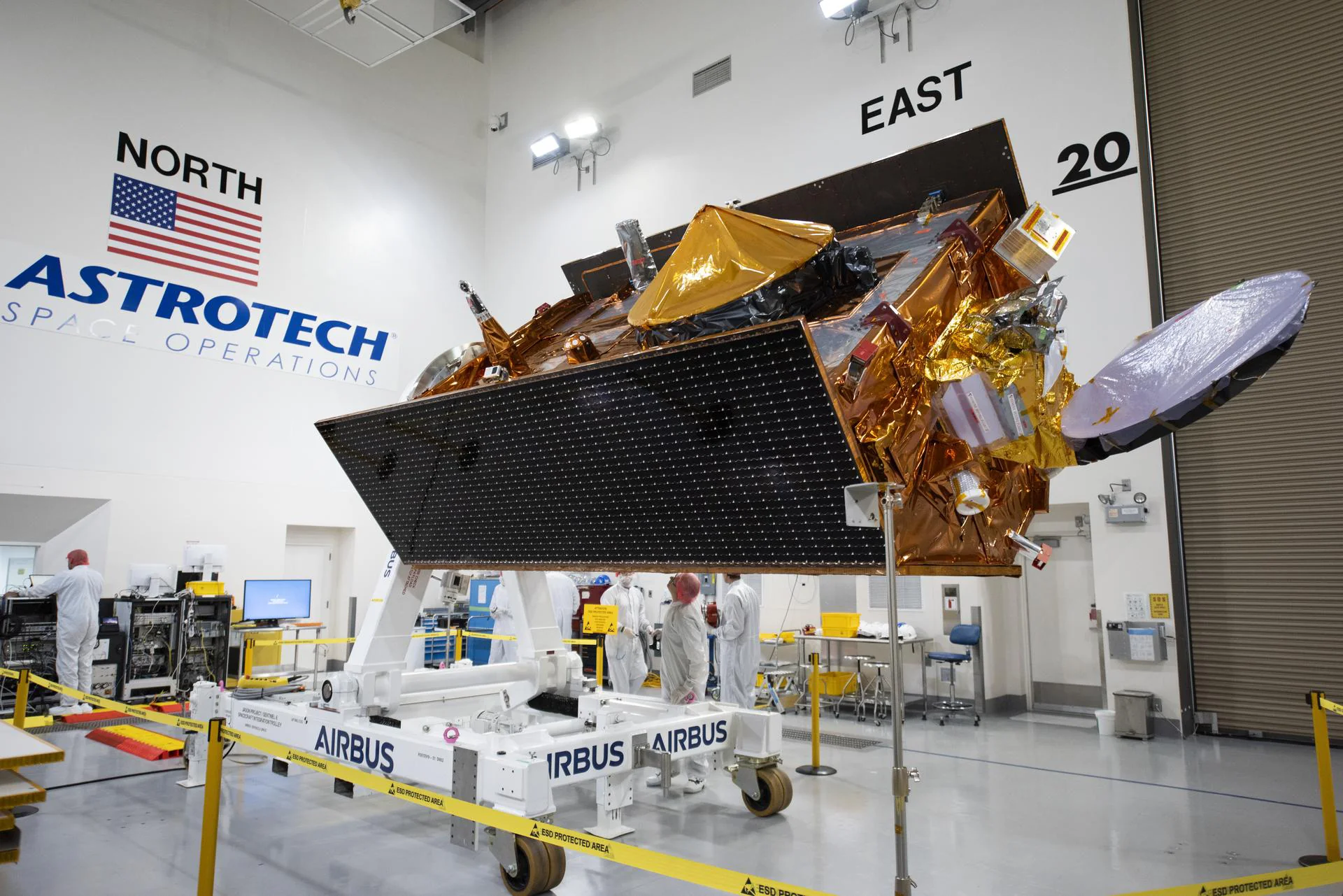
Key Highlights
- A joint U.S.-European satellite to monitor oceans is scheduled for launch on Sunday night from Vandenberg Space Force Base.
- The Sentinel-6B will launch aboard a SpaceX Falcon 9 rocket and aims to continue monitoring sea levels using precise radar measurements from space.
- Weather conditions could impact the launch, with a primary day probability of 60% for liftoff on Sunday night.
- Data collected by Sentinel-6B is crucial in understanding climate change and its effects on global sea levels.
New Ocean-Monitoring Satellite Set for Launch from Vandenberg Space Force Base
A joint U.S.-European satellite, the Sentinel-6B, designed to monitor ocean conditions and sea levels, is set to launch Sunday night (December 14, 2023) from Vandenberg Space Force Base. This mission, led by SpaceX, marks an important step in continuing global observations of the oceans’ health.
Preparation and Weather Conditions
The Falcon 9 rocket carrying Sentinel-6B has been prepared for launch with the satellite mated to it on Saturday morning. The team anticipates rolling out the rocket to the launch pad overnight before raising it into a vertical position, weather permitting.
“The Falcon 9 rocket and Sentinel-6B spacecraft are ready, and the launch team is prepared to launch this important ocean science altimetry mission,” said Tim Dunn, NASA’s launch manager for the Sentinel-6B mission. Despite the potential for cloudy skies due to ongoing storms in California, which could delay or scrub the launch attempt, mission managers remain optimistic.
1st Lt.
William “Forrest” Harbin, the launch weather officer assigned to Vandenberg, provided an update on the current weather outlook: “Overall, we’re optimistic for the weather. However, our probability of violation for the primary day is 60% with slight improvement for backup day with 40%.”
Clouds pose a significant challenge as they can trigger rocket-triggered lightning, which could jeopardize the launch countdown.
Mission Goals and Significance
The Sentinel-6B satellite will monitor global sea levels using precise radar measurements from space. This mission is part of an ongoing effort to continue observing ocean conditions that have been monitored for 40 years. The rate of sea level rise, which the satellite aims to track, is a critical indicator of climate change.
Phil Evans, director general for the European Organisation for the Exploitation of Meteorological Satellites (EUMETSAT), emphasized the importance of these data: “Sentinel 6B will ensure the uninterrupted continuation of this monitoring of sea level and will extend an unprecedented and unbroken record of global mean sea level measurements that run back 40 years.
The rate of sea level rise is an extremely important indication of climate change, Evans said, adding the data shows sea levels are rising and at a faster rate.”
With the primary launch attempt on Sunday night (December 14, 2023), a backup window exists for Monday if weather conditions do not cooperate. The live webcast of the countdown and liftoff will begin approximately one hour before Falcon 9’s planned departure at NASA+ and the NASA channel on YouTube.