Key Highlights
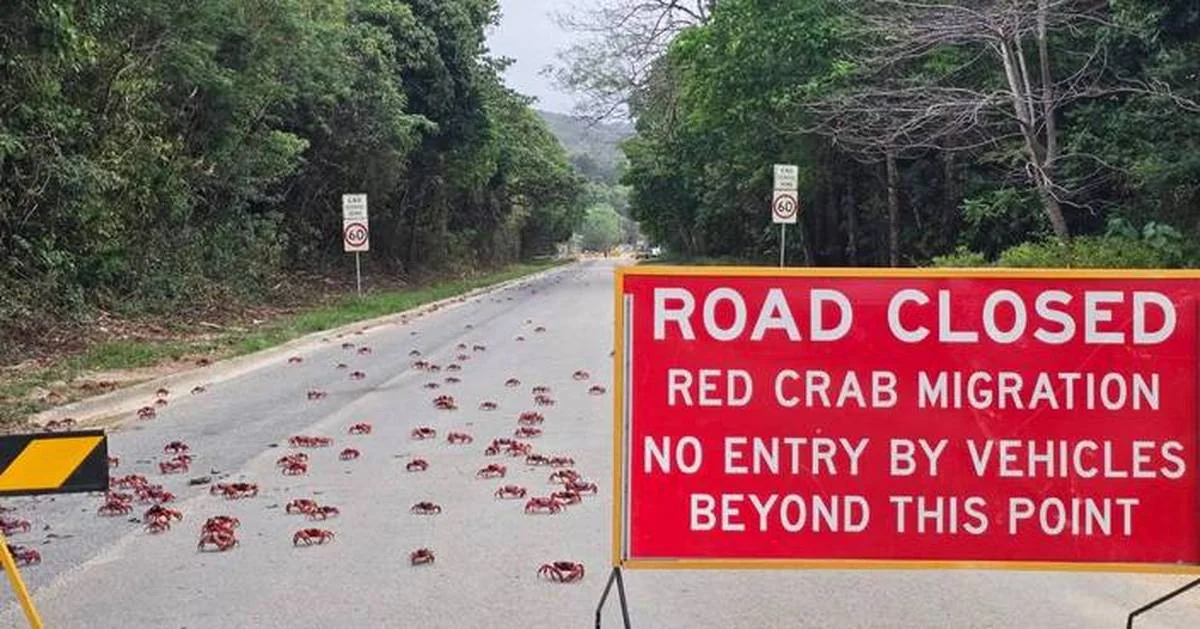
- About 100 million red crabs are expected to migrate from their forest burrows to the shoreline on Christmas Island.
- A small human population uses leaf blowers and garden rakes to help protect the migrating crabs.
- The crabs breed on the shores, with females laying eggs in burrows that will release into the ocean at high tide.
- During their migration, some crabs are crushed by vehicles, prompting conservation efforts involving leaf blowers and rakes.
Migrating Red Crabs: A Spectacle of Nature on Christmas Island
The tiny Australian island territory of Christmas Island, located in the Indian Ocean, is about to witness a natural phenomenon that draws international attention every year. Approximately 100 million red crabs (Gecarcoidea natalis), an endemic species, embark on their annual migration from their forest burrows to the shoreline for breeding purposes.
According to Alexia Jankowski, the acting manager of Christmas Island National Park, these crabs travel in vast numbers, making their way across roads and gardens during early mornings and late afternoons. This mass movement is triggered by the start of Southern Hemisphere summer rains, which occurred just a few days ago.
Human Efforts to Protect the Crabs
The 1,200 residents on Christmas Island play an active role in ensuring the safety and successful migration of these crabs. Jankowski explains that while some people might consider the crabs a nuisance, most view them as a privilege to experience. The crabs are known for their indiscriminate nature; they will navigate over anything in their path, including front doors, gardens, and even driveways.
However, during critical times like this migration period, residents must clear paths to help the crabs continue their journey unobstructed. This involves using leaf blowers to move tiny baby crabs, as well as rakes or other garden tools to gently displace larger ones that might be in danger of being crushed by vehicles.
Crab Breeding and Future Implications
The breeding process for the red crabs is a fascinating spectacle. On the shores, male crabs excavate burrows where females spend two weeks laying and incubating eggs. The females are expected to release their spawn into the ocean during high tide on November 14 or 15, specifically during the last quarter of the moon.
After spending about a month as tiny larvae in the ocean, the young red crabs return to Christmas Island as small crabs.
This annual cycle is crucial for the survival and continuation of this species. However, the migration can be dangerous for some crabs, especially during high-traffic periods when cars may accidentally run over them.
Conclusion
A Testimony to Environmental Stewardship
The efforts made by both the local residents and park management highlight the importance of environmental stewardship. By using simple tools like leaf blowers and rakes, people are able to minimize harm to these millions of crabs while allowing them to safely complete their migratory journey.
This annual event serves as a reminder of the delicate balance between human habitation and natural ecosystems. As climate change poses increasing challenges to global biodiversity, such conservation efforts on Christmas Island stand out as models for other regions facing similar ecological issues.