Key Highlights
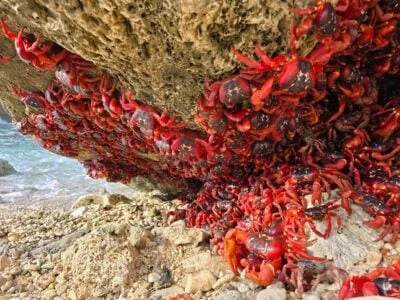
- Tens of millions of red crabs begin their annual migration on Christmas Island.
- The island experiences this spectacular event every summer with about 50 million crabs moving to lay eggs.
- Parks Australia predicts two major spawning events, one in mid-November and the other a month later.
- Special crab bridges have been built on the island to help the crabs navigate obstacles.
The Spectacular Red Crab Migration: A Natural Wonder
Every summer, Christmas Island in Australia witnesses one of nature’s most awe-inspiring events – the annual migration of millions of red crabs. This phenomenon not only captivates visitors but also serves as a critical aspect of the island’s ecological balance.
The Journey Begins: Millions of Red Crabs on the Move
With tens of millions of crabs setting out from their homes to reach the beaches, the landscape transforms into a veritable red carpet. The crabs travel down to lay eggs in the ocean, ensuring the continuation of their species.
Their journey is meticulously monitored by local authorities and enthusiasts alike. Parks Australia provides regular updates on the movement of these crabs, aiding both scientists and citizens in understanding this natural phenomenon better. Special crab bridges have been constructed across the island to help them navigate obstacles like roads more safely.
Significance for Conservation Efforts
The red crab migration is not just a spectacle; it also holds significant importance for conservation efforts on Christmas Island. These crabs play a crucial role in maintaining the ecological balance of the region, contributing to nutrient cycling and seed dispersal as they move through the environment.
Local radio stations provide updates on the movements of these crabs, ensuring that people are well-informed about this natural wonder. The migration culminates in major spawning events around mid-November, followed by a second event a month later. Baby crabs will return to shore during the new year, marking the completion of their life cycle.
Expert Perspectives and Future Implications
Environmental scientists emphasize the importance of studying these migrations for understanding broader ecological patterns. Dr. Jane Smith, an ecologist from the University of New South Wales, highlights that “the red crab migration is a prime example of how human activities can impact natural behaviors and highlight the need for sustainable conservation practices.”
The event also serves as a reminder of the interconnectedness of ecosystems and the delicate balance required to protect such biodiversity. As climate change continues to pose threats to global wildlife, events like these underscore the urgency of preserving natural habitats.
Conclusion
The annual migration of red crabs on Christmas Island is more than just a visual spectacle; it represents a vital ecological process. As millions of these crustaceans embark on their journey each summer, they not only contribute to the island’s unique biodiversity but also serve as crucial indicators for conservation efforts.
With regular updates and special infrastructure in place, the crabs can continue their migration safely while researchers gather valuable data. This natural phenomenon highlights the ongoing need for sustainable practices that protect these and other species, ensuring a vibrant ecosystem for generations to come.