Key Highlights
- The launch of the Turquoise Alert in Arizona has resulted in nearly 300 people being reported missing since its implementation.
- The alert was designed to address gaps in the system for missing Indigenous people but only qualifies under specific criteria, such as age and suspicious circumstances.
- Rep. Teresa Martinez changed the age limit of the Turquoise Alert to include all minors up to 64 years old.
- Only one Turquoise Alert has been used since its launch in July 2025, prompting questions about its effectiveness for Indigenous children who go missing at higher rates.
The Emergence of the Turquoise Alert: A New Tool in Arizona’s Missing Person Response System
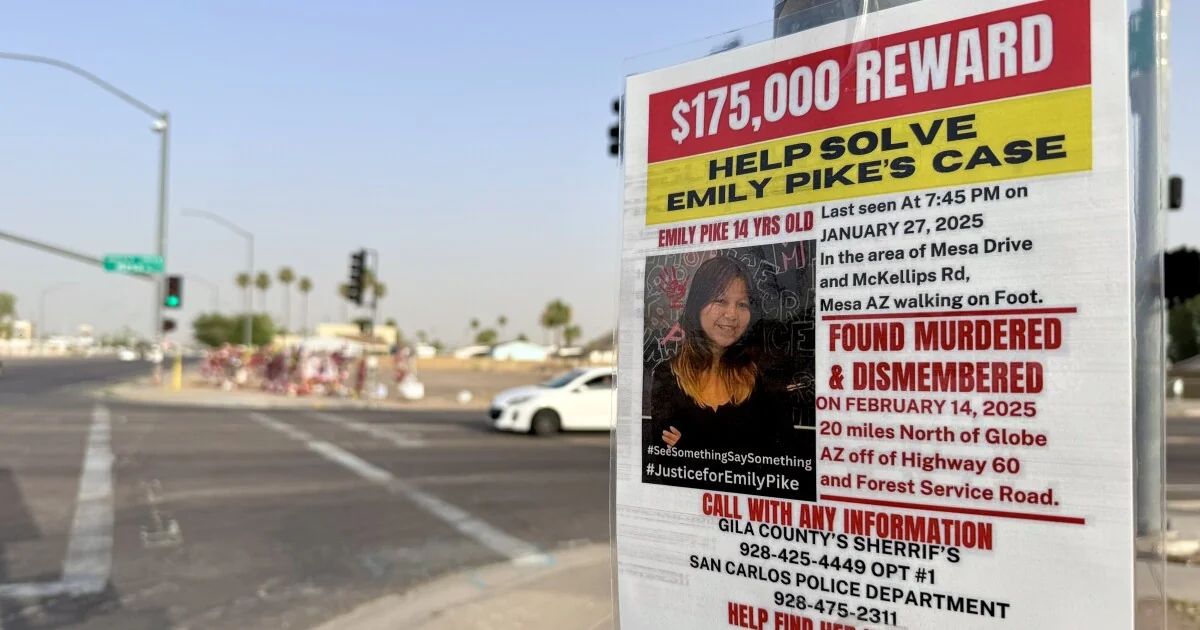
Arizona has introduced a new emergency alert system called the Turquoise Alert, designed to address gaps in existing alerts like Amber and Silver Alerts. The legislation behind this alert was named “Emily’s Law,” after Emily Pike, a 14-year-old Indigenous teen who tragically went missing from a Mesa group home earlier this year.
According to Chelsea Curtis, a reporter for Arizona Luminaria, the initial proposal of the Turquoise Alert was intended specifically for Indigenous people due to their historically high rates of violence and disappearances. However, the legislation was amended to include all individuals between 18 and 64 years old. The alert is designed to be triggered only when there are specific suspicious circumstances surrounding a missing person’s case.
Criteria for Activation
The Turquoise Alert requires that certain criteria be met before it can be activated, including:
- A report filed with law enforcement databases,
- The individual is under 65 years of age,
- An element of suspicious or unexplained circumstances,
- And a danger factor.
As of the implementation in July 2025, the Department of Public Safety (DPS) has reported that nearly 300 people have been reported missing in Arizona. However, none of these cases met all the criteria set by the Turquoise Alert system.
Effectiveness and Controversy
The low usage rate of the Turquoise Alert raises questions about its effectiveness, especially considering that Indigenous children go missing at much higher rates than the general population. Emily Pike’s case, which was initially labeled a “runaway” instead of a suspicious disappearance, highlights the challenges in applying these criteria.
Rep. Teresa Martinez addressed this issue by amending the age limit to include all minors up to 64 years old. However, the question remains: Would such an alert have made a difference for Emily Pike?
Public Safety and Public Perception
The DPS has stated that they are following the law as designed, which requires rigorous review processes before activating any alerts. They argue that frequent activation would desensitize the public to these alerts, reducing their impact.
“We have nearly 300 people in Arizona missing since July,” said a spokesperson from the DPS, “and none of them met all those criteria.” This statement underscores the challenge in balancing alert frequency with public perception and effectiveness.
Expert Perspectives and Future Directions
According to Chelsea Curtis’ research, there is growing support among experts for considering any missing child as a child in danger. This approach could potentially expand the criteria of the Turquoise Alert beyond its current limitations.
“Any missing child should be considered endangered,” said Curtis, “especially given that runaways are more prone to dangerous situations.” She also noted that addressing this issue requires preventive measures such as increased family support and counseling programs for at-risk individuals.
Conclusion
The introduction of the Turquoise Alert in Arizona aims to bridge gaps in existing emergency alert systems. However, its limited use since July 2025 has sparked discussions about its effectiveness, particularly concerning the disproportionate rates of missing Indigenous children. As this issue continues to gain attention, policymakers and experts will likely push for more comprehensive solutions to address these critical needs.