Key Highlights
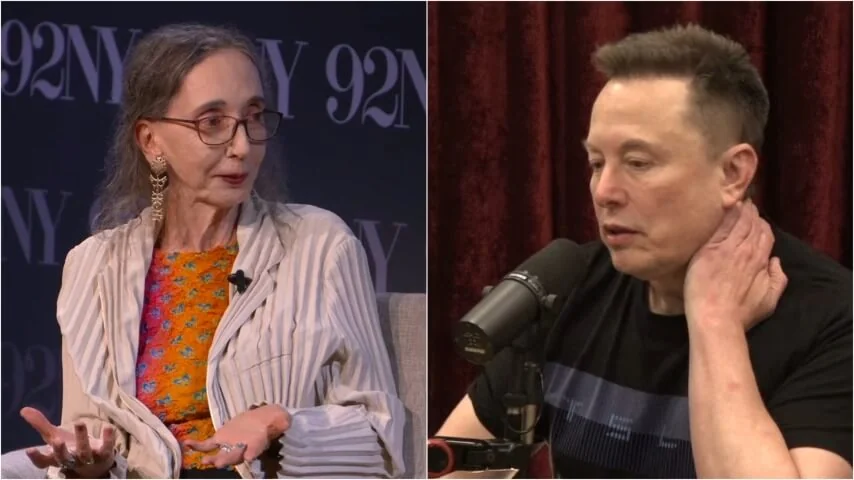
- Renowned author Joyce Carol Oates criticized Tesla CEO Elon Musk on the social media platform X.
- Oates’ tweet suggested that Musk’s posts lack cultural and educational depth, comparing him to “the poorest persons on Twitter.”
- Musk retaliated by calling Oates a liar and mocking her work, but also praised some films in an attempt to prove his cultural awareness.
- The interaction has gained traction in anti-Musk circles, with Oates defending her critique as stemming from curiosity about Musk’s lack of apparent appreciation for life’s beauty and meaning.
Background on the Author and Platform
Rewriting the social media landscape is Joyce Carol Oates, a celebrated author whose presence on platforms like X (formerly known as Twitter) has long been a source of critical commentary. Known for her prolific posts and incisive analysis, Oates regularly engages with a wide array of topics, often delving into political and cultural issues with sharp insights.
The Clash Between Author and Tech Titan
On Saturday, November 10, 2025, the tension between Oates and Musk escalated when Oates posted a tweet critiquing Musk’s social media presence. She wrote:
“So curious that such a wealthy man never posts anything that indicates that he enjoys or is even aware of what virtually everyone appreciates— scenes from nature, pet dog or cat, praise for a movie, music, a book (but doubt that he re); pride in a friend’s or relative’s accomplishment; condolences for someone who has died; pleasure in sports, acclaim for a favorite team; references to history. In fact he seems totally uneducated , uncultured.”
Musk’s response was swift and combative, denouncing Oates as a liar and expressing disdain for her work:
“Oates is a liar and delights in being mean. Not a good human,”
He further stated:
“Eating a bag of sawdust would be vastly more enjoyable than reading the laboriously pretentious drivel of Oates.”
Musk then took to defending his cultural awareness by praising films like “Man On Fire” and “The Fifth Element,” suggesting that his taste in entertainment was not lacking.
Reaction and Controversy
The interaction quickly gained momentum, with Oates explaining the curiosity behind her tweet:
“Truly it was out of curiosity: why a person with unlimited resources exhibits so little appreciation or even awareness of the things that most people value as giving meaning to life,”
Oates also noted the difference between wealthy individuals and those who contribute to society through cultural engagement:
Despite her critique, Oates conceded that Musk’s willingness to allow critical commentary was a positive aspect of his platform:
“It is impressive that Elon Musk allows critical ary of himself on X,”
Reflections and Implications
The back-and-forth between Oates and Musk highlights the ongoing debate over cultural engagement in the digital age, particularly among those with significant social media followings. As public figures increasingly use platforms like X to communicate with their audiences, the nature of their interactions and contributions becomes a matter of scrutiny.
For Joyce Carol Oates, the exchange serves as both a critique of Musk’s online presence and an exploration of the values that underpin cultural awareness in today’s society. Her tweet has sparked discussions about the role of wealth and privilege in shaping public discourse and the importance of engaging with various aspects of life beyond financial success.