Key Highlights
- AWS outage on Monday highlighted the critical role of cloud providers in business operations.
- The shift towards artificial intelligence could exacerbate the risk of major disruptions if services fail.
- Larger tech companies like Amazon, Microsoft, and Google dominate the market for AI applications.
- Experts suggest strategies to enhance resilience against outages as reliance on AI increases.
The Monday Outage: A Wake-Up Call
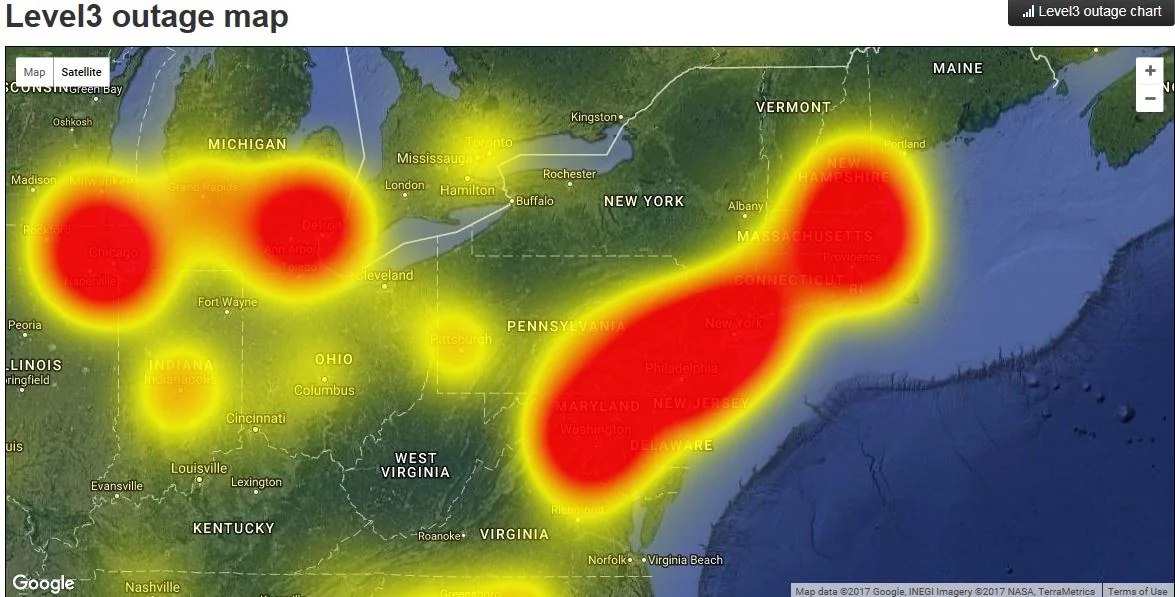
A global internet outage on Monday underscored just how reliant businesses and services are on a few major cloud providers, particularly Amazon Web Services (AWS). This event, which affected millions of users across the world, temporarily impacted everything from booking doctor’s appointments to accessing banking services. The incident brought into sharp focus the potential for significant disruptions in critical operations if similar outages were to occur more frequently.
Tim DeStefano, an associate research professor at Georgetown University, emphasized that such outages could have severe consequences: “If there’s an outage and you rely on AI to make your decisions and you can’t access it, that’s going to have an effect on performance.” This highlights the growing vulnerability of businesses and institutions as they increasingly depend on cloud-based services for their operations.
AI’s Rising Influence
The tech industry is rapidly moving towards a future where artificial intelligence (AI) plays a central role in decision-making processes. According to a global survey by McKinsey & Company, 78% of firms already use AI in at least one business function, marking a significant increase from the previous year. This trend suggests that more companies are integrating AI into their operations, making them even more dependent on cloud services that support these advanced technologies.
As AI becomes more prevalent, the potential for data center outages increases due to the high power consumption of AI models. Experts like Jacob Bourne from Emarketer highlight this trend: “Major cloud providers are spending billions on data centers to address this growing need.” However, this also means that any disruption could have far-reaching consequences across multiple sectors.
Building Resilience Against Outages
To mitigate the risks associated with such outages, various strategies are being explored. One approach is diversification of cloud providers. While AWS currently holds around 37% of the cloud computing market, other companies like Oracle and CoreWeave are gaining ground by offering AI-specific services.
Additionally, many organizations are opting for a multi-cloud strategy to avoid relying on a single provider.
Furthermore, investments in smaller, more efficient AI models that can run locally on devices such as smartphones and laptops could also reduce the dependency on cloud-based systems. This shift not only enhances resilience but also addresses concerns about data privacy and security. Experts agree that while these solutions are promising, they need to be implemented alongside continued advancements in cloud infrastructure to ensure reliable service.
The future of technology is increasingly intertwined with AI, and as this integration deepens, so too will the need for robust and resilient internet architectures. The lessons from Monday’s outage serve as a reminder that while technological progress brings immense benefits, it also introduces new challenges that must be addressed proactively to maintain stability in our interconnected world.