Key Highlights
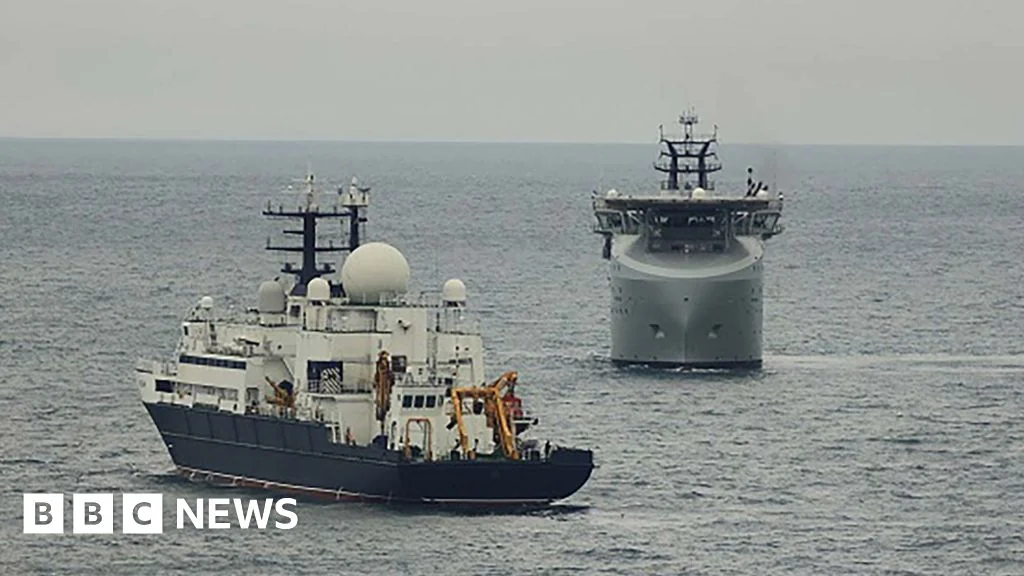
- Russia’s spy ship Yantar is suspected of mapping Britain’s undersea cables.
- The Royal Navy vessel RFA Proteus monitored the Yantar in November 2024.
- Russian sailors used lasers to target RAF pilots, raising concerns over “deeply dangerous” actions.
- UK Defense Secretary John Healey warned Russia that a military response would be ready if the ship entered British waters.
The Yantar: A Spy Ship Concern for Britain’s Security
Russia’s spy ship, the Yantar, has once again raised concerns among UK defense officials. Suspected of secretly mapping out undersea cables that carry critical data across the Atlantic, the Yantar recently came into the spotlight when its sailors reportedly targeted RAF pilots with lasers during their patrols.
The Undersea Cable Threat
Britain heavily relies on its network of undersea cables for data transfer. More than 90% of global internet traffic and billions of dollars in financial transactions flow through these cables, making them a strategic asset. The Yantar’s presence is viewed with suspicion as it operates near British shores, potentially gathering intelligence on the location and layout of these vital infrastructure lines.
Retired Royal Navy Commander Tom Sharpe highlighted the potential threat: “The most obvious one is they sit above our cables and critical undersea infrastructure, nosing around in the cables that transfer up to $7tn worth of financial transactions every day between us and America alone.”
A New Escalation
Recently, reports emerged that Russian sailors aboard the Yantar targeted RAF pilots with lasers during their patrols. This use of provocative force is considered deeply dangerous by UK authorities. According to Defense Secretary John Healey, “This is illegal in the UK and can lead to a prison sentence.” He added, “We see you.
We know what you’re doing. And if the Yantar travels south this week, we are ready.”
Healey’s statement reflects a clear message from the UK government that any further intrusion into British maritime boundaries will prompt a strong military response.
A History of Suspicion
This is not the first time the Yantar has been seen near British waters. At the start of the year, a Royal Navy submarine surfaced right in front of the ship as a deterrent measure. The Yantar’s operations are part of an ongoing Kremlin strategy to locate and map vital undersea cables and pipelines that connect the UK to other parts of the world.
These actions are part of broader Russian activity aimed at testing NATO’s reactions, resolve, and defenses. Similar moves have been observed with recent drone incursions across Europe and Russian warplanes flying into NATO airspace.
The Undersea Cable Threat: A Strategic Pressure Point
NATO has identified deep-sea cables as critical infrastructure that adversaries could exploit through sabotage or hybrid warfare. These cables are not only strategic for civilian communications but also pose a threat to military operations. The UK Ministry of Defence emphasizes the importance of protecting these assets, noting that any damage could have significant consequences.
Conclusion
The Yantar’s activities and the recent escalation raise serious concerns about Russia’s intentions in British waters. As tensions continue with NATO countries and ongoing conflicts like Ukraine, the UK remains vigilant against potential threats to its critical infrastructure. The government’s readiness for a military response underscores the seriousness of these security challenges.
Additional reporting by Tiffany Wertheimer and Stuart Hughes