Key Highlights
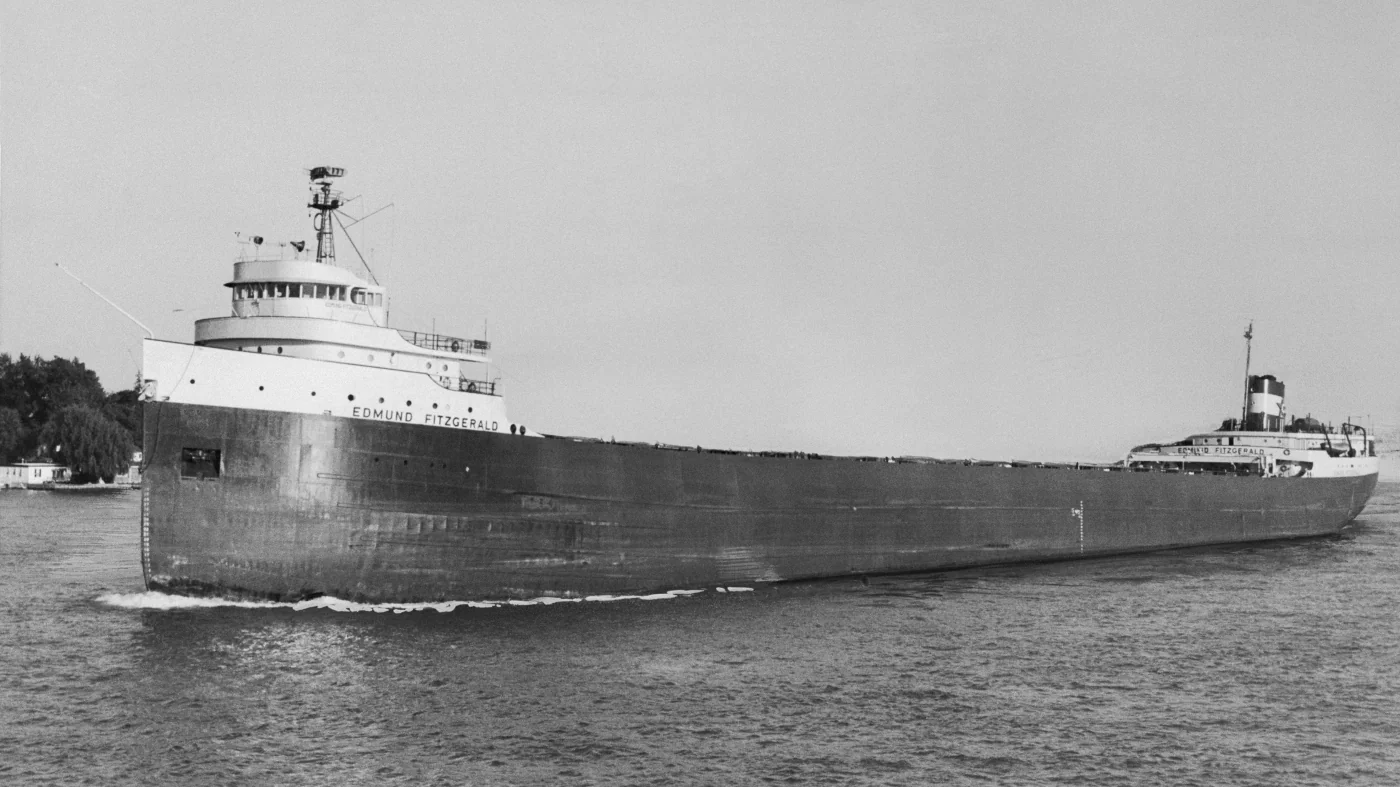
- The Edmund Fitzgerald, a 729-foot ore boat, sank in Lake Superior on November 6, 1975.
- Gordon Lightfoot’s song “The Wreck of the Edmund Fitzgerald” became one of the biggest hits of 1976, following the disaster it commemorates.
- The shipwreck led to changes in safety standards for commercial ships on the Great Lakes.
- Since the sinking, there have been no major commercial shipwrecks on the Great Lakes for the past 50 years.
The Sinking of the Edmund Fitzgerald: A Maritime Tragedy
In 1975, a tragic event unfolded in the waters of Lake Superior when the Edmund Fitzgerald, a 729-foot ore boat, met its demise. The ship sank on November 6, with no survivors, marking one of the most significant maritime tragedies in Great Lakes history.
The Rock Star Ship
The Edmund Fitzgerald was not just any ordinary freighter; it was known as a “rock star” among ships. Named after the president of the insurance company that funded its construction, this vessel was described as the “greatest ship on the Great Lakes” at launch in 1958. Its grandeur was such that over 15,000 people attended its launching ceremony in Detroit, and it attracted crowds waiting for hours to catch a glimpse of the massive ore carrier passing through locks like the Soo Locks.
A Stormy Night
The disaster occurred during a fierce storm with hurricane-force winds and waves up to 60 feet high. Gordon Lightfoot, an experienced sailor who knew those waters well, read news accounts of the tragedy while recording his album Summertime Dream in 1976. His song “The Wreck of the Edmund Fitzgerald” was a six-and-a-half-minute folk dirge with no hook or guitar solo, consisting of 28 two-line stanzas. Despite initial hesitation from bandmates and a studio engineer, Lightfoot’s persistence resulted in a hit that became number two on the Billboard Hot 100 charts.
The Legacy of “The Wreck of the Edmund Fitzgerald”
The success of Lightfoot’s song elevated the memory of the Edmund Fitzgerald. It helped change safety standards for commercial ships on the Great Lakes, leading to a period of unprecedented maritime safety. Since the sinking in 1975, there have been no major commercial shipwrecks on the Great Lakes for the past five decades.
A Lasting Impact
Gordon Lightfoot remained close to the families of those who perished and attended their reunions to commemorate the tragedy. He also established a scholarship fund at the Great Lakes Maritime Academy, which lost a cadet and an alumnus when the freighter sank. The singer’s contributions continue to honor the memory of the Edmund Fitzgerald and its crew.
The story of the Edmund Fitzgerald serves as a poignant reminder of the dangers faced by mariners on the Great Lakes and the enduring impact of music in honoring their legacy.