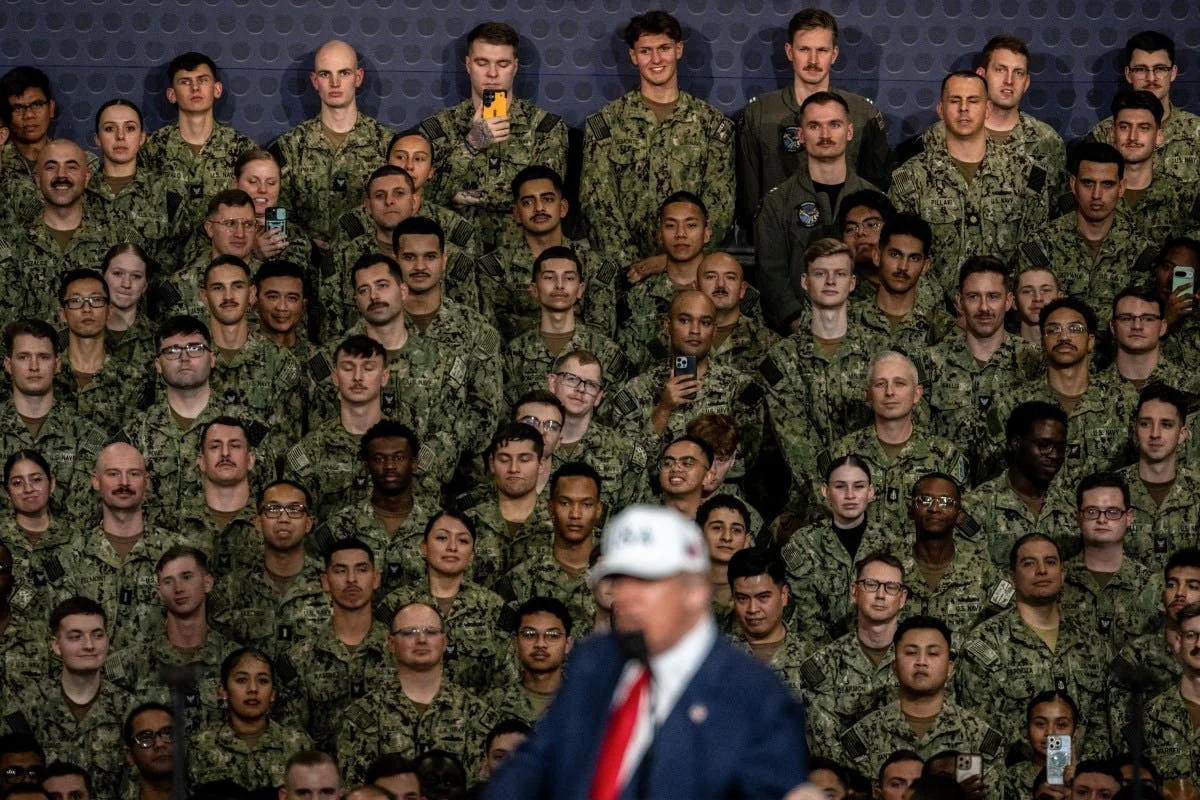
Key Highlights
- The U.S. military might miss their first paycheck since the government shutdown began on October 1.
- Treasury Secretary Scott Bessent stated that the Department of Defense will be able to pay service members by November but not beyond November 15 due to limited funds.
- President Donald Trump has directed his Secretary of War, Pete Hegseth, to use available funds to ensure troops are paid on October 15.
- The government has so far paid active-duty service members using a mix of legislative and Department of Defense funds totaling $5.3 billion.
Government Shutdown: Pay for Military Personnel at Risk?
As the U.S. government shutdown enters its second month, military personnel face the possibility of missing their next paycheck on November 15. This situation has drawn attention to the financial challenges faced by active-duty service members during prolonged budgetary disputes.
Funding Struggles and Timeline
According to Treasury Secretary Scott Bessent, the Department of Defense was able to use excess funds at the Pentagon to pay military employees in mid-October. However, these resources are now dwindling, raising concerns about future payments. Bessent warned that service members will not receive their November 15 paycheck unless a resolution is reached before then.
Efforts to Secure Payments
President Donald Trump has taken steps to ensure the military is compensated during the shutdown. On October 11, he directed his Secretary of War, Pete Hegseth, to use all available funds to pay troops on or around October 15. While this action addresses an immediate concern, it does not guarantee continuous payments if the shutdown persists.
Government Spending and Support
The government has allocated a total of $5.3 billion for military personnel during the shutdown. Of this amount, $2.5 billion came from One Big Beautiful Bill Act funds, $1.4 billion from the Pentagon’s procurement account, and another $1.4 billion from research, development, test, and evaluation funds. Additionally, a $130 million donation from an anonymous ally was confirmed by President Trump to help cover service members’ pay.
Political Back-and-Forth
The ongoing government shutdown has been the subject of intense political debate between Democrats and Republicans in Congress. Both parties have traded blame for the prolonged stalemate, with Democrats accusing Republicans of blocking crucial funding measures and vice versa. A procedural measure was approved by several Democratic senators on Sunday to temporarily fund the government, but it still needs final Senate approval before reaching the House.
Implications and Future Outlook
The potential for military pay delays highlights the broader financial implications of a prolonged government shutdown. Active-duty service members are considered essential federal employees who continue working during budgetary disputes. Their inability to receive timely compensation not only affects individual lives but also impacts morale and operational readiness.
As negotiations continue in Congress, the fate of military payments remains uncertain.
The Treasury Secretary’s warning underscores the urgency for a resolution that ensures service members can be paid without disruption. The situation serves as a stark reminder of the challenges faced by both policymakers and military personnel during times of political gridlock.