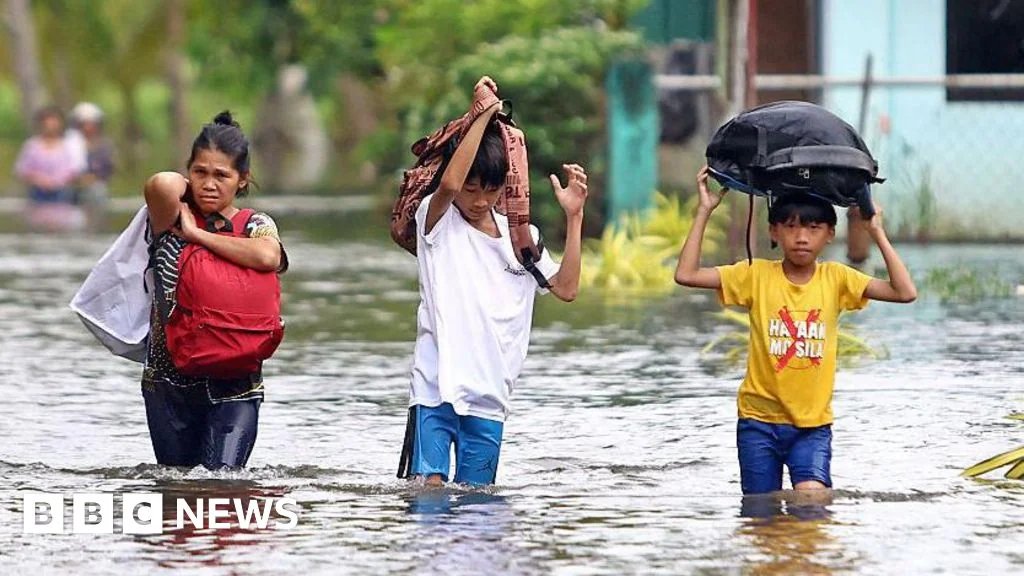
Key Highlights
- Typhoon Fung Wong has been upgraded to super typhoon status and is expected to hit the Philippines.
- A number of schools and airlines have cancelled classes and flights due to the approaching storm.
- The Philippines government declared a state of calamity in preparation for Typhoon Fung Wong’s arrival.
- Dozens of families in various regions have been evacuated ahead of the typhoon’s impact.
Typhoon Fung Wong: A Deadly Storm Approaches the Philippines
The Philippines faces another severe weather event as Typhoon Fung Wong, known locally as Uwan, has been declared a super typhoon. This storm follows closely on the heels of Kalmaegi, which caused significant damage and loss of life in recent days.
Intensity and Impact
Typhoon Fung Wong is projected to bring sustained winds of 185 km/h (155 mph) and torrential rain to several regions on Sunday. The Philippines’ meteorological service, Pagasa, has warned that the storm could lead to life-threatening conditions in outlying islands like Catanduanes off the coast of Luzon.
Several areas are already experiencing heavy rainfall and strong winds. Authorities have advised residents, especially those living in low-lying and coastal regions, to move to higher ground. In Aurora, a region on the eastern part of the country’s largest island, BBC News reported that local police had visited hotels multiple times to ensure all guests were evacuated before the storm.
Preparation and Evacuation
In preparation for Typhoon Fung Wong, the Philippines government has declared a state of calamity across the country. This declaration grants government agencies greater access to emergency funds and facilitates faster procurement and delivery of essential goods and services to those in need.
Aurora’s Sabang coast, where many hotels are situated, was particularly vulnerable due to its coastal location. Hotel staff had secured gates and tied windows shut with rope to prevent glass from shattering. Despite these precautions, residents were urged to stay as long as possible to guard their properties before evacuating.
Aftermath of Kalmaegi
The devastating impact of Typhoon Kalmaegi earlier this week has left many Filipinos apprehensive about the approaching storm. The earlier typhoon resulted in at least 204 deaths and obliterated some poorer neighborhoods with fast-moving flash floods.
Rescue operations following Kalmaegi were suspended, exacerbating concerns among residents. Norlito Dugan, one of those who took shelter in a church in the city of Sorsogon, expressed his anxiety: “We decided to evacuate because the recent typhoon brought floods in our area, and now I just want to keep my family safe.”
Experts attribute the Philippines’ frequent tropical cyclones to its location on the Pacific Ocean.
About 20 such storms form annually, with half directly impacting the country. While climate change does not increase the number of these storms, it can intensify their impact through warmer oceans and a warmer atmosphere.
Future Implications
The Philippine government’s response to Typhoon Fung Wong highlights the ongoing challenges in managing natural disasters. The declaration of a state of calamity is a critical step in ensuring resources are mobilized quickly, but it also underscores the need for long-term resilience strategies.
As Typhoon Fung Wong continues its path over Luzon and beyond, the focus remains on the safety and well-being of those most at risk. The Philippines’ experience with recent typhoons serves as a stark reminder of the importance of preparedness and rapid response in mitigating their impact.