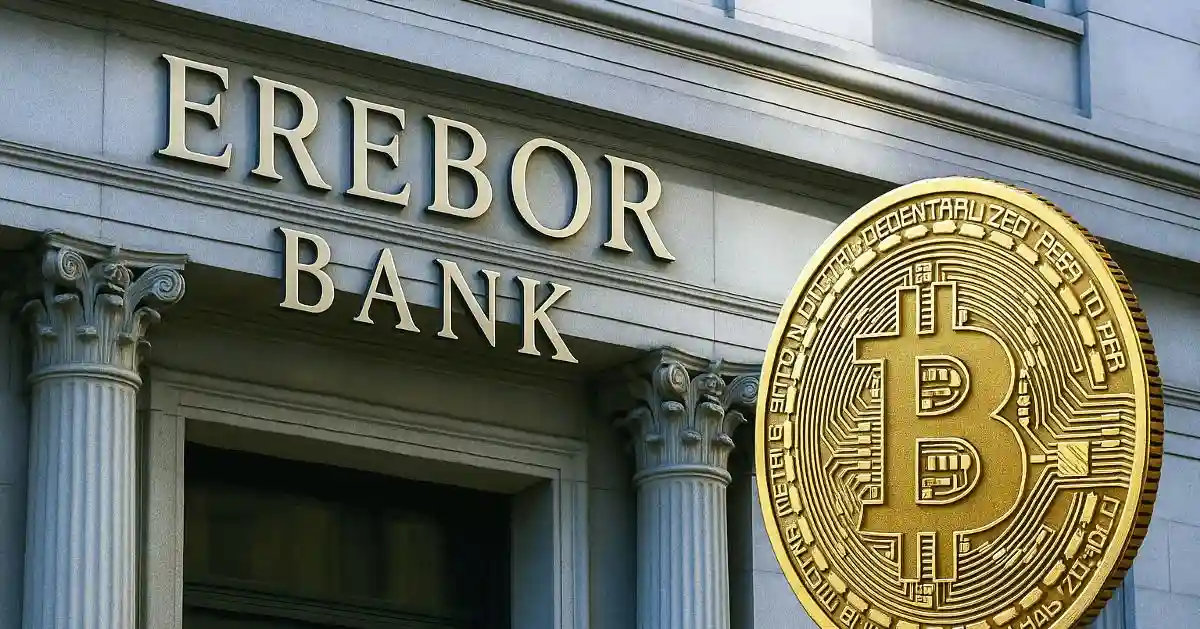
Trump Administration Clears Erebor Bank Backed by GOP Megadonors
TL;DR
- A new, tech-focused bank has received conditional approval at the federal level.
- The Erebor Bank approval points to a friendlier policy stance toward fintech, digital assets, and innovation-economy clients.
- Before launch, Erebor must still satisfy key conditions (capital, compliance, risk controls) and pursue FDIC insurance.
- Expect emphasis on AI, crypto-adjacent businesses, defense tech, and advanced manufacturing—sectors often underserved by traditional banks.
What Happened—and Why It’s a Big Deal
The Erebor Bank approval is an early, but meaningful green light. In U.S. banking, “conditional approval” typically means regulators are open to a new bank if it meets a checklist of operational, risk, capital, and compliance milestones. It is not a license to start taking deposits tomorrow; it’s a staged path to market.
Why this matters:
- Fintech & Startup Finance Gap: Since the high-profile failures in the innovation ecosystem, a swath of startups has struggled with day-to-day services (global payments, treasury management, FX, merchant services, and credit lines). The Erebor Bank approval signals a bid to fill that gap.
- Policy Signal: The administration’s rhetoric and agency guidance have leaned toward allowing digital-asset activities when done safely and soundly. The Erebor Bank approval fits that tone: prudence over prohibition.
- Capital Formation: With substantial backing and prominent founders, the bank aims to bankroll AI, defense tech, semiconductors, and manufacturing—all strategically important (and politically salient) sectors.
Who’s Behind Erebor—and What They Want to Build
Erebor is linked to notable Silicon Valley names and GOP-aligned megadonors, with Palmer Luckey among the best-known. The founding and investor set have long argued that innovators deserve banking partners who understand regulatory complexity, on-chain settlements, real-time risk analytics, and global cash operations.
What to expect from the go-to-market:
- Digital-first onboarding and account management
- Deep treasury tools (sweep accounts, cash segmentation, short-duration instruments)
- Payments rails across ACH, wires, RTP, and card issuing
- Clear KYC/AML posture and transaction monitoring built for crypto-exposed counterparties
- Credit products for working capital, venture debt-like facilities, and equipment financing
The Erebor Bank approval doesn’t guarantee any single product, but it strongly suggests a bank that speaks the language of dev tools, APIs, webhooks, and enterprise-grade compliance—not one that treats every startup like a risk outlier.
Conditional Approval vs. A Full Launch: Know the Difference
It’s easy to confuse phrases like “initial” or “conditional” with “open for business.” The Erebor Bank approval is an intermediate milestone. Typically, the steps include:
- Conditional Charter/Approval: High-level green light with a list of conditions.
- Readiness & Compliance Build-Out: Policies across credit risk, liquidity, operational resilience, vendor management, model risk, information security, and third-party risk.
- FDIC Insurance Application: Critical if the bank accepts insured deposits.
- Pre-Opening Exam(s): Regulators test real-world readiness.
- Staged Opening: Often a soft launch with limited accounts, then expansion.
The Erebor Bank approval means regulators see a path forward; it does not mean all those boxes are ticked.
What Products Could Erebor Offer First?
While specifics will evolve, the bank’s positioning hints at a product stack such as:
- Operating & Escrow Accounts for venture-backed companies and funds
- Treasury Management with automated liquidity ladders, short-term T-bills, and repo options
- Cross-Border Payments with treasury FX and settlement transparency
- Commercial Credit (revolvers, term loans) with real-time covenants and data-driven underwriting
- Card Programs and Spend Controls for distributed teams
- Digital-asset-adjacent services: custody integrations, fiat on/off-ramps, robust KYC/AML
By serving sectors historically labeled “too complex,” the Erebor Bank approval nudges competitors to rethink blanket exclusions of crypto-exposed or defense-tech clients.
Why This Resonates With High-CPM Finance Audiences
Advertisers pay more to reach readers who care about capital adequacy, Basel III, interest-rate hedging, liquidity coverage ratios, credit spreads, cash management, and enterprise compliance. The Erebor Bank approval touches all of that:
- Rate Strategy: Where do corporate treasurers park idle cash when short-term yields shift?
- Risk & Return: How does a new bank price credit risk for AI or semiconductor clients?
- Compliance Edge: Can better KYC/AML tooling unlock safe growth in controversial verticals?
- Payments Economics: Interchange, RTP fees, FX—optimizing unit economics at scale.
These themes draw premium interest—and premium CPMs.
The Politics: Praise, Pushback, and the Optics
With prominent GOP megadonors in the picture, the Erebor Bank approval was always going to be scrutinized. Supporters argue that credit allocation should track productive capacity, not reputational noise. Critics worry about regulatory capture and favoritism, warning that speed can come at the cost of oversight.
The smart read: neither cheerleading nor doom-saying will build a durable bank. Execution will. The Erebor Bank approval simply opens the door for execution under a microscope.
Key Opportunities If Erebor Executes Well
- Trust by Design: A transparent risk framework (conservative loan-to-value, sector diversification, hard limits on correlated risk) can quiet skeptics.
- Compliance as a Feature: Real-time analytics, watchlist screening, model governance, and auditable workflows.
- API-Native Distribution: Banking services embedded directly into developer and finance-ops stacks.
- Unit Economics Discipline: Balanced deposit strategy, low-cost funding, and diversified non-interest income.
The Erebor Bank approval sets the stage; the build will determine whether the bank earns a reputation for safety, soundness, and speed—in that order.
Risks to Watch
Even with the Erebor Bank approval, the path isn’t risk-free:
- Deposit Concentration: Tech-heavy clients can be correlated; diversification matters.
- Rate Volatility: Rapid shifts in the curve stress asset-liability management.
- Vendor Dependencies: Cloud, core banking, and security vendors must be airtight.
- Policy Whiplash: Future administrations or new rules could change what’s “permissible.”
- Reputation Spillovers: Association with crypto or controversial sectors, if mishandled, can hurt franchise value.
| Milestone | Status | What It Means | What’s Next |
|---|---|---|---|
| Conditional Charter | Approved | Regulators signaled a path forward. | Meet pre-opening conditions. |
| Capital Plan | In place | Supports growth and risk buffers. | Maintain Tier 1 ratios & stress tests. |
| Compliance Stack | Building | KYC/AML, model risk, vendor risk, audits. | Independent validation and training. |
| FDIC Insurance | Pending | Needed for insured deposits. | Application, review, and readiness exams. |
| Go-Live (Limited) | Future | Soft launch with controlled volumes. | Monitor liquidity & operational resilience. |
Practical Lens: What Founders, CFOs & Treasurers Should Do Now
- Diversify Banking: Don’t over-index on any single institution.
- Map Use Cases: If you’re in AI, defense tech, crypto-adjacent, or advanced manufacturing, list services you need on Day 1 vs. Day 90 (payments, FX, credit, custody integrations).
- Compliance Prep: Clean cap tables, polished KYC docs, and standardized payment flows reduce onboarding friction.
- Hedge Rates: Revisit interest-rate exposure and liquidity ladders ahead of account migrations.
- Vendor Diligence: If Erebor offers embedded services via partners, understand SLAs, escrow, and failover.
The Erebor Bank approval adds another potential partner to your treasury mix—prepare so you can move quickly once doors open.
FAQs
1) What does the Erebor Bank approval actually authorize?
It’s a conditional green light. The bank must still complete operational build-out, pass pre-opening checks, and typically secure FDIC insurance before taking insured deposits. The Erebor Bank approval recognizes a viable path—not a finished journey.
2) Will Erebor support crypto companies?
The positioning suggests services for digital-asset-adjacent clients with robust KYC/AML and risk controls. The Erebor Bank approval aligns with letting banks engage in such activities safely and soundly rather than banning them outright.
3) Is FDIC insurance guaranteed?
No. It’s a separate process. The Erebor Bank approval and deposit insurance are related but distinct steps.
4) Why are GOP megadonors part of the headline?
Because political ties raise perception questions around speed and scrutiny. The Erebor Bank approval will face ongoing oversight; execution quality will decide credibility.
5) When can customers open accounts?
Only after conditions are met and regulators sign off on a go-live. The Erebor Bank approval is early-stage; timelines depend on readiness.
6) What sectors could benefit first?
AI, defense tech, semiconductors, advanced manufacturing, and crypto-native treasury teams—all frequent targets of legacy de-risking. The Erebor Bank approval aims to re-open those pipes with tighter controls.
7) Will the bank be digital-only?
Expect a digital-first footprint, API-centric services, and enterprise-grade support. The Erebor Bank approval doesn’t rule out future physical presence, but the thesis is software-led.
8) How does interest-rate volatility affect this launch?
ALM (asset-liability management) is central. The Erebor Bank approval will be measured against its ability to manage rate risk, deposit beta, and liquidity under stress.
Conclusion
The Erebor Bank approval is more than a headline; it’s a stress test for whether a new, policy-friendly posture can responsibly expand access to banking for the innovation economy. If Erebor turns conditional green lights into disciplined execution—capital strength, airtight compliance, and boring-in-the-best-way risk management—it can become a durable node in America’s financial infrastructure. If not, the same scrutiny that trailed the Erebor Bank approval will follow every misstep.
Either way, founders, CFOs, and treasurers just gained optionality. In finance, optionality—well-priced and well-managed—is everything.