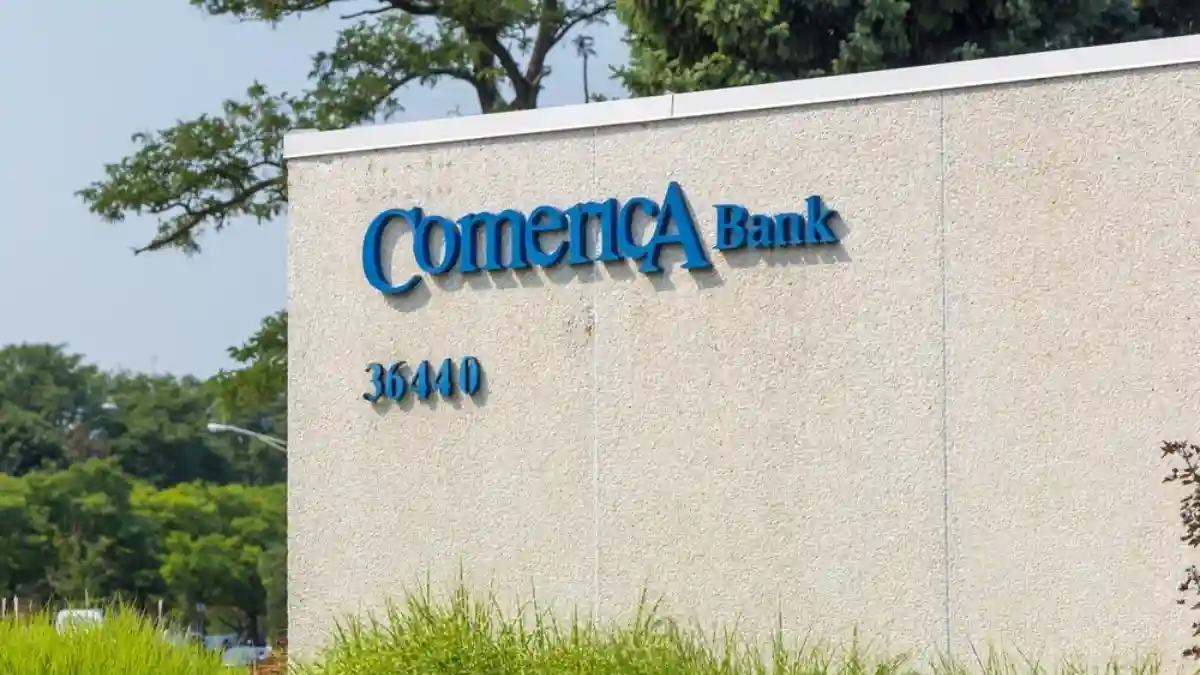
Fifth Third to Acquire Comerica in $10.9 Billion All-Stock Deal (2025): What It Means for Customers, Investors, and U.S. Banking
Quick Take
Fifth Third Bancorp has announced an all-stock acquisition of Comerica valued at $10.9 billion, a tie-up that would create the ninth-largest U.S. bank by assets and reshape the regional-bank landscape.
Comerica shareholders are slated to receive 1.8663 Fifth Third shares per Comerica share—valuing Comerica at about $82.88 per share at the reference price—while existing Fifth Third investors will own roughly 73% of the combined company and Comerica investors about 27% after closing. The companies expect the deal to close by the first quarter of 2026, pending regulatory and shareholder approvals.
Why This Deal, and Why Now?
Regional banks have been under pressure to scale deposit franchises, diversify revenue, and strengthen fee-based businesses after the 2023 banking stresses. A merger of Fifth Third and Comerica seeks to:
- Expand geographic reach across the Midwest while accelerating into high-growth Sunbelt markets (Texas, Florida, Arizona, California).
- Broaden commercial capabilities in payments, treasury management, and wealth/asset management—segments with higher noninterest income potential and premium CPM-aligned audiences (corporate finance, high-net-worth banking).
- Enhance operating leverage via cost synergies, better technology spend efficiency, and branch optimization (overlapping metros). (Inference based on typical M&A objectives for regional banks, supported by statements about scaling fee businesses.)
Deal Terms at a Glance
- Structure: All-stock
- Headline value: $10.9 billion
- Exchange ratio: 1.8663 Fifth Third (FITB) shares for each Comerica (CMA) share
- Implied value: About $82.88 per CMA share at the reference close
- Ownership split at close: ~73% FITB / 27% CMA
- Pro forma rank: Top-10 U.S. bank (≈$288B in assets)
- Expected close: Q1 2026, subject to shareholder and regulatory approvals
- Leadership: Comerica CEO Curt Farmer expected to serve as vice chair of the combined company; other Comerica leaders to take senior roles (including wealth & asset management).
Strategic Rationale: Where the Value Could Come From
1) A stronger, more diversified deposit franchise
Combining Fifth Third’s Midwest strengths with Comerica’s commercial and business-banking focus in Texas and the West deepens access to low-cost core deposits—a crucial buffer for net interest margin resilience across cycles.
2) Scale in commercial payments and wealth management
Management highlights two $1B+ fee-revenue businesses post-integration: commercial payments (treasury, merchant, card) and wealth/asset management. These recurring noninterest income streams can support ROE and soften rate-cycle swings.
3) Operating efficiency and tech leverage
Bigger scale can improve the efficiency ratio through shared platforms, unified vendor contracts, and digital banking investments spread across a larger base.
Expect focus on core systems, payments rails, fraud/risk analytics, and AI-enabled underwriting—key for credit quality and capital ratio stability. (Industry-standard integration focus; value drivers inferred and consistent with disclosed fee ambitions.)
Market Footprint: Midwest Base, Sunbelt Upside
The tie-up preserves a dominant presence in the Midwest while sharpening the push into Texas, Florida, Arizona, and California—states with faster population and business formation growth. This mix positions the bank to pursue SME lending, middle-market deals, and private wealth onboarding in rising income corridors.
What Customers Can Expect
- Branch and ATM access: Over time, expect smart branch consolidation in overlapping neighborhoods—but with a commitment to local coverage. Digital channels should expand self-service and real-time payments options. (Typical integration pattern; consistent with scale objectives.)
- Products & fees: Larger scale can bring broader product menus (e.g., treasury services, merchant acquiring, investment products) and potentially more competitive pricing on cash-management and small-business packages.
- Service continuity: Until close (expected Q1 2026), both banks operate separately. Customers should continue using their existing accounts, apps, routing numbers, and cards. (Standard pre-close practice, pending approvals.)
What Investors Should Watch
- Regulatory path & timing
Banking M&A faces detailed reviews on competition, consumer impact, community reinvestment, and financial stability. The companies target early 2026 for completion, but timelines can shift with regulatory feedback. - Synergy targets & integration costs
Watch for quantified cost saves, revenue synergies, and one-time charges in future updates. How quickly management executes branch, vendor, and technology integration will shape the efficiency ratio path. - Credit cycle & rate backdrop
Loan growth, net charge-offs, and provisioning will matter. The combined bank’s exposure to commercial & industrial (C&I) lending, CRE, and middle-market clients should be monitored alongside the interest-rate environment. - Capital and dividend policy
Look for clarity on Common Equity Tier 1 (CET1) targets, payout ratio, and plans for buybacks post-close. A stronger noninterest income base could support returns through the cycle. - Retention of key talent & clients
Relationship managers, treasury advisors, and wealth teams drive fee growth. Retention packages and cultural fit will be essential to preserve pipelines and cross-sell momentum.
Stock Reaction (Day 1 Snapshot)
Initial market response has reflected M&A math typical for all-stock deals: Comerica shares rising on premium news, and Fifth Third shares easing on dilution/integration overhang—both common patterns that tend to normalize as synergy detail emerges.
Timeline & Next Steps
- Announced: October 6, 2025
- Shareholder votes: To be scheduled by each company
- Regulatory approvals: Federal and state banking regulators
- Expected close: By Q1 2026, assuming approvals and customary conditions
- Leadership & board: Comerica’s Curt Farmer to become vice chair; several Comerica leaders to hold senior roles, including head of wealth & asset management; three Comerica directors to join the board.
Who Wins from This Merger?
Customers
- Broader product set combining Fifth Third’s consumer and digital strengths with Comerica’s business-banking heritage.
- Potential for better treasury & payments tools for SMEs and middle-market clients.
- Branch and digital access scaled across more states.
Investors
- Exposure to high-growth Sunbelt regions, with a larger base of fee income (commercial payments + wealth).
- Scale benefits that, if executed, can improve returns on equity and earnings stability through the rate cycle.
Communities
- Combined community development and small-business lending programs could expand local impact—often a focus in approval processes.
Key Risks to Watch
- Integration execution: Core systems and operations integrations are complex and can impact service levels and cost saves.
- Regulatory scrutiny: Banking M&A remains a headline topic; conditions could include branch divestitures or specific consumer commitments.
- Credit conditions: A turn in credit quality—especially in CRE or cyclical sectors—could pressure earnings.
- Rate path & deposit costs: If deposit betas stay elevated, net interest margin could be tighter than modeled.
- Competition: National banks and fast-growing fintechs remain aggressive in payments, SMB, and wealth.
How the Combined Bank Could Compete
- Payments & Treasury at Scale
Building a top-tier commercial payments franchise (ACH, RTP, card issuing, merchant acquiring) can deliver sticky relationships and recurring fee income. - Wealth & Private Banking Expansion
With leadership named from Comerica to run wealth & asset management, expect a push into HNW and small-institution mandates—driving advisory fees and AUM growth. - SME & Middle-Market Lending
The combined relationship networks across manufacturing, healthcare, tech services, and energy-adjacent firms in the Midwest and Sunbelt can deepen cross-sell: treasury + FX + card + working capital. - Digital & Data
A larger client base improves data-driven underwriting, fraud detection, and personalized offers—vital for customer lifetime value and efficiency ratio improvement.
FAQs
Q1) What exactly are Comerica shareholders getting?
An all-stock consideration: 1.8663 shares of Fifth Third for each Comerica share. At the reference price used by the companies, that equates to about $82.88 per CMA share.
Q2) When will the deal close?
The companies target closing by Q1 2026, subject to shareholder and regulatory approvals. Until then, both banks operate separately.
Q3) How big will the combined bank be?
Roughly $288 billion in assets, placing it among the top 10 U.S. banks by size.
Q4) Who will lead the combined firm?
Fifth Third remains the parent; Comerica CEO Curt Farmer will become vice chair, and a Comerica executive will lead wealth & asset management. Three Comerica directors will join the board.
Q5) Will my branch or account change right now?
No immediate changes. Customers should continue using their current accounts, cards, and apps until the companies announce integration steps after closing. (Standard pre-close practice.)
Q6) Is this good for investors?
Potentially—if cost synergies and fee-income growth materialize as planned, and credit quality holds. Watch the efficiency ratio, ROE, and capital ratios as management shares updates.
Q7) Why are regional banks merging?
Rising technology costs, payments competition, and a need for stable deposits and diversified revenue have pushed banks to scale up. This deal follows the broader regional-bank consolidation trend post-2023.
Conclusion
Fifth Third’s planned $10.9 billion all-stock acquisition of Comerica is a watershed moment for regional banking, forging a top-10 U.S. institution with reach from the Midwest into high-growth Sunbelt markets.
The strategic prize is clear: a broader deposit franchise, scaled commercial payments, and a larger wealth management platform—each vital for noninterest income and durable returns.
For customers, the near term should be business as usual; the upside is a fuller menu of products and a deeper service bench post-close. For investors, the story hinges on regulatory timing, synergy capture, and the credit/rate backdrop. If management executes—and economic conditions cooperate—this merger could deliver the efficiency, earnings stability, and growth that regional banks have been chasing since the last cycle.