Key Highlights
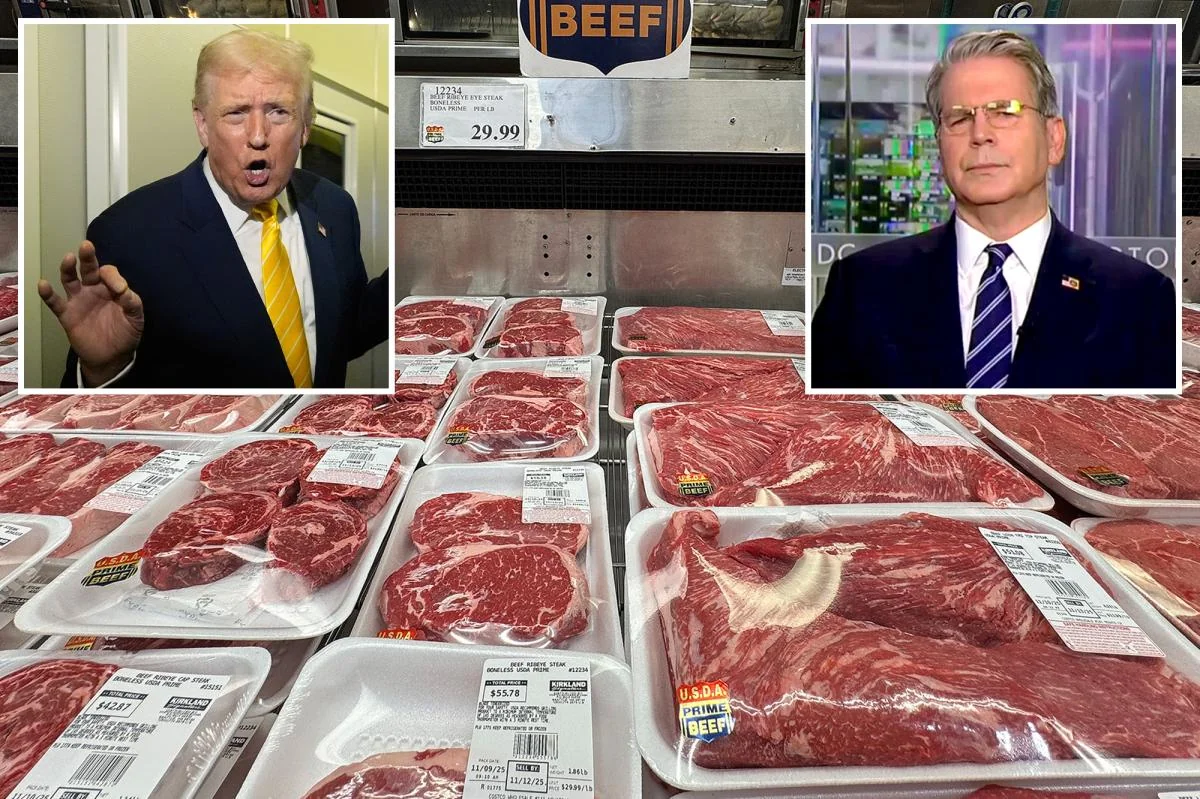
- Treasury Secretary Scott Bessent warns of a “perfect storm” behind ground beef possibly soaring to $10 a pound.
- The Trump administration eased tariffs on beef imports last week to address affordability concerns.
- Bessent predicts inflation will begin to ease, with the economy accelerating in the first two quarters of 2026.
- The screwworm outbreak in Mexico has affected ground beef prices due to a ban on cattle imports from that country.
Economic Turmoil and Rising Beef Prices
According to Treasury Secretary Scott Bessent, the United States is facing a “perfect storm” of issues driving up the price of ground beef. The Secretary’s comments come in response to reports that ground beef could rise to $10 per pound by next fall, according to Omaha Steaks President and CEO Nate Rempe. In an interview with Fox Business’ Maria Bartiromo, Bessent attributed these rising costs to a combination of factors inherited from the previous administration and current issues.
The Perfect Storm
Bessent elaborated during his interview that part of the problem is due to the spread of a parasitic screwworm from Mexico. This parasite, known for its larvae that chew on animal flesh causing severe wounds, has led to the U.S. government shutting down imports of cattle, bison, horses, and other livestock from Mexico since May 2025. The Secretary noted that the origins are complicated, as the screwworm outbreak in Mexico is still being investigated.
Government Actions and Economic Forecasts
To address affordability concerns, the Trump administration last week took steps to ease tariffs on beef imports from other countries. Bessent also highlighted efforts made by his department to tackle inflation, citing a reduction in energy prices and interest rates as positive indicators. He expressed confidence that the economy would pick up early next year, with predictions of a substantial acceleration in economic growth.
“I believe we’re going to push it down,” Bessent said about inflation. “Energy prices are down.
Interest rates are down. But the real thing that is going to happen that is going to give Americans real purchasing power increases.”
The Scrutiny of Affordability
Despite these measures, some critics argue that affordability remains a significant issue for American families. Assistant Director of the National Economic Council Kevin Hassett defended Trump’s efforts, stating that while inflation is still high, it has come down from its peak and that many prices are actually lower than they were under the previous administration.
“The prices went up so much under Joe Biden, and inflation is way down. Inflation is about half what it was in December,” Hassett told ABC’s “This Week” on Sunday. He emphasized that the Trump administration has made significant progress on boosting affordability relative to its predecessors.
The Impact of the Screwworm Outbreak
While Bessent believes that these measures will help combat rising costs, the immediate impact of the screwworm outbreak is still being felt. The U.S. and Mexico have been working for decades to control the screwworm population through mass production of sterile flies. However, recent outbreaks in Mexico have led to a shutdown of imports from that country.
“Part of the problem is, we have had to shut the border to Mexican beef because of this disease called the screwworm,” Bessent explained. “So we’re not going to let that get into our supply chain.”
Federal Policies and Future Projections
As the U.S. economy faces these challenges, Treasury Secretary Scott Bessent remains optimistic about the future outlook for prices and economic growth. He predicted that inflation on groceries and household goods would begin to ease, with a substantial acceleration in real income expected in the first two quarters of 2026.
“We’re already seeing on many prices as I said, we’re bending that curve down,” Bessent added. “What we’re not going to do is tell the American people that they don’t know how they’re feeling, which is what the Biden administration did.”
The article concludes with a discussion of President Trump’s plans for addressing cost-of-living concerns ahead of the 2026 midterm elections, including potential measures such as a $2,000 tariff dividend. Bessent emphasized that these policies would target working families and come with an income limit.