Key Highlights
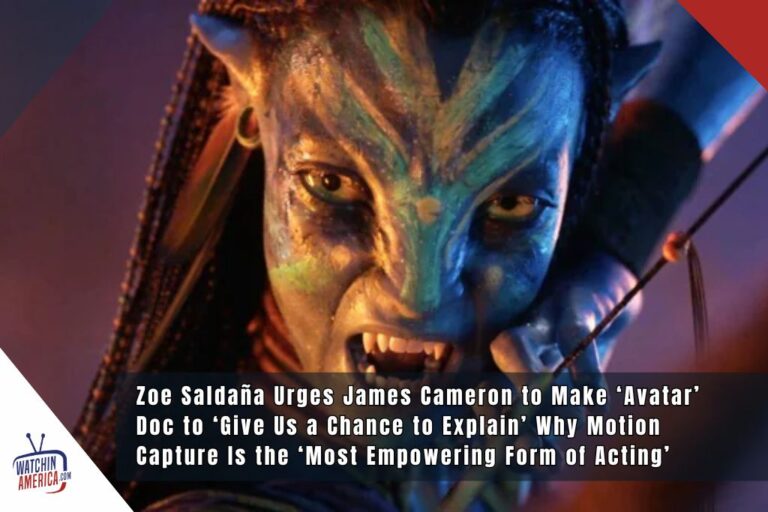
- Zoe Saldaña urges James Cameron to make a documentary about the making of the “Avatar” movies.
- The documentary will aim to explain why performance capture is the most empowering form of acting.
- Saldaña has long been a champion of motion capture acting and advocates for its recognition in award ceremonies like the Oscars.
- James Cameron intends to make two more “Avatar” movies, with an average production time of seven years between each film.
The Power of Performance Capture: Zoe Saldana’s Advocacy
In an interview with Beyond Noise, Zoe Saldana has called for a documentary that delves into the making of the “Avatar” franchise. The film is expected to shed light on why performance capture acting holds such significant importance in the industry. Saldana is particularly keen on this idea because it would finally give her and other actors involved in motion capture performances the opportunity to explain their craft, which she believes has been undervalued by traditional award ceremonies.
Performance capture involves the use of physical performance to drive digital characters in films and video games. In the context of “Avatar,” Saldana describes a process where actors don specialized suits with markers to help animators transfer their movements into the digital realm, creating realistic and believable alien characters like Neytiri.
The Behind-the-Scenes Magic of “Avatar”: A Labor of Love
James Cameron is known for his meticulous approach to filmmaking, a trait that has been on full display with the “Avatar” series. According to Saldana, each film takes an average of seven years between productions, during which time actors undergo extensive training and preparation. This includes learning archery, martial arts, free diving, scuba diving, and even physically preparing in collaboration with gymnasts, circus performers, and acrobats.
“It gives us the credit, the ability to own 100 percent of our performance on screen,” Saldana explained. “With animation, you might go into the studio for a few sessions; that’s as much as they’ll need you for the whole movie.
You go into a studio, however you’re dressed, and you lend your voice, right? Performance capture means that ‘Avatar’ wouldn’t exist if Sigourney Weaver, Sam Worthington, Stephen Lang, Kate Winslet, myself, and the entire cast didn’t get up and put those dots on our faces.”
Championing Motion Capture: A Long Road to Recognition
Saldana has been vocal about her frustration with award bodies like the Academy Awards for continuing to snub performances in motion capture films. She points out that actors such as herself and Andy Serkis, known for his roles in “The Lord of the Rings” and “Planet of the Apes,” have not received the same recognition despite their exceptional talent.
James Cameron has also spoken on this issue, defending Saldana’s work. He told Variety that her performance as Neytiri is on par with any Oscar-winning actor, yet it often goes unrecognized because the characters are rendered digitally. “I’ve worked with Academy Award-winning actors, and there’s nothing that Zoe’s doing that’s of a caliber less than that,” Cameron said.
The upcoming “Avatar: Fire and Ash” is set to open in theaters on December 19 from Disney and 20th Century Studios, continuing the legacy of this groundbreaking franchise. As the industry continues to evolve, Saldana’s advocacy for performance capture highlights a critical conversation about how technology impacts artistic expression and recognition.