Key Highlights
- The song “The Wreck of the Edmund Fitzgerald” by Gordon Lightfoot is a reflection on human frailty and the sublime.
- The poem explores themes of vastness, uncertainty, power, and weakness through Burke’s concept of the sublime.
- The ballad conveys a sense of the eternal nature of shipwrecks as an artistic motif, symbolizing the smallness and vulnerability of mankind.
- Lightfoot’s work is seen as both a remembrance of the tragedy and a broader reflection on human helplessness in face of nature’s power.
The Wreck of the Edmund Fitzgerald: A Musical Reflection on Human Frailty
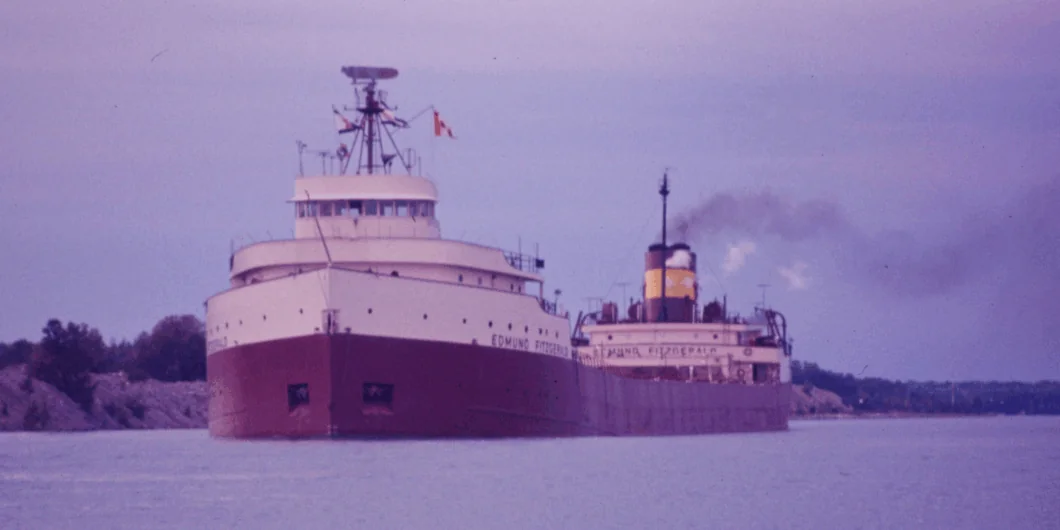
On November 10, 1975, “the witch of November” descended upon Lake Superior, breaking apart and sinking the Great Lakes freighter Edmund Fitzgerald. This tragic event, which claimed all 29 lives on board, became a cornerstone in American cultural consciousness thanks to Gordon Lightfoot’s folk rock ballad. “The Wreck of the Edmund Fitzgerald” is not only a poignant remembrance of those lost but also a profound reflection on human vulnerability and the sublime.
The Sublime and Vastness
In his essay “A Philosophical Inquiry into the Origin of Our Ideas of the Sublime and Beautiful,” philosopher Edmund Burke distinguished between beauty and sublimity. He argued that the latter springs from our fear of death and desire for self-preservation, especially when confronted with immense natural forces. Lightfoot’s ballad captures these elements masterfully.
The repetitive melody and the vast expanse of Lake Superior are highlighted through the song’s continuous strumming on a twelve-string acoustic guitar.
The repetition mimics waves and conveys the sense of infinite space, making listeners feel small in comparison to nature’s power. This is evident in phrases like “Could it be the north wind they’d been feeling?” and “Does anyone know where the love of God goes.”
Uncertainty and Powerlessness
The uncertainty surrounding the sinking adds to its sublimity. Lightfoot leaves many details unspecified, such as how the ship went down: “They might have split up or they might have capsized/ They may have broke deep and took water.” This ambiguity echoes Burke’s idea that we are left in awe by things we cannot fully understand.
The song also emphasizes the power of the lake. The Edmund Fitzgerald, described as “bigger than most,” becomes a symbol of man’s pride and arrogance, ultimately proving vulnerable to nature’s wrath. The lyrics highlight this power contrast: “And later that night when his lights went out of sight Came the wreck of the Edmund Fitzgerald.”
The Timeless Nature of Shipwrecks
Shipwrecks have long been a subject in art, representing man’s struggle against nature. Lightfoot’s ballad adds to this tradition by creating a timeless narrative that resonates with listeners. The opening verse hints at the legend: “The lake it is said never gives up her dead.” This line underscores the enduring nature of shipwrecks as symbols of human loss and vulnerability.
Lightfoot’s approach to writing the ballad was deeply personal, informed by his respect for the story and those involved. He refused to perform it in a flippant manner, recognizing its gravity: “I had penned a chapter in the timeless story of man facing helplessness and mortality.” This perspective elevates the song beyond mere entertainment, making it a significant cultural artifact.
Conclusion
Gordon Lightfoot’s “The Wreck of the Edmund Fitzgerald” is more than just a musical tribute; it is a searching reflection on human frailty and our place in nature. Through Burke’s concept of the sublime, Lightfoot crafts a powerful narrative that captures both the vastness of Lake Superior and the smallness of man. The song remains a poignant reminder of the eternal struggle between humanity and the forces of nature.