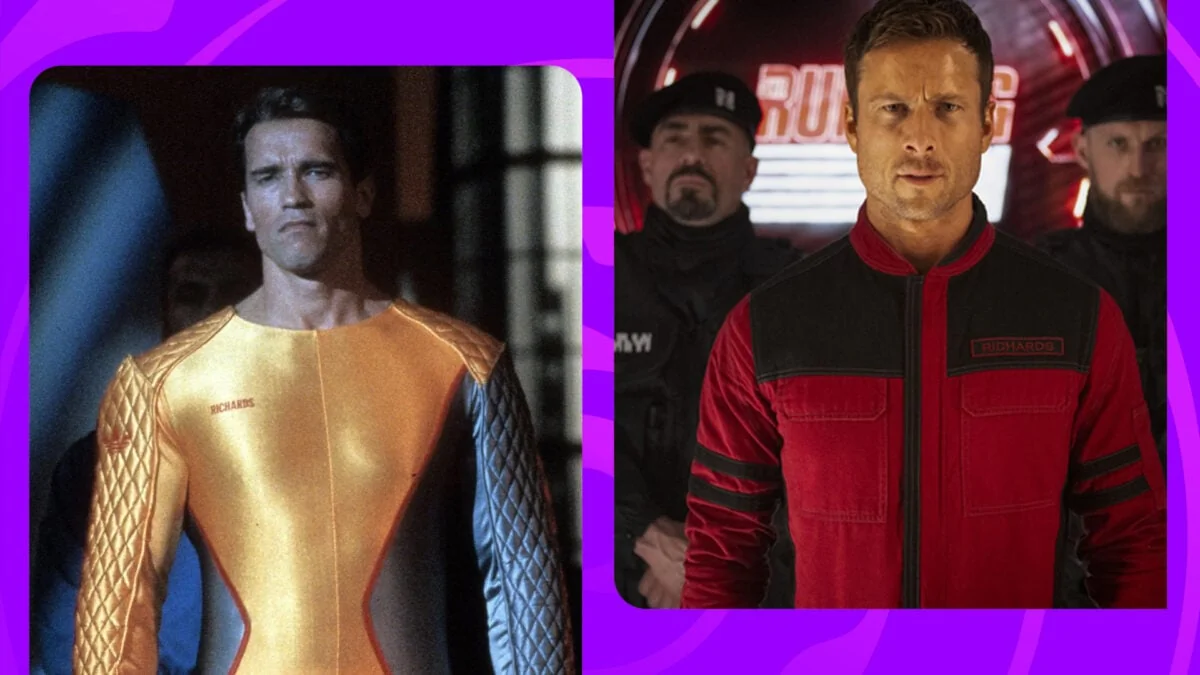
Key Highlights
- The 1987 and 2025 versions of “The Running Man” are significantly different in several aspects.
- Glen Powell stars as Ben Richards in the newer film, while Arnold Schwarzenegger played the same character in the original.
- Key differences include the setting, villains, backstory, love interest, prize, and world impact of the new movie compared to the older one.
- The 2025 version has more relatable motivations for its protagonist to participate in the game.
New vs. Old: A Comprehensive Comparison of “The Running Man”
Next week, moviegoers will have a chance to experience two very different takes on Stephen King’s The Running Man. The original 1987 film, starring Arnold Schwarzenegger and based on the novel by Richard Bachman (Stephen King), set the stage for what would become a thrilling survival contest in an underground arena. Now, director Edgar Wright and actor Glen Powell bring their own spin to this classic tale with the release of the new adaptation.
The Arena
One of the most striking differences between the two films is the setting. In 1987’s “The Running Man”, Ben Richards competes in a confined 400-block underground arena, which allowed for controlled filming and simpler logistics. This choice was practical but limited the scope of potential action sequences. However, by expanding the scope to global locations, the 2025 version offers more dynamic and varied set pieces, making for a much more engaging viewing experience.
The Villains
Another significant difference lies in how the villains are portrayed. In the original film, the Stalkers (later renamed Hunters) were larger-than-life personalities with distinct characteristics, such as Fireball and Dynamo. These characters added an element of spectacle but also made them less relatable to audiences.
By contrast, the 2025 film presents the Hunters as a more cohesive military team with fewer standout individuals. While this approach offers a different dynamic, it doesn’t match the charisma and entertainment value provided by the original villains.
The Backstory
Perhaps one of the most crucial differences between the two films is their backstory. In 1987’s “The Running Man,” Ben Richards was framed for genocide and forced to play the game to clear his name. This tragic backstory added a layer of complexity and emotional weight to the character, making audiences empathize with him more deeply. On the other hand, in the 2025 version, Ben volunteers because he needs money to help his family. This explanation is simpler but perhaps more relatable to modern audiences.
The Love Interest
Both films feature a love interest for their protagonist, but the nature of these relationships differs significantly. In 1987’s “The Running Man,” Ben has no attachments initially and only forms a relationship with a random woman played by María Conchita Alonso as an afterthought. However, in the 2025 version, Ben is deeply involved with his wife, played by Jayme Lawson, which adds a layer of emotional depth to the story.
The Prize
The financial motivations for participating in The Running Man also differ between the two films. In 1987’s “The Running Man,” only criminals play the game, and their prizes are vaguely legal in nature. In contrast, in the 2025 version, there is a massive cash prize of up to $1 billion available for the winner, which provides a more tangible and relatable motivation.
The Length
A notable difference between the two films is their length. The original movie required participants to stay alive for only three hours, while in 2025’s “The Running Man,” Ben Richards must survive 30 days out in the world. This change alters the pacing and intensity of the narrative, offering a longer, more drawn-out experience.
The World
The new film’s expanded setting also means that anyone can become involved in The Running Man. This concept adds an extra layer of unpredictability and excitement to the story. In contrast, 1987’s “The Running Man” was limited to a contained arena with mostly passive participants from the outside world. This design choice made for a more straightforward and focused narrative but may have felt less immersive.
In conclusion, while both films are based on the same source material, they offer distinct perspectives and experiences. 2025’s “The Running Man” places greater emphasis on relatable motivations and emotional depth, which could appeal to a wider audience. However, the original 1987 film’s more intense and dramatic elements provide a thrilling and memorable viewing experience.
Both versions are worth checking out for fans of the story, offering unique takes on this classic tale.
The new The Running Man opens in theaters on November 14. Stay tuned for more reviews and interviews with director Edgar Wright.