Key Highlights
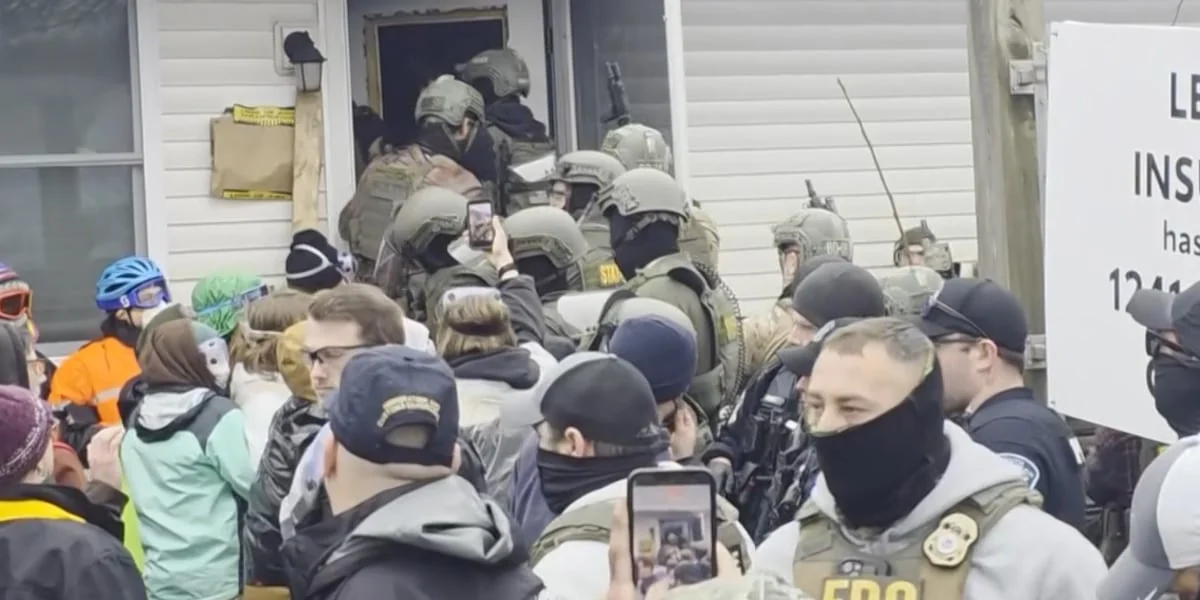
- Federal authorities seek a 24-year-old Mexican citizen during an operation in South Burlington.
- Protests turn chaotic as federal agents use chemical and flash bangs to disperse the crowd.
- Vermont lawmakers question state’s Fair and Impartial Policing Policy implementation.
- Local police criticize ICE tactics, calling them “totally unnecessary” and “violent.”
Federal Agents’ Tactics Spark Controversy in Vermont
On Wednesday, federal immigration agents were on a mission to apprehend Deyvi Daniel Corona-Sanchez, a 24-year-old Mexican citizen who entered the country illegally and was later arrested for DUI. The operation turned into an ugly scene as local law enforcement criticized ICE’s methods.
A Day of Tension
The day started with a peaceful protest outside a Dorset Street home where authorities believed Corona-Sanchez might be hiding. However, tensions quickly escalated when federal agents used chemical agents and flash bangs to disperse the crowd, leading to arrests of three individuals who were not on the warrant.
Local Law Enforcement’s Criticism
Chittenden County State’s Attorney Sarah George condemned ICE’s tactics, saying, “ICE chose escalation over professionalism at every turn. The result was chaos, harm, and fear visited on our community by a federal agency that appears more interested in spectacle than safety.”
Vermont Lawmakers Weigh In
Sen. Tanya Vyhovsky called for a special panel to investigate whether local police broke the state’s Fair and Impartial Policing Policy, while State Sen. Kesha Ram Hinsdale expressed that these events test the policy’s effectiveness.
A Test of Community Trust
The incident raises questions about the balance between federal immigration enforcement and local law enforcement responsibilities. While some argued for stricter policies to protect communities from harm, others insisted on accountability in handling protests and demonstrations.
As Vermont lawmakers grapple with these complex issues, the community remains divided, testing not only the Fair and Impartial Policing Policy but also the trust between residents and their law enforcement agencies.