Key Highlights
- Philadelphia District Attorney Larry Krasner joins a nationwide coalition to prosecute ICE agents for breaking state laws.
- The coalition includes prosecutors from various states across the country.
- Krasner criticizes federal overreach and calls for accountability of federal officials.
- Federal agents involved in recent killings are under scrutiny by local law enforcement.
Philadelphia DA Takes a Stand Against ICE
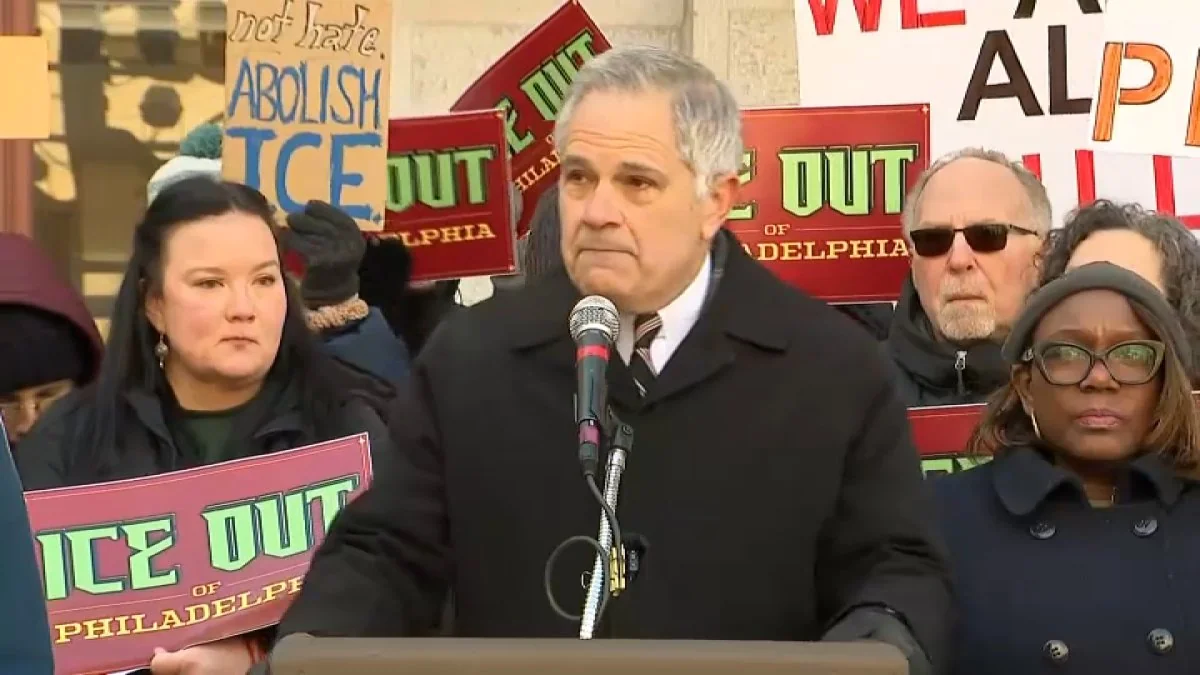
Philadelphia District Attorney Larry Krasner has joined the fray, announcing his participation in a nationwide coalition aimed at holding federal immigration enforcement agents accountable. This move follows a series of high-profile incidents where individuals were killed by ICE agents, highlighting the tension between local and federal law enforcement.
A Nation-Wide Effort
The coalition, which includes prosecutors from across the country, is working to ensure that any violations of state laws committed by federal officials are prosecuted. Key figures involved include Mary Moriarty from Hennepin County in Minnesota, Jose Garza from Travis County, Texas, and John Creuzot from Dallas County.
Local Prosecutor’s Perspective
Krasner’s announcement comes after a series of incidents where ICE agents were involved in the deaths of Alex Pretti and Renee Good. In his remarks at City Hall, Krasner emphasized that local prosecutors have the legal authority to bring charges against federal officials for violations of state laws.
Challenges Ahead
While Krasner’s approach is well-intentioned, the practicalities of prosecuting federal agents are complex. Local prosecutors will face significant challenges in navigating the legal system and securing convictions. However, Krasner remains undeterred, asserting that federal officials cannot use presidential pardons to evade accountability.
Consequences for Federal Agents
Krasner’s stance on federal overreach is clear: “We are up against people who find the law inconvenient.” He emphasized that local prosecutors will not be swayed by political pressures and will pursue justice regardless of the political climate. Despite these strong words, Krasner also noted that investigations into specific incidents are ongoing.
While the coalition represents a bold move in asserting state sovereignty over federal actions, its success remains to be seen. The legal battles ahead will test not only the commitment of local prosecutors but also the willingness of the federal government to comply with state law.
In conclusion, Krasner’s involvement in this nationwide effort is more than just symbolic; it signals a renewed push for accountability and justice in the face of perceived overreach by federal agencies. As local and federal jurisdictions continue to clash, the outcome will have significant implications for both immigration enforcement and the broader legal landscape.