Key Highlights
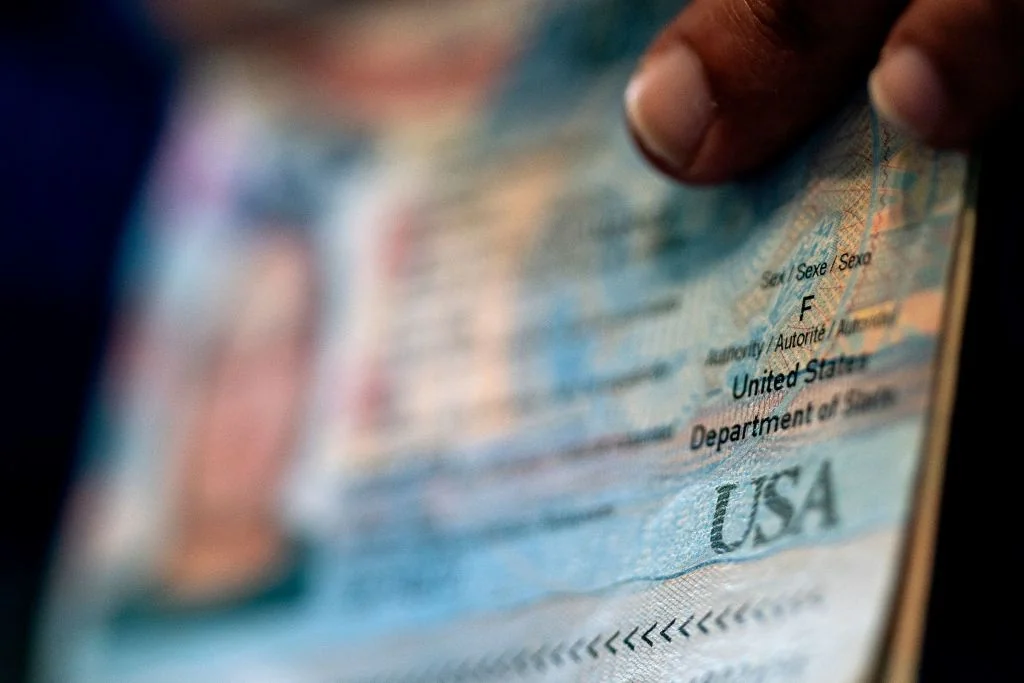
- The Supreme Court granted the Trump administration’s request to pause a lower court order that would have required the State Department to issue passports with sex designations of choice for transgender and nonbinary individuals.
- Justice Ketanji Brown Jackson dissented, arguing that the Court’s decision undermines equitable standards and harms transgender people without adequate justification.
- The case centers around a 2023 executive order by President Trump that restricted passport sex designations to male or female only.
Supreme Court Decision on Passport Sex Designations
The Supreme Court of the United States made an impactful decision this week, siding with the Trump administration in a legal dispute over the issuance of passports. The case, Trump v. Orr, revolves around a 2023 executive order by President Donald Trump that required government-issued identification documents to reflect only two sexes: male and female.
The Court’s decision came as a brief, unsigned opinion on November 6, 2025, granting the government’s request to temporarily suspend rulings issued by U.S.
District Judge Julia Kobick in Massachusetts. These rulings had required the State Department to issue passports that reflected the sex designation of transgender and nonbinary individuals, challenging the new policy.
The majority opinion stated, “Displaying passport holders’ sex at birth… no more offends equal protection principles than displaying their country of birth—in both cases, the Government is merely attesting to a historical fact without subjecting anyone to differential treatment.” This rationale suggests that the Court views the requirement to reflect one’s biological sex as consistent with constitutional equality principles.
Justice Ketanji Brown Jackson’s Dissent
However, Justice Ketanji Brown Jackson dissented, joined by Justices Sonia Sotomayor and Elena Kagan. In her dissenting opinion, she criticized the majority for “paving the way for the immediate infliction of injury without adequate justification.” Jackson argued that the Court’s decision undermines the equitable discretion required in such cases.
She wrote, “Because I cannot acquiesce to this pointless but painful perversion of our equitable discretion, I respectfully dissent.” This sentiment reflects a broader debate within the judiciary regarding the balance between policy implementation and individual rights.
The Background
The legal challenge began earlier this year when U.S. District Judge Julia Kobick issued orders based on a lawsuit brought by seven transgender and nonbinary individuals. These plaintiffs challenged an executive order from President Trump, which limited passport sex designations to male or female only.
Under the Biden administration’s previous policy, transgender people could receive passports that reflected their gender identity without medical documentation, and the State Department had added a third gender marker—“X”—for nonbinary applicants. However, the 2023 executive order reversed this approach, leading to legal challenges from those who believed it violated constitutional rights.
Impact of the Decision
The decision by the Supreme Court has significant implications for transgender and nonbinary individuals seeking international travel documentation that aligns with their gender identity. Justice Jackson’s dissent highlights ongoing concerns about the equitable application of judicial discretion, especially in cases involving marginalized groups.
While the Court’s majority view prevailed this time, the case underscores broader debates within the judiciary and society at large regarding civil rights and administrative policies under different presidential administrations. The immediate impact is a temporary pause on lower court orders that could have granted greater flexibility in passport issuance for transgender individuals.