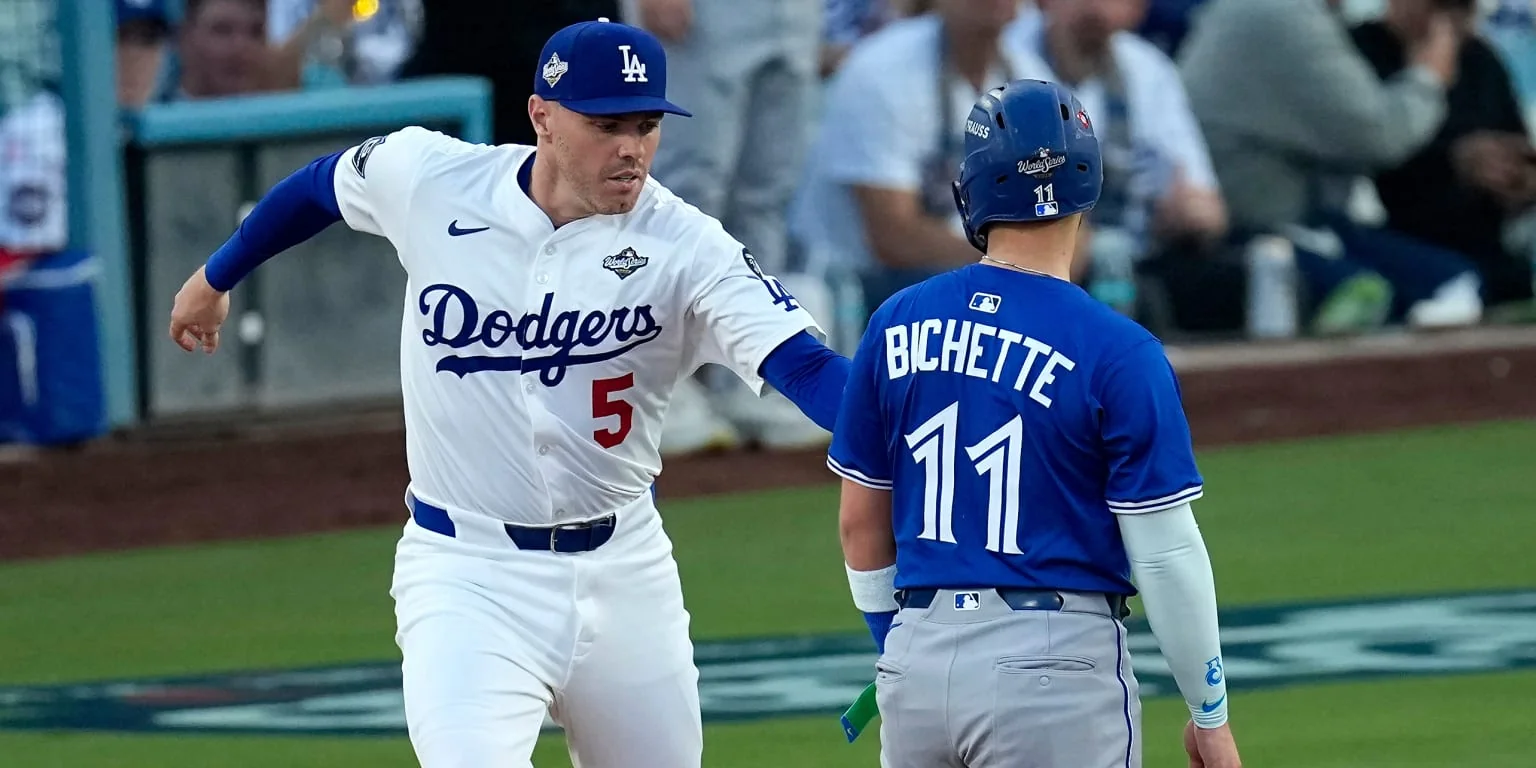
thought it was a ball. I think a runner’s assumption is the umpire is telling Varsh that it was a ball — for him to throw his bat like that. So it’s a weird play. You don’t want that to come back to bite you, but you wanna kind of let the players decide what’s going on.”
Implications and Broader Context
This moment had significant implications for both teams. For the Blue Jays, this call could have led to a different outcome in an inning where they were sandwiched between two singles with runners stranded on the corners. The loss of a potential run was particularly impactful given that the Dodgers bullpen is considered a weakness.
Manager Schneider also highlighted the need for clarity in such situations: “Mark’s a great umpire, been doing it a long time.
Very delayed call, pretty deliberate. He just didn’t say anything, so Varsh assumed it was a ball and Bo assumed. I just asked him, in this environment, can he be a little bit quicker or give a little bit of clarity so everyone kind of knows what’s going on.”
Season-Long Strategy
The Blue Jays’ strategy for the 2025 World Series has been to chase Dodgers starters, taking advantage of their bullpen’s limitations. However, this incident might have disrupted that plan. “This was a tough blow,” Schneider acknowledged.
Despite the confusion and potential loss of momentum, Bichette’s performance in the game remained encouraging. He laced a 3-1 sinker for a single straight back up the middle, an important sign as he plays through a left knee sprain that still isn’t fully recovered. “This moment also snuffed out the early momentum from Bichette,” noted Schneider.
The incident serves as a reminder of the human element in baseball and the importance of clear communication between players and umpires. As the World Series continues, similar situations may arise, underlining the need for continuous improvement in game management and officiating.