Key Highlights
- Russia intensifies attacks on Ukraine’s railways in a strategic move to disrupt the country’s war effort.
- Ukrainian officials report twice as many attacks in September compared to August, targeting both trains and rail infrastructure.
- The attacks have caused significant disruptions and pose risks to civilians, with multiple people injured or killed during strikes.
- Russian drones, particularly the Shahed-type, are responsible for most of these targeted attacks on Ukraine’s railway system.
Ukraine’s Railways: A Central Pillar in the War Effort
The Ukrainian railway network is more than just a means of transportation; it serves as a critical artery supporting the country’s war effort and economy. Spanning 13,000 miles, this vast infrastructure is crucial for moving troops, supplies, and goods across the nation.
Attacks on Railway Infrastructure
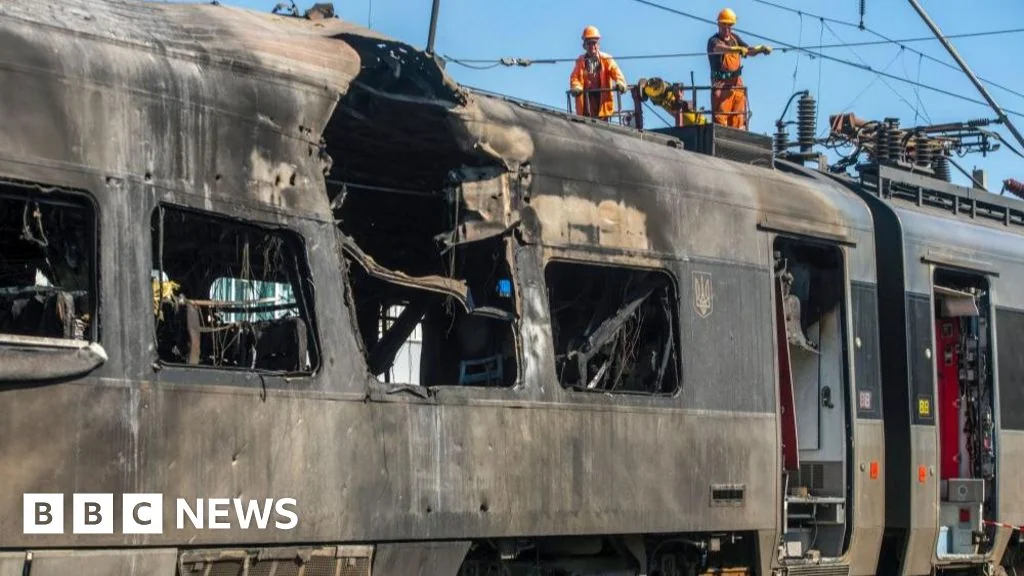
Russia has intensified its attacks on Ukraine’s railways, launching frequent strikes using unmanned aerial vehicles (UAVs) or drones. According to officials at the national rail operator Ukrzaliznytsia, there were twice as many attacks in September compared to August, with half of all attacks since the start of the war occurring in just two months.
Russian Strategy: A Clear Battle for Railways
Deputy Minister Oleksiy Balesta explains that Russia is deliberately targeting both freight and passenger trains. “Almost every day for the last two months, we have been experiencing targeted attacks on Ukrzaliznytsia infrastructure and on power transmission facilities,” he states.
Impact on Civilians and Economy
The strikes are not only causing significant disruptions but also posing direct risks to civilians. Olha Zolotova, a train conductor who was injured in one such attack, describes the harrowing experience: “When the Shahed drone hit I was covered in rubble. People pulled me out. My eyes went dark; there was fire everywhere.” Such incidents have raised concerns about civilian targeting and potential war crimes.
Response from Ukrainian Authorities
In response to these attacks, officials are working tirelessly to repair damage as quickly as possible while coordinating with the military and training staff to recognize potential sabotage threats. Oleksandr Pertsovskyi, CEO of UZ, emphasizes their determination: “Lastly, we always have Plan B, C and D. The goal is never to cancel a single service or destination.”
Impact on Ukraine’s Economy
The attacks also affect key economic activities. Much of Ukraine’s grain and iron ore exports are moved by rail to southern Black Sea ports and through Poland. Political leaders enter the country via trains, which Pertsovskyi describes as “iron diplomacy.” The constant threat poses significant challenges for the railway system’s ability to function normally.
Future Outlook and Calls for Support
The increase in attacks on infrastructure could lead to a harsh winter if not addressed. Oleksandr Pertsovskyi calls upon Ukraine’s allies to supply stronger air defenses: “But we’re not desperate. We’re preparing mentally and practically. Ukrainians remain strong in spirit.”
As the conflict continues, the resilience of Ukraine’s railways remains a testament to the country’s ability to adapt and persevere despite overwhelming odds.